
Ever noticed your favorite sterling silver cuff or copper ring looking a little less brilliant than it used to? That darkening isn't a sign of poor quality—far from it. It's just a natural chemical reaction, especially common with the sterling silver and copper metals that give Southwestern jewelry its authentic soul.
The Real Reason Your Jewelry Changes Color
You're getting ready for the day, maybe heading out to a local artisan market. You reach for that go-to turquoise bracelet, but something’s off. The metal’s bright, silvery shine has been replaced by a dull, dark film. It’s a familiar story for anyone who loves Southwestern or estuarian cowgirl styles, but it’s not about your jewelry being cheap. It’s about chemistry in action.
Tarnish is simply what happens when a metal’s surface interacts with its environment. Think about how a silver buckle patinas over time. In the same way, certain metals change color when they encounter specific elements in the air. For those of us who love that estuarian cowgirl aesthetic, this process is part of the package, since both sterling silver and copper are known to react.
At its heart, tarnish is caused by oxidation. The metals in your jewelry react with sulfur-containing substances floating around in the air. This reaction creates a brand-new compound on the surface, which is what we see as discoloration. It's a completely natural process and, honestly, often a sign that you're dealing with authentic materials common in Southwestern pieces.
Why Sterling Silver Is The Main Character
So, what's really making your cherished Southwestern pieces change color? Sterling silver, the absolute star of those stunning cuffs and turquoise rings, is the perfect example. It isn't pure silver. By definition, it's 92.5% silver mixed with 7.5% other metals—usually copper.
It’s that little bit of copper that really gets the reaction going. It reacts quite aggressively with sulfur in the air, forming a dark layer of silver sulfide. This chemical dance happens much faster in humid or polluted areas. For instance, a sterling silver concho belt worn daily in a humid coastal area might show visible tarnish within just 7-14 days, whereas it might stay bright for months in a drier, high-desert climate.
This same reaction is sometimes what leaves a mark on your skin, which is a separate but related issue. If you’ve ever noticed that tell-tale green tint from a favorite ring, you can learn all about how to stop your jewelry from turning skin green in our detailed guide.
Understanding How Different Metals React
Not all metals tell the same story, especially when it comes to tarnish. The soul of Southwestern and estuarian cowgirl jewelry often comes from the specific metals used, and knowing how each one behaves is the first step to truly appreciating its journey. It’s the kind of knowledge that helps you care for each piece the right way, preserving its rustic charm for years.
The way a metal reacts with its environment is a huge part of its identity. Some, like pure gold, are incredibly stable and almost aloof. Others, like the silver and copper in your favorite Southwestern pieces, are much more eager to interact with the world around them. That reactivity is what leads to tarnish, creating everything from that familiar dark film on silver to a beautiful green patina on copper.
The Sterling Silver Story
Sterling silver is the beating heart of Southwestern style, but it’s a perfect example of how a tiny addition can change everything. By definition, sterling silver is 92.5% pure silver mixed with 7.5% of another metal—usually copper. Why the mix? Pure silver is stunning, but it's just too soft for crafting a durable cuff or a detailed concho belt that can stand up to daily life on the ranch or in the city.
That 7.5% of copper is what gives sterling its strength, but it’s also the very reason it tarnishes. Copper is highly reactive, especially with sulfur compounds floating around in the air. When exposed, the copper in the alloy kicks off a chemical reaction, forming silver sulfide and copper sulfide. The result? That dark, sometimes black, layer you see on your jewelry.
To get the full picture of this fascinating blend, you can explore the key differences between sterling silver and pure silver in our detailed guide.
The Warm Patina of Copper
Copper itself is a hero in cowgirl aesthetics, loved for its warm, rustic glow. Unlike the dark tarnish you see on silver, copper's reaction with the environment—a process called oxidation—creates a totally different look: a distinct greenish-blue layer known as a patina. It’s the exact same chemical process that gives old barn roofs their iconic color.
This beautiful patina is a form of copper carbonate, which builds up slowly as the metal reacts with oxygen, water, and carbon dioxide. For many collectors of Southwestern jewelry, this isn't a flaw. It’s a desirable feature that adds depth, character, and an authentic, aged look to their pieces.
The visual below shows the main culprits that kickstart these chemical reactions for just about any metal.
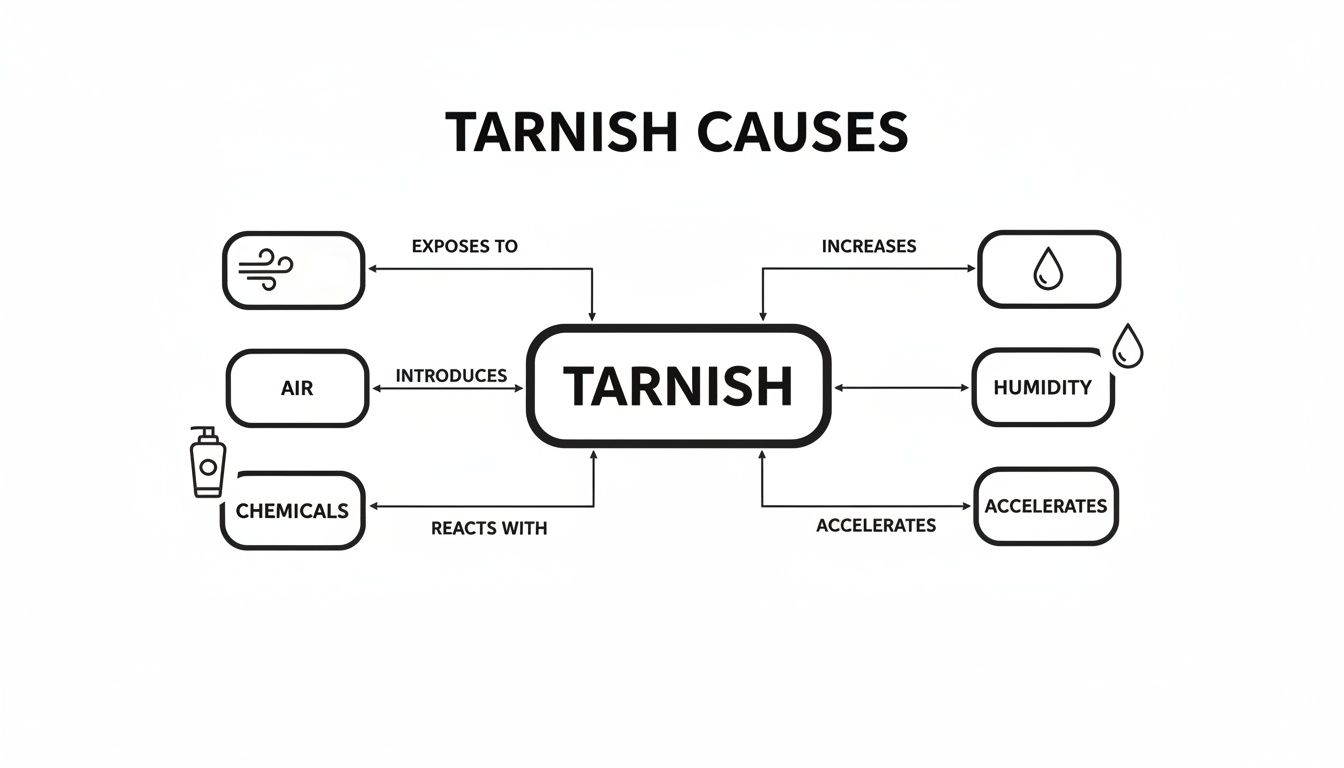
As the diagram shows, it all boils down to three main triggers: the air itself, various chemicals, and humidity.
Plated and Other Precious Metals
Plated jewelry is a great way to get a certain look without the high price tag, but it behaves a lot differently over time. These pieces have a very thin layer of a precious metal (like gold or silver) coated over a more reactive base metal, like copper or nickel. Tarnish starts to show up when that outer layer eventually wears away, exposing the base metal underneath to the elements.
Even high-karat gold isn’t completely immune, depending on what it's mixed with. The percentage of pure gold versus other alloys has a direct impact on its likelihood to tarnish. You can dive deeper into how gold purity affects reactivity to see how the alloys in your gold pieces can influence their longevity.
Everyday Culprits That Speed Up Tarnish
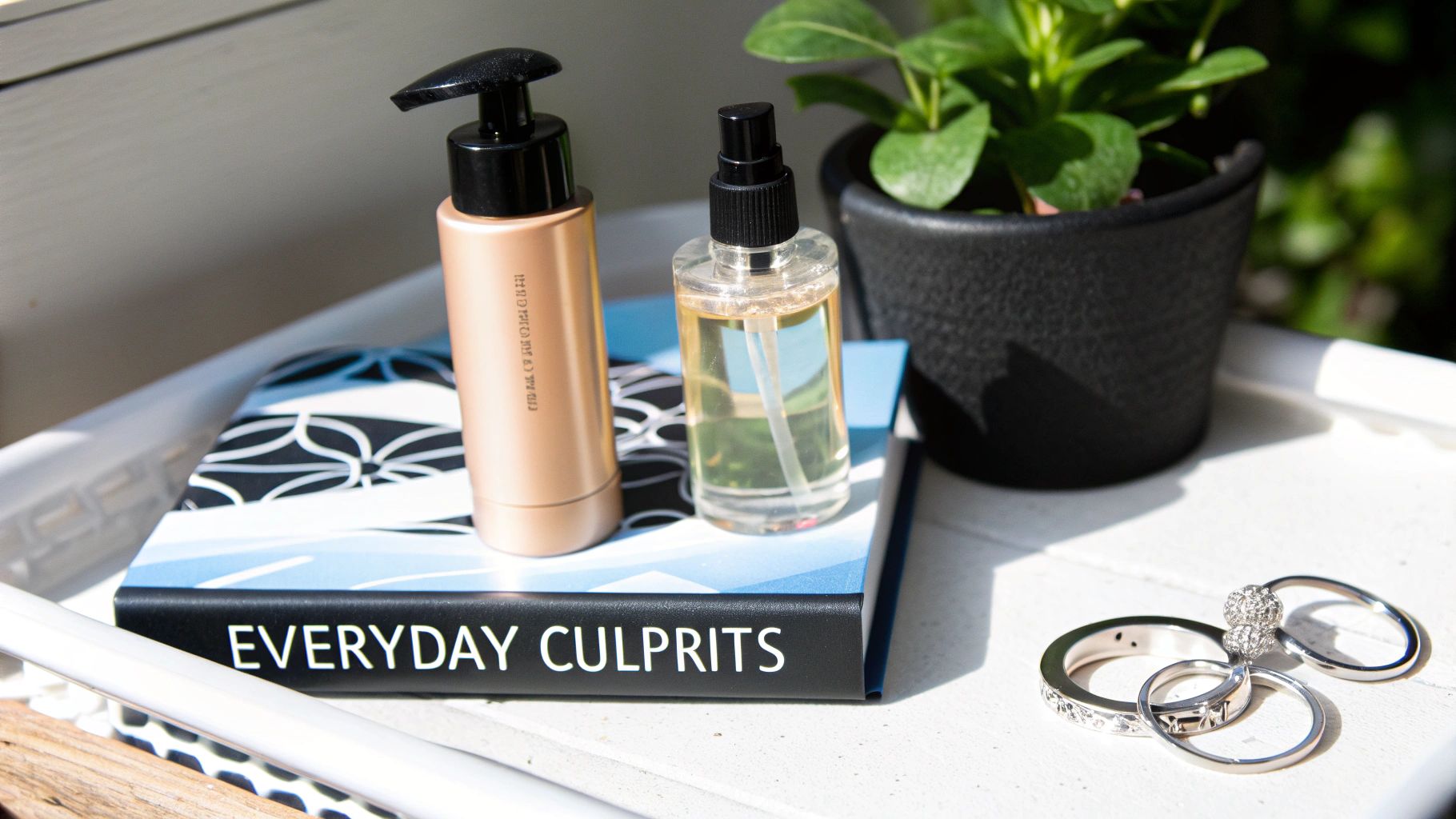
While science gives us the "how" of oxidation, your daily life tells the story of "when" and "why" your jewelry starts to lose its shine. There are a handful of everyday factors that can hit the fast-forward button on this natural process, turning your brilliant turquoise ring a bit duller much faster than you’d expect.
The environment you’re in, the products you use, and even your own body are all part of the equation.
The very air around us is a major player. Humidity and air pollution can create the perfect storm for tarnish, especially on our beloved copper-infused Southwestern rings. Moisture in the air—often hanging above 60% in coastal or estuarian regions—kickstarts the oxidation reaction with the alloy metals in your jewelry.
And in cities with heavy traffic, sulfur dioxide in the air can react with the 7.5% copper in sterling silver, causing noticeable darkening in as little as 48 hours when it’s humid.
Your Personal Chemistry
Believe it or not, you are one of the biggest reasons your jewelry tarnishes. Your sweat is a unique cocktail of salts, water, and acidic compounds that react directly with the copper and other metals in your sterling silver pieces.
This is exactly why that favorite cuff bracelet might look a little darker after a day of riding or a hot summer afternoon. Everyone’s skin and sweat have a slightly different pH level, which means some people will naturally cause their jewelry to darken more quickly than others. It's just personal chemistry at work.
Pro Tip: Your diet can even have an impact here. Eating foods high in sulfur, like eggs or onions, can sometimes increase the sulfur compounds released through your pores, giving tarnish more fuel to work with right where your jewelry touches your skin.
This is a huge reason why getting into a good cleaning routine is so important. You can check out our top tips in our guide to essential jewelry care habits that keep pieces shining.
The Hidden Chemicals in Your Routine
Beyond the environment and your own body, your daily beauty and cleaning routines are packed with hidden culprits that can cause discoloration almost instantly. These products contain chemicals that are perfectly safe for you but are highly reactive with the metals in your cherished Southwestern jewelry.
Just think about your morning routine. Perfumes, lotions, and hairsprays are often loaded with chemicals and alcohols that can easily dull the finish of your silver. At home, everyday household cleaners can be just as aggressive.
Here are some of the most common offenders to watch out for:
- Chlorine: This is a big one. Found in swimming pools and household bleach, chlorine is incredibly harsh on sterling silver and can cause permanent damage and dark spots.
- Sulfur: You can find this in some medicated creams, soaps, and even certain foods. Direct contact can lead to rapid blackening.
- Chemicals in Cosmetics: A great rule of thumb for any cowgirl is to apply perfumes, hairsprays, and lotions before you put on your jewelry. Let everything dry completely to create a bit of a barrier between the chemicals and your metal pieces.
By keeping these everyday factors in mind, you can seriously slow down the tarnishing process and keep your collection looking as vibrant as the day you got it.
How to Spot the Early Signs of Tarnish
Think of catching tarnish like spotting a single weed in a garden—it’s so much easier to handle before it has a chance to spread. Knowing the first, subtle signs of discoloration on your Southwestern and estuarian cowgirl jewelry means you can act fast, keeping your sterling silver and copper pieces vibrant and ready to wear.
For sterling silver, the process doesn't start with the dramatic black you might imagine. Instead, the very first hint is a faint, almost buttery yellow tint that creeps over the surface. This is the initial layer of silver sulfide forming, a clear sign that the copper alloy within the silver is starting to react with the air around it.
You might only catch this subtle shift in color under bright, direct light. A good trick is to compare a well-worn section of a cuff against a more protected part, like the inside. The difference will be much clearer.
Watching Your Copper Pieces
Copper, with its fiery, reddish-brown warmth, shows its age a bit differently. The first sign of oxidation isn't a bright green patina, but rather a noticeable dulling of its natural luster. That bright, almost pinkish shine will fade, giving way to a flatter, more muted brown finish.
This initial dulling is your cue. It almost always happens before darker brown or small green spots appear. If you catch it at this stage, a quick polish is usually all it takes to bring back that gorgeous glow.
Once you’ve spotted these early warnings, taking action is simple. For gentle and effective cleaning, our complete guide on how to clean tarnished silver jewelry will walk you through restoring its original shine.
Here’s a quick visual checklist for your favorite pieces:
- Sterling Silver (925): Be on the lookout for a pale yellow or light golden haze before any dark spots show up.
- Copper: Watch for the loss of its bright, reflective shine as it turns into a dull, matte brown.
- Plated Pieces: Pay close attention to the edges and high-contact areas, looking for signs of the base metal peeking through as the top layer wears thin.
By giving your jewelry a quick look-over now and then, you can easily stay ahead of the tarnish and make care a simple, routine part of owning your beautiful collection.
Simple and Effective Ways to Prevent Tarnish
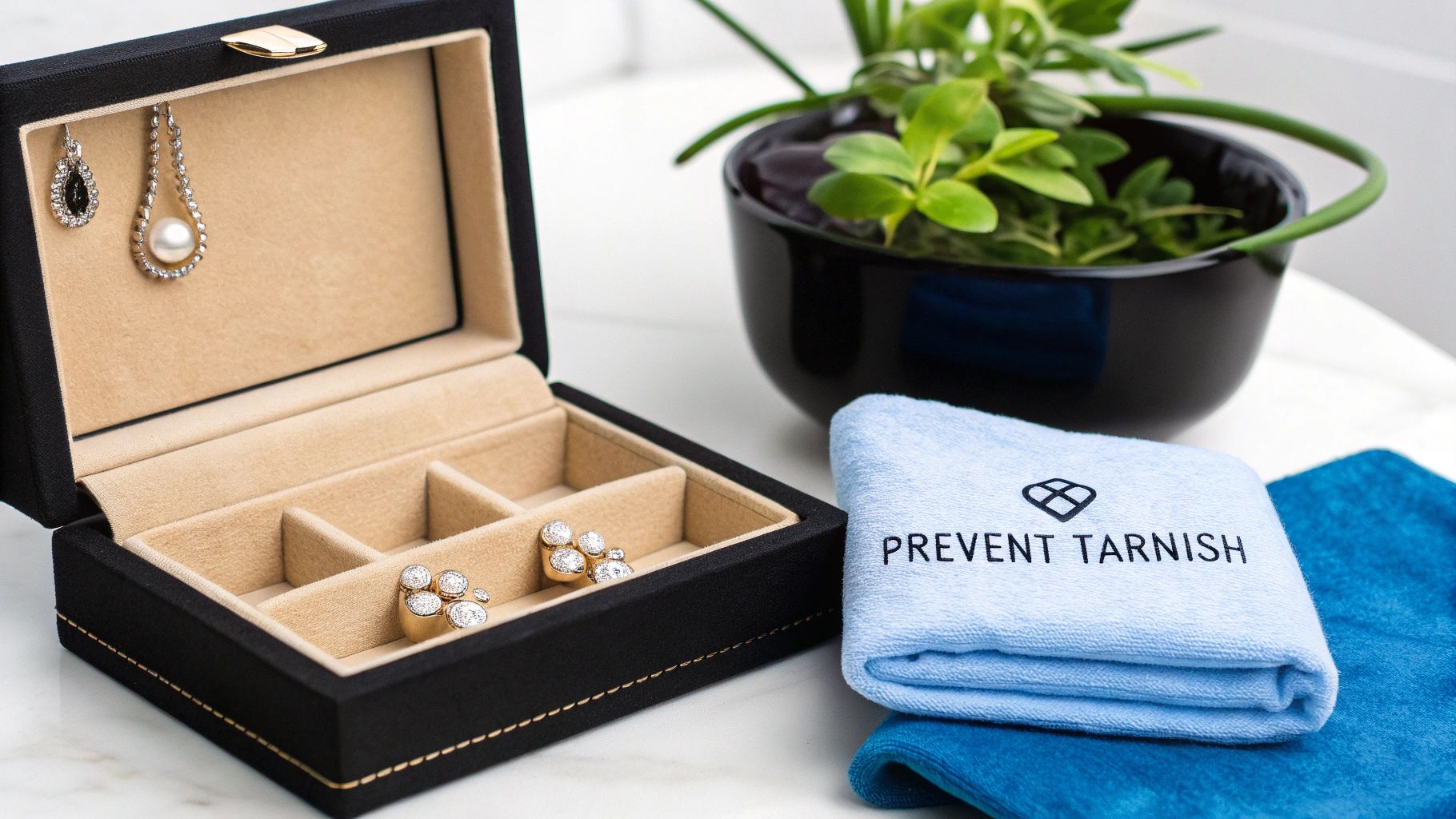
Knowing what causes your jewelry to tarnish is half the battle. The other half is all about building simple habits that protect your treasured pieces from those very culprits. Keeping discoloration off your Southwestern accessories doesn't take a lot of effort, just a little consistency. A few small tweaks to your daily routine can keep your sterling silver and copper glowing for years.
The most powerful strategy is a simple one to remember: “last on, first off.” This just means your jewelry should be the absolute last thing you put on after your clothes, makeup, perfume, and lotion have all settled in. On the flip side, it should be the first thing you take off before changing or starting your evening skincare routine.
This simple rule creates a protective barrier, minimizing direct contact with the harsh chemicals in cosmetics and hair products that speed up that dreaded tarnishing process.
Master Your Storage and Daily Habits
Proper storage is your number one defense against the air itself. Since oxygen and humidity are the key ingredients for tarnish, limiting your jewelry’s exposure to them is a game-changer. Storing your pieces in an airtight container or a lined jewelry box is one of the most effective moves you can make.
For an extra layer of protection, think about tossing in some anti-tarnish strips or a few small silica gel packets. They work quietly in your jewelry box to absorb excess moisture and those pesky sulfur compounds from the air.
Beyond storage, a few key daily habits will make a huge impact:
- Keep It Dry: Always, always take off your rings, bracelets, and necklaces before showering, swimming, or doing the dishes. Chlorine from pools and chemicals from soaps are incredibly harsh on sterling silver.
- Wipe It Down: After each wear, take a moment to gently wipe your jewelry with a soft, dry, lint-free cloth. This simple act removes skin oils, sweat, and other residues that can build up and lead to tarnish.
- Avoid the Gym: An intense workout means more sweat, which is basically a super-accelerator for tarnish. It’s best to leave your beautiful turquoise pieces safely at home while you exercise.
Taking these proactive steps does more than just maintain shine. It preserves the intricate details and craftsmanship of your Southwestern-inspired jewelry. Consistent care is truly the secret to lifelong brilliance.
Creating a Long-Term Care Routine
A proactive care routine ensures you’re always one step ahead of discoloration. For a deeper dive into maintaining your favorite pieces, our guide on how to care for sterling silver offers more detailed techniques and tips.
Beyond just preventing a dull finish, keeping your jewelry pristine ensures it always looks its best. This is especially true for anyone interested in optimizing jewelry appearance for photography. By adopting these simple habits, you’re not just cleaning your jewelry—you’re actively preserving its story and value for the future.
Your Tarnish Questions, Answered
To wrap things up, let's dive into a few of the most common questions we get from our community about why jewelry tarnishes. Think of this as your go-to guide for keeping your Southwestern treasures looking incredible.
Does Tarnish Mean My Sterling Silver Is Fake?
Not at all! In fact, it's quite the opposite. Seeing that gentle, dark patina develop over time is one of the surest signs that your piece is genuine sterling silver.
Pure silver is far too soft for jewelry, so it's blended with other metals—usually copper—to give it strength and durability. It’s that very copper that reacts with sulfur in the air, creating what we see as tarnish. So, when your favorite cuff starts to show a little character, take it as proof of its authentic 925 sterling silver heritage.
Tarnish isn't a defect; it’s a sign of authenticity. It tells you the metal is exactly what it claims to be—a high-quality alloy built to be worn and loved for a lifetime.
Why Does Some Jewelry Tarnish Faster Than Others?
This is a great question, and the answer almost always boils down to three things: your body chemistry, your environment, and your daily habits. Some of us just have more acidic perspiration, which can speed up that chemical reaction.
Where you live also plays a huge part. A humid, salty estuarian town or a city with more air pollution will cause tarnish to appear much faster than a dry, high-desert climate. And, of course, a ring you wear every day while working on the ranch is going to tarnish quicker than a necklace saved for special occasions, simply because it gets more exposure to air, moisture, and lotions.
Is It Safe to Clean Tarnished Jewelry with Turquoise?
You absolutely need to be careful here. Turquoise is a porous stone, which means it acts like a tiny sponge. It will soak up any liquids or harsh chemicals from cleaners, which can cause permanent discoloration or damage. Never, ever submerge your turquoise jewelry in any kind of cleaning dip or solution.
Instead, here’s the safe way to do it:
- Grab a professional-grade silver polishing cloth and gently work on the silver areas only.
- Be very careful to avoid rubbing the cloth against the turquoise itself.
- For the stone, all you need is a quick wipe with a soft, dry cloth to keep it looking beautiful.
This gentle touch keeps both the metal and the gemstone in perfect condition.
Can I Stop Tarnish Completely?
While you can't entirely stop a natural chemical process, you can slow it down dramatically with a little bit of care. The single most effective thing you can do is focus on proper storage.
Keeping your pieces in an airtight container, a sealed bag, or a quality lined jewelry box is your best defense. It cuts off the supply of air and humidity that the tarnish reaction needs to get started.
Ready to embrace the timeless beauty of Southwestern style? Explore the handcrafted sterling silver and turquoise collections at Silver Elegant and find your next cherished piece today at https://silverelegant.com.