
So, you’ve noticed that tell-tale green stain left behind by your favorite silver cuff or turquoise ring. Don’t panic—it's not a sign of cheap jewelry or some strange skin allergy. It’s just a bit of simple, harmless chemistry at play, especially common with the beautiful metals used in Southwestern and estuarian cowgirl styles, like sterling silver and copper.
This phenomenon is incredibly common when you're living that free-spirited lifestyle, where your jewelry is as much a part of you as your favorite boots.
Why Your Favorite Jewelry Leaves a Green Mark
When a metal like copper comes into contact with your skin, it reacts with your body's natural chemistry—things like sweat, oils, and even the salty air if you're near the coast. This reaction is kicked into high gear by lotions, perfumes, or even just a humid day at an outdoor festival.
The result of this oxidation process is a thin layer of copper salts (like copper carbonate), which then transfers onto your skin, leaving that signature green tint. The good news? It's completely harmless and washes right off with a bit of soap and water.
The Science Behind the Stain
At its heart, the green stain mystery is all about metal alloys. Pure silver is just too soft to be crafted into durable, wearable art, so it's mixed with other metals to give it the strength needed for a bold turquoise ring or a sturdy concho belt buckle.
Sterling silver, the standard for quality, is an alloy made of 92.5% silver and 7.5% other metals—and that other metal is usually copper. It's this small, essential amount of copper that typically causes the green reaction.
Likewise, other popular metals in Southwestern and estuarian cowgirl designs, like brass and bronze, have a high copper content by nature. While copper gives jewelry a gorgeous warm hue and makes it easy for artisans to shape, it’s also the primary culprit behind the green skin. You can even learn about the many traditional beliefs regarding the health benefits of copper jewelry, which has been valued for centuries.
This reaction doesn't mean your jewelry is low-quality; it simply means the piece contains copper, a standard and vital component in many of the timeless designs we love.
Is It Common to React This Way?
If you've noticed this green hue, you're definitely in good company. This is an incredibly common reaction and doesn’t point to a true metal allergy. It's part of the authentic experience of wearing handcrafted pieces.
Dermatologists and jewelers report that metal sensitivity and discoloration are far from rare. Estimates suggest that up to 15–20% of people have some form of contact sensitivity to metals like nickel and copper, with women being affected about twice as often as men.
Even the small 7.5% copper content in sterling silver can be enough to trigger these green marks. This is especially true if you’re working on the ranch or live in a warmer climate where you might sweat more often.
Here’s a quick look at common metals in estuarian cowgirl jewelry and how likely they are to cause that harmless green stain.
Metals in Southwestern Jewelry and Their Green Skin Risk
| Metal Type | Typical Copper Content | Green Skin Risk Level |
|---|---|---|
| Sterling Silver (925) | 7.5% | Low to Moderate |
| Copper | 100% | High |
| Brass | ~67% | High |
| Bronze | ~88% | High |
| Plated Metals | Varies (often over copper/brass base) | Moderate to High |
As you can see, the metals that give Southwestern jewelry its authentic, earthy feel are the same ones that can leave a little mark behind.
Understanding this simple science is the first step toward preventing it. It empowers you to wear your cherished pieces with total confidence, knowing that the green is just a sign of the beautiful, authentic materials you’re wearing.
Choosing Jewelry That Won't Betray Your Skin
The absolute best way to stop jewelry from turning your skin green is to get savvy before you even hit "add to cart." When you understand which metals are your friends and which are, well, not, you become a much more confident shopper. This way, you can be sure that the next Southwestern treasure you fall in love with is a perfect match for your skin.
When you're building a collection of what I like to call "estuarian cowgirl" jewelry—pieces that feel at home from the dusty trail to the salty shore—focusing on the right materials from the get-go saves you a world of trouble. It really all boils down to picking metals that create a stable, non-reactive barrier between the piece and your skin's unique chemistry.
Materials That Minimize Reactions
Some metals are just naturally less likely to leave behind that harmless, but annoying, green stain. Making these your top priority is the best defense, especially if you have sensitive skin or live somewhere with a lot of humidity.
Here are a few of my go-to, skin-friendly options to look for:
- Rhodium-Plated Silver: Rhodium comes from the platinum family, and a whisper-thin layer of it over sterling silver creates an incredible shield. It’s brilliant, tarnish-resistant, and hypoallergenic—a fantastic choice for those cherished pieces you’ll wear day in and day out.
- Surgical Steel: Just like its name suggests, this stuff is tough. It's known for its use in medical implants because it's super durable and corrosion-resistant. Crucially, it has very little nickel and no copper, making it a safe bet for most people with sensitivities.
- Platinum and Titanium: These are the premium players. As highly unreactive metals, they are virtually guaranteed not to cause any discoloration. You don't see them as often in traditional Southwestern designs, but they are a foolproof option.
On the flip side, you've got metals like brass and bronze. They have a high copper content by nature, which makes them prime suspects for the green-skin effect. They’re beautiful and totally authentic to the cowgirl aesthetic, but they require a bit more management if you’re prone to stains. For a deeper dive, checking out a guide on the best hypoallergenic jewelry materials can arm you with even more knowledge.
If you ever do notice a reaction, this flowchart is a simple, no-fuss guide for figuring out what to do next.
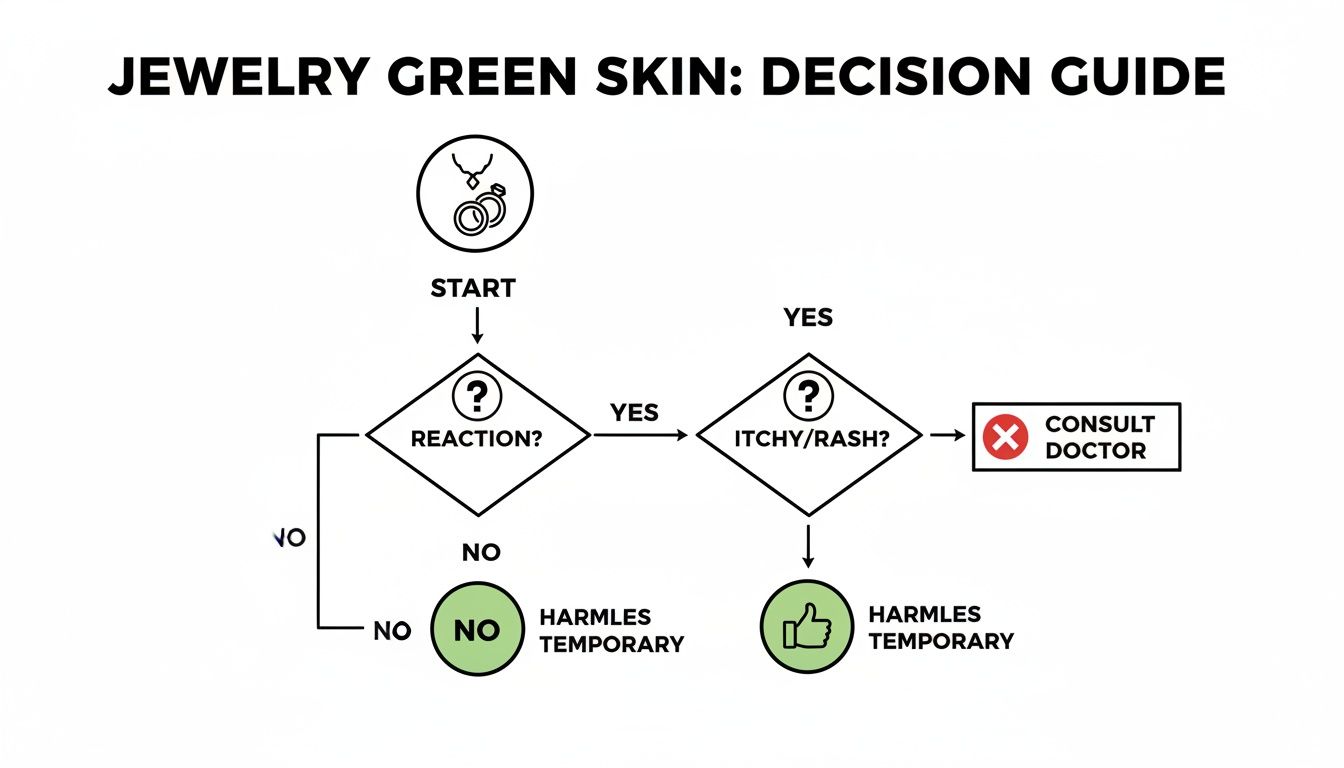
The main takeaway here is simple: a green stain is just a harmless chemical reaction, not an allergy, and it's easy to handle.
Shopping Smart for Southwestern Styles
When you're hunting online for that perfect concho belt or turquoise cuff, the product description is your best friend. Seriously, read it! You'll want to look for specific keywords that signal a piece is less likely to cause a problem.
As you browse boutiques like Silver Elegant, keep an eye out for clear descriptions. Phrases like "925 Sterling Silver," "Rhodium-Plated," or "Hypoallergenic" are all green flags. They tell you that quality materials were used, designed for both comfort and longevity.
These details are a good sign that the artisan or brand has actually thought about skin sensitivity. At the end of the day, spending an extra minute reading the fine print ensures the beautiful piece you bring home is one you can wear with total confidence and comfort. You get to focus on the style, not the stain.
Simple Habits to Protect Your Skin and Jewelry
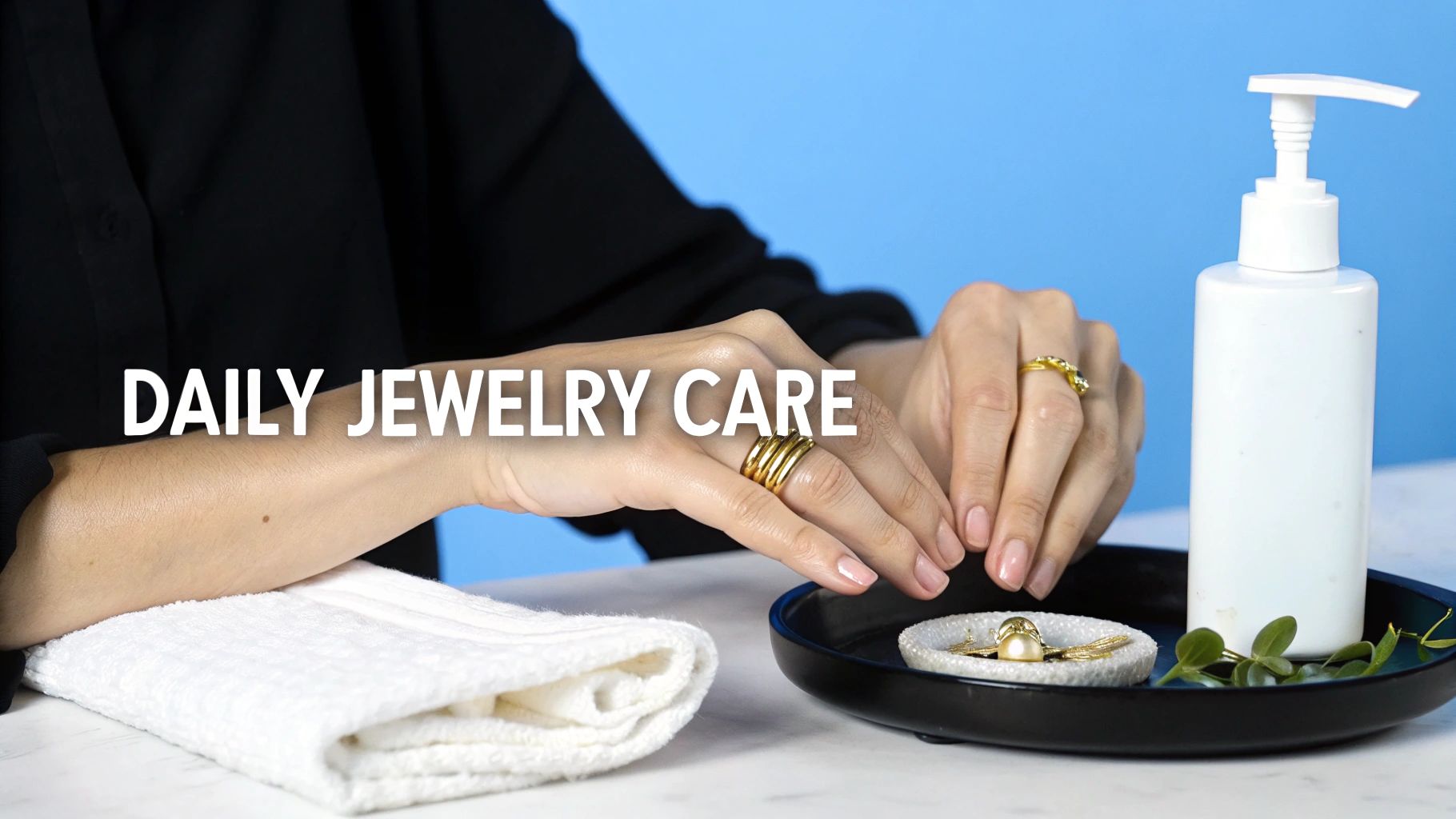
Sometimes the best way to stop that dreaded green stain is just to build a few small habits into your daily routine. It's so much easier to prevent the chemical reaction in the first place than to deal with the aftermath. The whole game is about minimizing how much your jewelry gets exposed to the things that kickstart oxidation—moisture, heat, and chemicals.
This is a big deal for anyone living that estuarian cowgirl lifestyle, where your favorite pieces are always out in the elements. Think about it: an outdoor concert, a day on the boat, or even just a sunny afternoon creates the perfect storm of sweat and humidity for copper to start reacting with your skin.
Manage Environmental Accelerants
Your everyday routine has a bigger impact on your jewelry than you might think. I always tell people to live by a simple rule: your beautiful Southwestern pieces should be the last thing you put on and the first thing you take off. It’s a tiny change that keeps your jewelry away from all the common culprits.
Moisture and chemicals are the biggest enemies here. Corrosion studies have actually shown that reaction rates can more than double when humidity jumps from just 40% to 80%. That’s why you’re way more likely to see a green ring mark after a long ride or on a humid coastal day. Skincare is another sneaky accelerator—the acids and other ingredients in lotions, perfumes, and sunscreens can tarnish copper alloys in a heartbeat.
To get ahead of it, just try these simple practices:
- Lotion and Perfume First: Make sure you apply any lotions, perfumes, or sunscreens before putting on your jewelry. Let everything dry completely first.
- Keep it Dry: Always take off rings and bracelets before washing your hands, showering, or doing the dishes. Water is oxidation's best friend.
- Workout Wear: Jewelry and exercise don't mix. Sweat is salty and acidic, creating the perfect environment for that green reaction to happen.
The "last on, first off" rule is your best defense. By making this a habit, you create a protective barrier of time and space between your jewelry and potential chemical reactors, keeping both your skin and your sterling silver looking pristine.
Create a Post-Wear Ritual
What you do after taking off your jewelry for the day is just as important as how you wear it. A quick, simple wipe-down can make a huge difference in extending the life of your favorite turquoise pieces and keeping your skin clear.
This doesn't have to be some complicated chore. You just want to remove any sweat, oils, or residue that built up during the day before you store your pieces. Honestly, a consistent routine is one of the most essential jewelry care habits that keep pieces shining.
Just give everything a gentle wipe with a soft, lint-free cloth—a microfiber cloth or a dedicated jewelry polishing cloth works perfectly. A quick polish of your rings, bracelets, and necklaces removes all the surface gunk before you put them away for the night. This two-minute habit prevents the kind of buildup that causes both tarnishing and skin reactions down the road.
When it comes to storage, find a cool, dry place away from direct sunlight. Tucking your pieces into a soft pouch or a lined jewelry box not only prevents scratches but also minimizes their exposure to humid air, giving you another layer of protection against oxidation. By making these small habits part of your day, you'll ensure your Southwestern treasures stay beautiful and reaction-free for years to come.
Quick Fixes for Your Favorite Problem Pieces
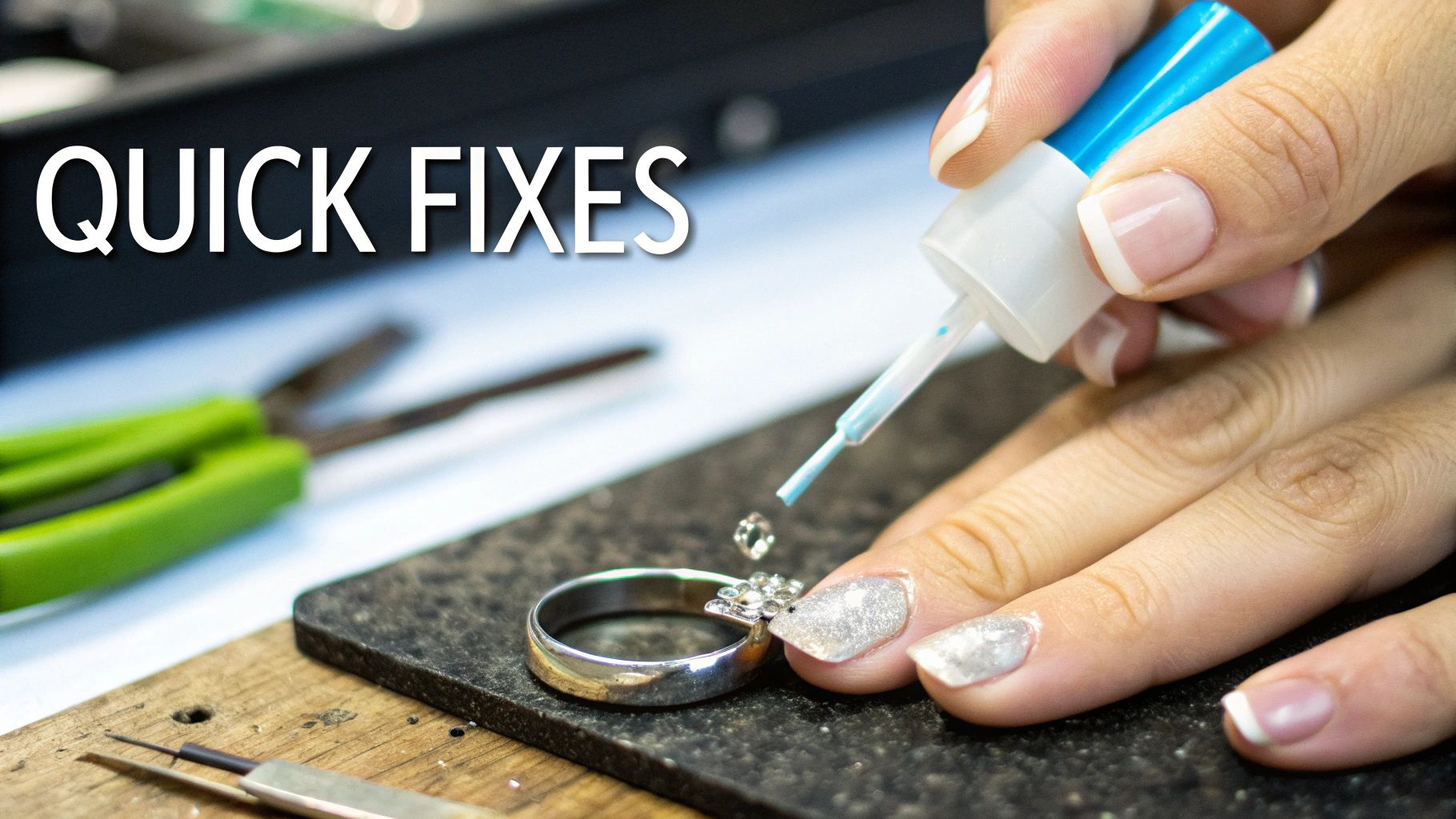
We’ve all got one. That favorite sterling silver cuff or a stunning copper ring that, without fail, leaves a green smudge behind. But don’t let a little chemistry banish your best pieces to the bottom of the jewelry box.
There are a few hands-on tricks that will let you wear what you love, worry-free.
The DIY Clear Polish Shield
This is the classic home remedy for a reason—it just works. A thin, even coat of clear nail polish on the part of the jewelry that touches you creates an invisible barrier. It’s that simple shield that stops the copper in the metal from reacting with your skin’s natural oils and sweat.
For your Southwestern pieces, just focus on the areas with the most skin contact:
- Rings: Paint a light layer on the entire inner band.
- Cuffs: Apply a coat along the inside surface that rests against your wrist.
- Pendants: Even a small dab on the back of a statement necklace can make all the difference.
Just make sure the piece is clean and totally dry before you start. Let the polish cure for at least an hour before you put it on. Keep in mind, this isn't a permanent solution. If you wear the piece daily, you’ll probably need to reapply a fresh coat every week or so.
A More Permanent Professional Solution
If you’re looking for a longer-lasting answer, especially for a treasured sterling silver heirloom, professional plating is an excellent route to take. This is a process where a jeweler applies a micro-thin layer of a non-reactive metal right over your original piece.
A major practical way to stop jewelry from turning skin green is to create a barrier between the metal and the skin. Jewelry insurers and retailers commonly recommend applying a thin coat of clear nail polish or a jewelry shield polymer to the inner surface of rings or bracelets. For longer‑term protection, professional rhodium plating has become a standard solution, acting as a durable barrier against both tarnish and skin discoloration.
Rhodium plating is a fantastic choice for sterling silver. It's bright, hard, and hypoallergenic, so it not only stops the greening but also means you'll spend less time figuring out how to remove tarnish from silver jewelry.
This little upgrade gives your favorite jewelry extra shine and durability, making it a great investment for those special items you plan to wear for years to come.
Your Go-To Southwestern Jewelry Care Plan
Navigating the beautiful world of Southwestern and estuarian cowgirl jewelry shouldn't come with any worries. Keeping your skin happy and your favorite pieces gleaming is all about having a simple routine you can stick to.
This guide pulls together the most effective strategies into an easy-to-follow plan. Think of it as your go-to checklist for how to stop jewelry from turning skin green, designed specifically for the unique metals and styles that make cowgirl adornments so special.
Smart Shopping Habits
Honestly, the best defense against the green finger is a good offense—and that starts before you even click "add to cart." Being a savvy buyer is your first and most powerful move.
Whether you're browsing online boutiques like Silver Elegant or exploring a local festival market, keep these pointers in mind:
- Read the Descriptions: Get used to scanning for keywords like "925 Sterling Silver," "Rhodium-Plated," or "Hypoallergenic." These aren't just buzzwords; they signal higher-quality materials that are far less likely to react with your skin.
- Know Your Metals: Don't get me wrong, metals like copper, brass, and bronze are authentic and beautiful, but they are the primary culprits for that green stain. Even sterling silver, a fantastic choice, has 7.5% copper in its alloy, which can still be enough to cause a reaction for some people.
- Look for Built-In Barriers: If you’ve fallen hard for a piece with a copper or brass base, see if you can find one that’s been plated with a non-reactive metal. Rhodium plating is a common and effective shield that keeps the reactive metal from touching your skin.
Daily Wear and Care Rituals
The way you handle your jewelry every day makes a huge difference. You don't need a complicated system—just a few consistent habits that will protect both your skin and the integrity of your pieces for years to come.
If you remember only one thing, make it this: your jewelry should be the last thing you put on before you head out the door and the first thing you take off when you get home.
This one habit alone drastically cuts down on your jewelry's exposure to lotions, perfumes, hairspray, and all the other chemicals that speed up oxidation. Letting your products dry completely before putting on your pieces creates an essential buffer zone.
After a day of wear, just give each piece a quick wipe with a soft, lint-free cloth. It takes less than two minutes, but it removes the sweat, oils, and daily grime that build up and lead to those green marks.
Finally, store your treasures in a cool, dry spot—a lined jewelry box or a soft pouch works perfectly. The goal is to minimize their contact with humid air, which is a big driver of tarnish.
Long-Term Protection and Quick Fixes
For those beloved pieces that are just a little bit problematic, a few targeted solutions can make all the difference. These methods offer a more direct approach to stopping that green reaction right in its tracks.
Sometimes, a quick-reference plan is the easiest way to figure out the best move.
Quick Prevention and Care Action Plan
Here's a simple checklist summarizing the most effective ways to prevent green skin and keep your jewelry looking its best.
| Action | When to Do It | Best For |
|---|---|---|
| Apply Clear Nail Polish | As a temporary, quick fix. Reapply every 1-2 weeks for daily wear. | The inside of rings, cuffs, and the back of pendants made from copper or brass. |
| Get Professional Plating | For a long-term, durable solution. | Cherished or heirloom sterling silver pieces you wear frequently. |
| Keep Jewelry Dry | Daily. Remove before showering, swimming, or exercising. | All jewelry types, especially sterling silver and copper-based alloys. |
| Post-Wear Cleaning | After every wear. | All pieces to remove oils and sweat that cause reactions and tarnish. |
By combining smart shopping, mindful daily habits, and a few clever fixes, you can build an incredible collection of Southwestern jewelry and wear it with complete confidence. No more green stains, just stunning style.
Frequently Asked Questions
Even with the best care, you might still have a few questions about why your favorite Southwestern jewelry is leaving its mark. Let's tackle some of the most common concerns so you can wear your pieces with total confidence.
Does Green Skin From Jewelry Mean I Have An Allergy?
Not usually. That green tint on your skin is almost always a completely harmless chemical reaction from copper oxidizing. Think of it as a cosmetic inconvenience, not a medical issue—it washes right off.
A true metal allergy, which is most often triggered by nickel, looks and feels quite different. You’d be dealing with redness, itching, a rash, or maybe even blisters. If you’re experiencing irritation that goes beyond just the green color, you might have a sensitivity to one of the metals in the alloy. You can learn more about how to test for nickel in jewelry if you think a real allergy is at play.
Will My Expensive Sterling Silver Jewelry Still Turn My Skin Green?
It absolutely can, and it has nothing to do with the jewelry's quality. In fact, it’s a sign of authenticity. High-quality 925 sterling silver is an alloy, which means it’s made of 92.5% pure silver mixed with 7.5% other metals—usually copper—to make it strong and durable.
For some people, that small amount of copper is enough to react with their skin’s unique chemistry, especially in humid weather or when they sweat. This is completely normal for genuine sterling silver.
The green stain from high-quality sterling silver isn't a flaw; it's evidence of its authentic composition. It’s a sign that you have a real piece containing the copper necessary for its structure.
How Often Should I Reapply Clear Nail Polish To My Rings?
This really comes down to how often you wear the piece. If it's a ring you wear every single day, you'll probably need to touch it up with a new, thin coat every one to two weeks.
On the other hand, for a big statement cuff you only bring out for special occasions, a single application could easily last for months. A good rule of thumb is to reapply it as soon as you notice even the faintest green mark returning. Just be sure to clean and dry the piece thoroughly before adding a new coat.
Is The Green Stain From Jewelry Harmful?
Nope, not at all. The green stain is completely harmless. It’s just a salt compound that forms when the copper in your jewelry meets the natural acids and sweat on your skin.
This compound just sits on the surface of your skin and isn't absorbed into your body. It washes away easily with a bit of soap and water, leaving no lasting effects. Think of it as a temporary cosmetic annoyance, not a health concern.
Ready to build your collection of beautiful, high-quality Southwestern jewelry? At Silver Elegant, we specialize in stunning sterling silver and turquoise pieces designed for comfort and timeless style. Shop our collections now!