

For centuries, Southwestern and estuarian cowgirl styles have celebrated the warm, earthy glow of copper. But its appeal often goes far deeper than just looks.
The real fascination for many ties back to long-held beliefs in copper jewelry health benefits, especially claims of soothing joint pain and improving circulation. While modern science is still sorting out these connections, the tradition of wearing copper for wellness is a huge part of this timeless jewelry's story.
The Allure of Southwestern Copper Jewelry
Southwestern jewelry is more than just an accessory; it’s a story told through metal and stone, and copper often plays a starring role. Its rustic, reddish hue perfectly evokes the sun-drenched landscapes of the American West, making it a natural partner for turquoise, silver, and leather. This connection to the earth gives each handcrafted piece a feeling of authenticity that just resonates with the cowgirl spirit.
Many wearers are drawn to copper not just for its beauty but for the wellness properties they believe have been passed down through generations. This blend of style and holistic belief is really what gives it such enduring charm. The idea that a simple cuff or ring could offer comfort adds a meaningful layer to its look.
An Ancient Tradition of Wellness
Using copper for health isn’t some new-age trend. In fact, civilizations like the Egyptians, Greeks, and Romans valued it for its supposed anti-inflammatory and antimicrobial properties thousands of years ago. They believed that wearing copper could help with aches and pains and even ward off sickness.
This deep-rooted history is especially important in Southwestern styles, which often pull from indigenous traditions. You can learn more about this in our article on the history of Native American jewelry. For many, the belief in copper's power is woven right into the artistry of these pieces.
For many artisans and wearers, copper is not merely a material but an element with protective qualities. It connects the wearer to the earth and to a legacy of natural healing that has been cherished for millennia.
The infographic below breaks down the most common benefits people associate with wearing copper.
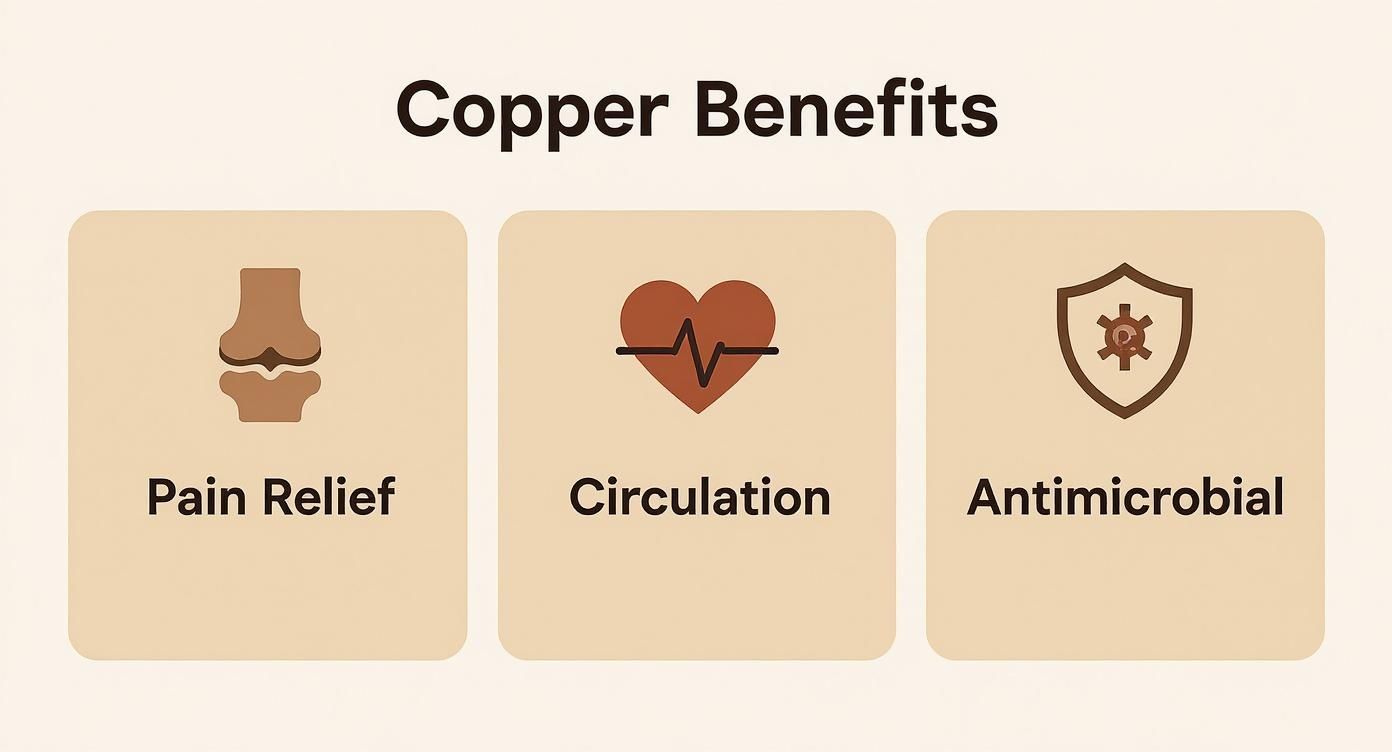
This visual really captures the three main pillars of copper's wellness reputation: pain relief, better circulation, and antimicrobial effects. These are the beliefs that continue to attract people to this beautiful metal. Whether you're drawn to its rugged look or its healing lore, the appeal of copper is undeniable.
Tracing Copper's Healing Legacy Through History

The idea that copper jewelry has healing properties isn't some new-age trend. It's a story that has been told for thousands of years, weaving through different cultures and across entire continents. To really understand the appeal of the copper cuffs and rings that define Southwestern and cowgirl style, you have to follow that ancient trail.
This journey starts with some of history’s greatest civilizations, who saw copper as something much more than just a piece of metal. Long before we had scientific instruments to explain why, ancient societies recognized copper’s unique qualities through simple observation and passed-down tradition. They valued it not just for making tools or beautiful art, but for what they believed was a deep connection to health and purity.
From Ancient Empires to New World Artisans
History is filled with examples of copper's special status. The ancient Egyptians, known for their sophisticated medical knowledge, actually used copper to sterilize drinking water and treat wounds. In fact, one of the oldest medical texts ever discovered, the Smith Papyrus, mentions copper as a tool for managing infections as far back as 2200 B.C.E.
The Romans and Greeks carried this legacy forward, weaving copper into their own health practices. They noticed it resisted grime and algae, which led them to use it for everything from plumbing to medical tools. To them, copper was a practical guardian of cleanliness and well-being.
The core belief was simple yet powerful: copper was an element that purified, protected, and healed. This idea was passed down not through textbooks, but through oral traditions, apprenticeships, and cultural rituals that spanned generations.
This ancient wisdom didn't just vanish when empires fell. Instead, it journeyed along trade routes, adapted by new cultures, and eventually found a profound new home in the Americas.
Copper in Southwestern Cultural Traditions
When these copper traditions arrived in the American Southwest, they blended seamlessly with the spiritual beliefs of Native American tribes. For many indigenous cultures, copper was a sacred metal—a gift from the earth that held a special kind of power. They saw it as a conductor not just of heat, but of energy and spiritual force.
This view transformed the metal into a powerful symbol. Artisans began working copper into their jewelry, drawn to its warm, earthy tones that echoed the desert landscape and its perceived protective qualities. A copper bracelet wasn't just an accessory; it was a personal talisman, believed to help balance the body's natural energies. To learn more about this incredible heritage, you can explore the deep symbolism in guides to Native American jewelry meanings.
The Cowgirl Connection and Enduring Legacy
As the estuarian cowgirl aesthetic took shape, it naturally pulled from the materials and stories of the land. Copper's rustic charm and rich history made it a perfect match for this independent, earth-connected style. The jewelry created a bridge, connecting ancient beliefs with a spirit of rugged individualism.
Today, when an artisan shapes a piece of Southwestern copper jewelry, they are often continuing this incredible legacy. They are crafting an item that carries the whispers of Egyptian healers, Roman engineers, and Native American spiritual leaders. This is why the belief in copper jewelry health benefits is still so compelling—it’s a story of our connection to a metal believed to offer protection, balance, and a tangible link to the healing power of the earth itself.
The Science Behind Copper and Arthritis Relief
Of all the health benefits people link to copper jewelry, nothing gets more attention than its power to soothe arthritis pain. For generations, folks have slipped on a simple copper cuff, hoping its rustic charm comes with a dose of relief for stiff, aching joints. This belief is a cornerstone of why so many are drawn to these pieces, viewing them as both beautiful and functional.
But what does the science have to say? When we move from personal stories and historical traditions to clinical evidence, the picture becomes much clearer—though maybe a little less magical. The core idea is that tiny amounts of copper from the bracelet absorb through the skin, letting its anti-inflammatory properties get to work directly on the joints. So, let's look at what controlled studies have actually found.
Examining the Clinical Evidence
To properly test a claim like this, researchers have to separate the metal's real physical effect from the power of belief, which is known as the placebo effect. This means setting up carefully designed studies where some people wear real copper bracelets and others wear fakes that look identical, without anyone knowing who has which.
One of the most significant trials in this area was a 2013 randomized study that dug deep into this connection. In this study, 70 patients with active rheumatoid arthritis were given either a standard copper bracelet, a magnetic bracelet, or a placebo bracelet with no copper or magnets. Over five weeks, they reported on their pain, joint tenderness, and physical function. The results were definitive: there was no statistically significant difference between the groups.
What this means is that the copper bracelets provided no more relief than the fake bracelets did. While that might be disappointing for believers, it gives us a clear, evidence-based answer to the long-standing question of whether copper itself is an effective treatment for arthritis pain.
Understanding the Placebo Effect
So, if the studies show copper doesn't work, why do so many people genuinely feel better when they wear it? The answer often lies in the powerful and very real phenomenon of the placebo effect. The placebo effect isn't about being fooled or just imagining relief; it's a documented process where a person's belief in a treatment can trigger genuine physiological changes, like the release of pain-relieving endorphins.
Believing that something will help can, in itself, be a powerful form of relief. The mind has a profound ability to influence the body's perception of pain. The simple act of wearing a special piece of jewelry, like a beautifully crafted flexible copper bracelet, can create a positive expectation that leads to feeling better.
This experience is completely valid. If wearing a copper bracelet makes you feel a reduction in your pain, that is a real and positive outcome for you. The science simply suggests that the benefit comes from your belief and the psychological comfort the bracelet provides, not from any anti-inflammatory action of the metal itself.
Making an Informed Choice
Ultimately, the decision to wear a copper bracelet is a personal one. The scientific consensus is clear: it is not a medical treatment for arthritis. However, that doesn't diminish the cultural significance or personal meaning these pieces hold, especially within aesthetics like Southwestern or estuarian cowgirl styles.
Many people choose to wear them for their earthy beauty, their connection to history, and the simple comfort they bring. The key is to appreciate copper jewelry for what it is—a stunning accessory with a rich story—without expecting it to replace proven medical treatments. By understanding both the science and the personal experience, you can make an informed choice that feels right for you, blending style with a clear-eyed view of the copper jewelry health benefits.
How Your Body Interacts with Copper Jewelry
One of the first things new copper jewelry owners ask is, "Why did it turn my skin green?" It's a fair question, and it usually comes with a hint of worry. But that harmless green stain is actually a fantastic sign—it means you've got a genuine piece of copper.
That green mark isn't an allergic reaction or a sign of poor quality. It's the beautiful, natural result of oxidation. When the copper in your Southwestern cuff meets the salts, oils, and moisture in your sweat, it creates a thin layer of copper carbonate. Think of it like the stunning green patina that develops on an old copper roof, just on a much smaller and more temporary scale.
This simple chemical reaction is the very heart of the conversation around the health benefits of copper jewelry. The logic is pretty straightforward: if the metal is reacting with your skin, then your body might be absorbing trace amounts of it. This idea suggests a direct path for copper to enter your system and potentially offer anti-inflammatory effects.
The Science of Skin Absorption
For any of this to be possible, copper has to actually get from the jewelry into your body. And it turns out, this isn't just a theory; it's a measurable process. Sweat, being slightly acidic, is the perfect medium to slowly dissolve microscopic particles of copper right off the surface of your bracelet or ring.
This process is so real that a piece of copper jewelry will literally lose weight over time if you wear it enough.
The transfer of metal isn't just a guess; it's been measured in scientific settings. It confirms that a physical interaction is truly happening, where tiny particles of copper are actively absorbed by the skin through sweat.
One study, for example, found the effect was pretty significant. Researchers discovered that a single copper bracelet lost about 90 mg of its mass over just 50 days of continuous wear. A pair of bracelets worn on the ankles lost a combined 80 mg in the same amount of time. You can explore the detailed findings of this study on copper absorption to see just how they measured this incredible transfer.
This confirms that wearing copper jewelry does, in fact, lead to the metal entering your system, which is why the debate about its health benefits is still very much alive.
From Absorption to Systemic Impact
Now for the big question: is the tiny amount of copper your body absorbs enough to make a real difference in your overall health? This is where the line between that green stain on your skin and proven medical benefits gets a little blurry.
Your body absolutely needs copper to function—it helps with everything from forming red blood cells to keeping your nerves healthy. The thing is, most of us get all the copper we need from our diets. Foods like nuts, seeds, and dark leafy greens are packed with it.
The amount of copper absorbed through a bracelet is incredibly small compared to what you get from a handful of almonds. So far, scientific evidence hasn't been able to show that this tiny, localized dose can create a systemic effect powerful enough to treat something like arthritis throughout your entire body.
So when you see that faint green hue on your wrist after wearing your favorite estuarian cowgirl cuff, you can smile. It’s not a flaw; it's a sign of authenticity—your body’s unique chemistry having a conversation with a pure, natural element.
How to Wear and Care for Your Copper Pieces
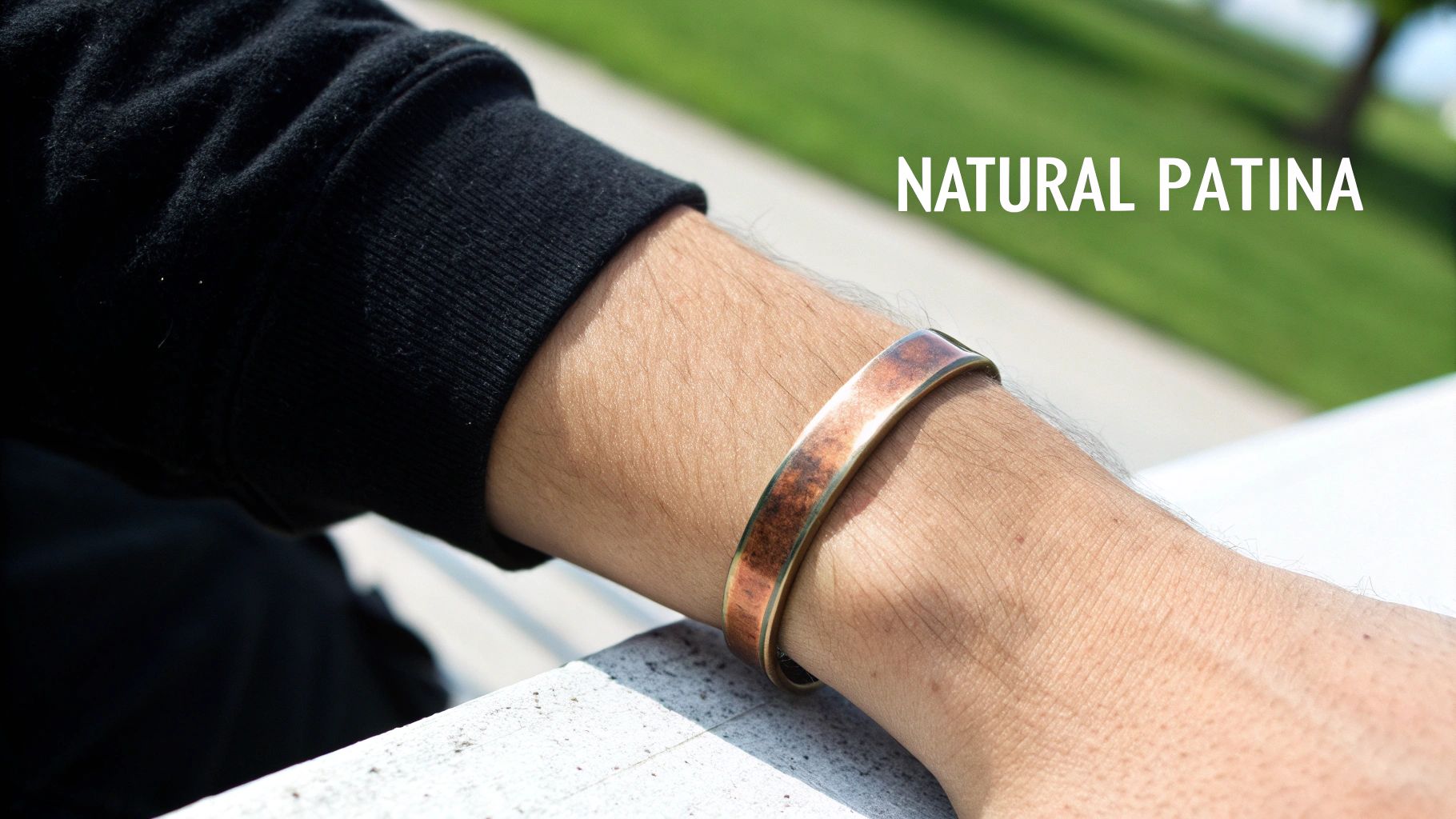
Loving your Southwestern copper jewelry means knowing how to wear it well and keep it looking fantastic. Good care isn't just about preserving that warm, rustic glow we all love; it's also about making sure your experience is a comfortable one.
The first thing new copper wearers often notice is the harmless green mark it can leave on the skin. It's really important to know this is just a natural reaction, not an allergy. While the green tint is simply oxidation, be aware that some copper alloys might contain nickel, which is a common irritant for people with sensitive skin.
Tips for Wearing Your Copper Jewelry
If you adore your copper pieces but could do without the green skin, a few simple tricks can make all the difference. These methods basically create a thin barrier between the metal and your skin’s natural oils.
- Keep Your Skin Dry: Always wait to put on your jewelry until after any lotions or perfumes have completely soaked in.
- Remove It Before Water Activities: It's best to take off your copper rings and bracelets before washing hands, showering, or going for a swim.
- Apply a Clear Sealant: A quick coat of clear nail polish on the inside of a ring or cuff creates an invisible shield that works wonders.
Remember, that green stain is only temporary and comes right off with a bit of soap and water. Think of it as proof that you've got an authentic piece of copper that's interacting with your own unique body chemistry.
The natural patina that develops on copper is part of its story. It reflects your personal journey with the piece, adding character and a unique, vintage appeal that is highly prized in Southwestern jewelry.
Keeping Your Copper Clean and Bright
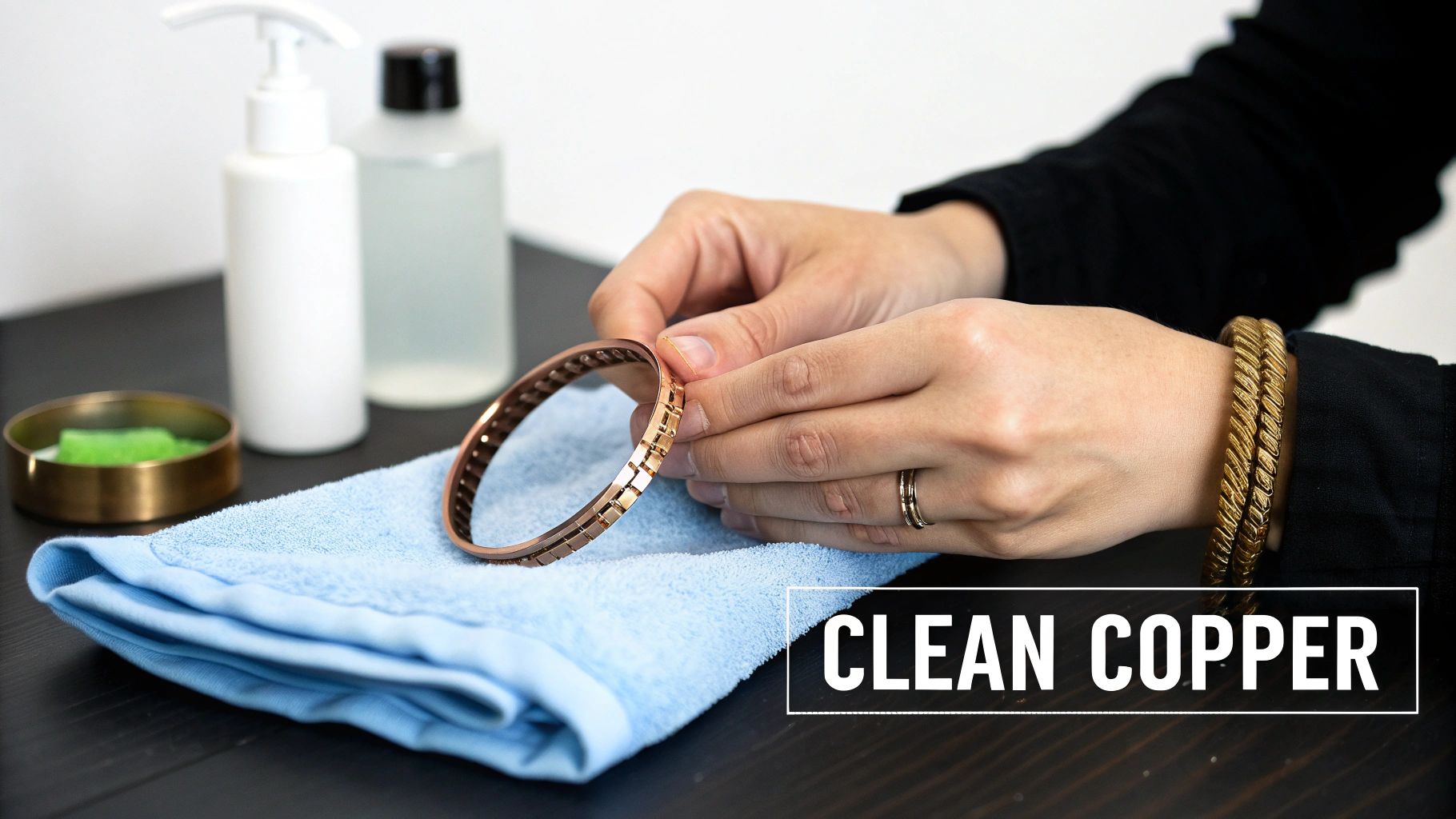
Over time, your copper jewelry will naturally darken as it develops a patina. While many people treasure this aged, lived-in look, you might prefer the bright, shiny gleam of newly polished copper. The good news is that bringing back that luster is incredibly easy and can be done with things you already have in your kitchen.
You can use this simple cleaning method anytime your piece starts to look a bit dull. If you'd like to explore more maintenance tricks, you can learn how to clean copper jewelry naturally in our detailed guide.
A Simple Cleaning Method:
- Create a Paste: Mix a little lemon juice (or white vinegar) with a teaspoon of salt until you have a paste.
- Gently Rub: Using a soft cloth or just your fingertips, apply the paste to your copper piece and gently rub it over the surface. You’ll see the tarnish disappear almost immediately.
- Rinse Thoroughly: Once it looks clean, rinse the piece completely under warm water to wash away any of the acidic mixture.
- Dry Completely: This final step is critical! Use a soft, clean cloth to dry your jewelry thoroughly. Any leftover moisture will just restart the oxidation process.
By following these straightforward tips, you can enjoy your beautiful Southwestern copper jewelry for years, keeping it looking just the way you like it.
Choosing Authentic Southwestern Copper Jewelry
When you're ready to find that perfect piece of Southwestern copper jewelry, knowing what to look for can turn a simple purchase into a treasure you'll have for years. Real authenticity is about more than just the metal itself—it’s about the story, the craftsmanship, and the soul poured into the piece.
Genuine Southwestern jewelry feels different. When you hold an artisan-made cuff or ring, you’re not just buying an accessory; you’re connecting with a long tradition of metalwork and cultural expression. That's something mass-produced items just can't offer.
Identifying Quality and Craftsmanship
The first thing to do when you pick up a piece is to really examine its construction. Handcrafted jewelry often has tiny, unique imperfections that give it character. A slight variation in a stamped design or the smooth, worn feel of a vintage piece aren't flaws—they're the signature of a human touch.
Flip the piece over and look for an artisan's signature or hallmark. It’s usually a small stamp on the inside that identifies the maker. This mark is one of the strongest signs of genuine craftsmanship. When you find a piece you love, a little research into the artisan can add a rich, personal story to your new jewelry.
Another dead giveaway is the weight. Solid copper has a satisfying heft to it, feeling substantial in your hand. In contrast, copper-plated items are surprisingly light and can feel a bit flimsy or hollow.
Pure Copper Versus Plating and Alloys
Getting familiar with the different types of copper will help you make a smart choice. The material directly affects the jewelry's look, its durability, and how it feels against your skin.
- Pure Copper: This is the real deal. It has that distinct warm, reddish-brown color and will develop a beautiful natural patina over time. It’s also completely non-magnetic.
- Copper Alloys: Metals like bronze (copper and tin) or brass (copper and zinc) are often used in jewelry. They offer different colors and are a bit harder, but they won't give you the same direct skin contact as pure copper.
- Copper Plating: This is just a thin layer of copper over a base metal like nickel or steel. It's a cheaper option, but the plating can eventually wear off, exposing the metal underneath and possibly causing skin irritation.
You can do a quick check right in the shop to tell pure copper from plated steel. Just grab a magnet—if it sticks, it’s not pure copper. This simple test is a great way to verify what you're buying.
Ultimately, choosing Southwestern copper jewelry is a personal journey. You might be drawn to the bright shine of a brand-new cuff or the deep, storied patina of a vintage ring. By focusing on true craftsmanship and quality materials, you can find a piece you'll absolutely treasure. To learn more about the style, check out our guide to authentic Southwestern earrings craftsmanship and care tips.
Answering Your Questions About Copper Jewelry
When you're drawn to the rustic charm of copper jewelry, a few questions naturally pop up. From its quirky habits to its storied history, let's clear up the most common curiosities so you can wear your Southwestern pieces with complete confidence.
We'll get into everything, from that harmless green mark to what the real science says about its health claims.
Why Does Copper Jewelry Turn My Skin Green?
That faint green tint on your skin is nothing to worry about—it's just a sign your copper is the real deal. This happens because of a completely natural chemical reaction called oxidation. When the copper in your bracelet or ring meets the unique blend of sweat, air, and oils on your skin, it reacts.
This creates a thin layer of copper carbonate, which is what you're seeing. Think of it as a mark of authenticity. It's totally harmless and washes right off with a bit of soap and water.
Will a Copper Bracelet Actually Help My Arthritis?
The tradition of wearing copper for achy joints goes back centuries, but modern science tells a different story. Major clinical studies have looked into this and consistently found no evidence that copper bracelets work better than a placebo for easing arthritis symptoms.
Now, this doesn't mean the relief some people feel isn't genuine. The placebo effect is a very real, powerful phenomenon. Believing a treatment will help can actually lead to feeling better. However, the medical community doesn't recommend copper jewelry as an actual treatment for arthritis.
The experience of feeling better is always valid. For many, the comfort comes from the act of wearing a meaningful piece, which is a benefit in itself, even if the metal isn't the direct cause of relief.
How Can I Tell If My Jewelry Is Real Copper?
Spotting authentic copper is pretty straightforward once you know what to look for. Polished copper has that signature warm, reddish-brown shine, just like a new penny. Beyond that, a couple of simple tests can confirm its purity.
- The Magnet Test: Pure copper is not magnetic. If you hold a magnet up to your jewelry and it sticks, it's likely just copper-plated over a different metal like steel.
- Look for Patina: Over time, genuine copper will naturally darken and develop an aged look. This beautiful tarnish is called a patina.
- Check for the Green Mark: As we mentioned, that harmless green stain is one of the most reliable signs that you're wearing authentic copper.
Is It Safe to Wear Copper Jewelry Every Day?
For almost everyone, wearing copper jewelry daily is perfectly safe. The green discoloration is not harmful and doesn't point to any health risks.
The only real exception would be for someone with a very rare allergy to copper, which would usually show up as an itchy, red rash. If you know you have sensitivities to other metals (especially nickel), it's always smart to look for pieces labeled "pure copper" to avoid alloys that might contain other irritants.
Ready to add a touch of authentic Southwestern charm to your collection? Explore the handcrafted copper and sterling silver designs at Silver Elegant and find a piece that tells your story. Visit us today at https://silverelegant.com.