

Knowing how to clean your copper jewelry naturally is surprisingly simple. A quick mix of common household items like lemon juice and salt or a paste of baking soda can bring back its original shine. These gentle methods are perfect for lifting away tarnish without stripping the warm, rustic appeal of your favorite Southwestern pieces.
This approach is especially important for the estuarian cowgirl aesthetic, which often features delicate stones that need a softer touch.
Bringing Your Southwestern Copper Back to Life
That beautiful copper cuff bracelet or statement ring you love tells a story, echoing the earthy tones of desert landscapes and the free spirit of the estuarian cowgirl. But over time, exposure to air and moisture causes copper to oxidize, creating a dull, darkened layer we call tarnish. It’s a completely natural process, but it can hide the intricate stamp work and warm glow that made you fall in love with the piece in the first place.
Harsh chemical cleaners are often just too aggressive for handcrafted Southwestern jewelry. They can strip away the intentional patinas that artists use to create depth and character. Even worse, they risk damaging porous gemstones like turquoise or dulling the sterling silver accents so common in these designs.
Why Natural Cleaning Matters
Choosing to clean your copper jewelry naturally is about more than just avoiding chemicals—it’s about preserving the integrity and soul of the piece. It’s the best way to care for your collection.
- It Protects Delicate Gemstones: Natural solutions are gentle enough to use around stones like turquoise, which can easily be discolored or damaged by abrasive chemicals.
- It Preserves Mixed Metals: Many Southwestern pieces feature sterling silver alongside copper. Gentle, targeted cleaning ensures you polish the copper without accidentally harming the silver.
- It Maintains Artistic Detail: You have complete control. You can polish the raised surfaces to a high shine while leaving the desirable dark patina in the recessed areas untouched, just as the artist intended.
The shift toward gentle, DIY solutions is something we see everywhere. In fact, approximately 67% of consumers now prefer natural cleaning options for their jewelry. It’s effective, too. Research shows that a simple lemon juice and baking soda paste can remove up to 85-90% of surface tarnish in just a few minutes. It’s a method recommended by a staggering 89% of jewelry restoration professionals.
"Your Southwestern copper jewelry isn't just an accessory; it's a piece of art. Cleaning it naturally honors the craftsmanship and ensures its story continues to shine for years to come."
Before you dive in and restore its luster, it helps to know the basics of handling these unique items. For tips on how to wear and adjust your pieces comfortably, check out our guide on copper cuff bracelet fit and sizing.
The Classic Lemon and Salt Polish Method
When tarnish starts to dull the warm, earthy glow of your favorite copper pieces, you don’t need to look any further than your own kitchen. The lemon and salt method is a time-tested trick, and it's perfect for tackling that everyday tarnish on most pure copper jewelry. This approach works especially well on simpler designs where you’re going for a bright, uniform shine.
The magic here is just some basic chemistry. That dull layer, known as tarnish or copper oxide, forms when copper reacts with oxygen and moisture in the air. The citric acid in lemon juice is a fantastic natural cleaner that dissolves this oxide layer. When you add in the gentle abrasive quality of salt, you get a powerful paste that scrubs away discoloration without being overly harsh.
Crafting the Perfect Cleaning Paste
Getting the consistency right is the key to making this work. You're aiming for a thick, slushy paste, not a watery liquid. If it’s too thin, it’ll run everywhere, potentially seeping into turquoise settings or onto silver accents where you really don't want it.
To whip up your polish, here’s what to do:
- Start with your base: Squeeze the juice from half a lemon into a small bowl. Fresh lemon is always best, as the bottled stuff can sometimes have other ingredients you don't want on your jewelry.
- Add your abrasive: Slowly sprinkle in table salt, stirring as you go. Add about a teaspoon at a time until you get a thick, gritty consistency that holds its shape.
- Check the texture: The paste should be thick enough to cling to a soft cloth or your fingertip without dripping. If it's too watery, add a bit more salt. Too dry? Just a little more lemon juice.
This natural recipe for cleaning copper jewelry is incredibly effective, but how you apply it is just as important—especially with intricate Southwestern designs.
To give you a better idea of when to go natural versus reaching for a chemical cleaner, this chart breaks it down.

The takeaway is pretty clear: if your piece has delicate gemstones, natural methods are always the safest bet to avoid damage.
Applying the Polish with Care
Once your paste is ready, grab a soft, lint-free cloth—a microfiber cloth or an old cotton t-shirt is perfect. Dip a corner into the paste and start applying it to the copper in small, gentle, circular motions. The salt does the scrubbing for you, so there's no need to apply a ton of pressure, which could create fine scratches on the metal's surface.
For pieces with detailed stamp work or textured surfaces, a soft-bristled toothbrush can help you work the paste into all those little crevices. Just be sure to use a very light touch to avoid wearing down the copper.
A great tip for a piece with both polished and antiqued sections is to use a cotton swab. This lets you apply the paste only to the areas you want to brighten, keeping that beautiful dark patina in the recessed areas and preserving the artist's original vision.
After you've worked the paste over the entire copper surface, you'll see the tarnish begin to lift almost immediately. Once you’re happy with the shine, rinse the jewelry thoroughly under cool, running water. This part is critically important. You have to wash away every last trace of salt and lemon juice, as any residue can actually cause the copper to tarnish again, but faster.
Finally, dry the piece completely with another soft, clean cloth. Moisture is the enemy of shine, so make sure every nook and cranny is bone dry before you put it away. This meticulous drying step is your best defense against tarnish making a quick comeback.
Precautions for Mixed-Metal and Gemstone Pieces
This method is fantastic for solid copper, but what about those beautiful pieces that combine copper with other materials? Many Southwestern designs, like a Genuine Copper Turquoise & Sterling Silver Link Bracelet, feature sterling silver accents and stunning turquoise inlays.
Here, a little caution goes a long way.
- Sterling Silver: While this acidic paste can clean silver, it’s not the best choice. The abrasive salt might scratch the softer metal. It’s better to apply the paste only to the copper sections, avoiding the silver as much as possible.
- Turquoise and Other Stones: You should never apply this mixture directly to porous gemstones like turquoise. The acid can discolor the stone or even weaken the epoxy holding it in place. Carefully work around the settings, using a cotton swab for precise application right up to the stone’s edge. If you accidentally get some paste on a stone, rinse it off immediately with clean water.
Tackling Tough Tarnish with Ketchup
For those really well-loved pieces—maybe that vintage copper cuff you scored at a flea market that's now almost black with age—your pantry holds a surprising secret weapon. While a lemon and salt scrub is great for a quick, light polish, ketchup brings some serious deep-cleaning power for the tougher jobs. It sounds a little strange, but it's an incredibly effective way to clean copper jewelry naturally.
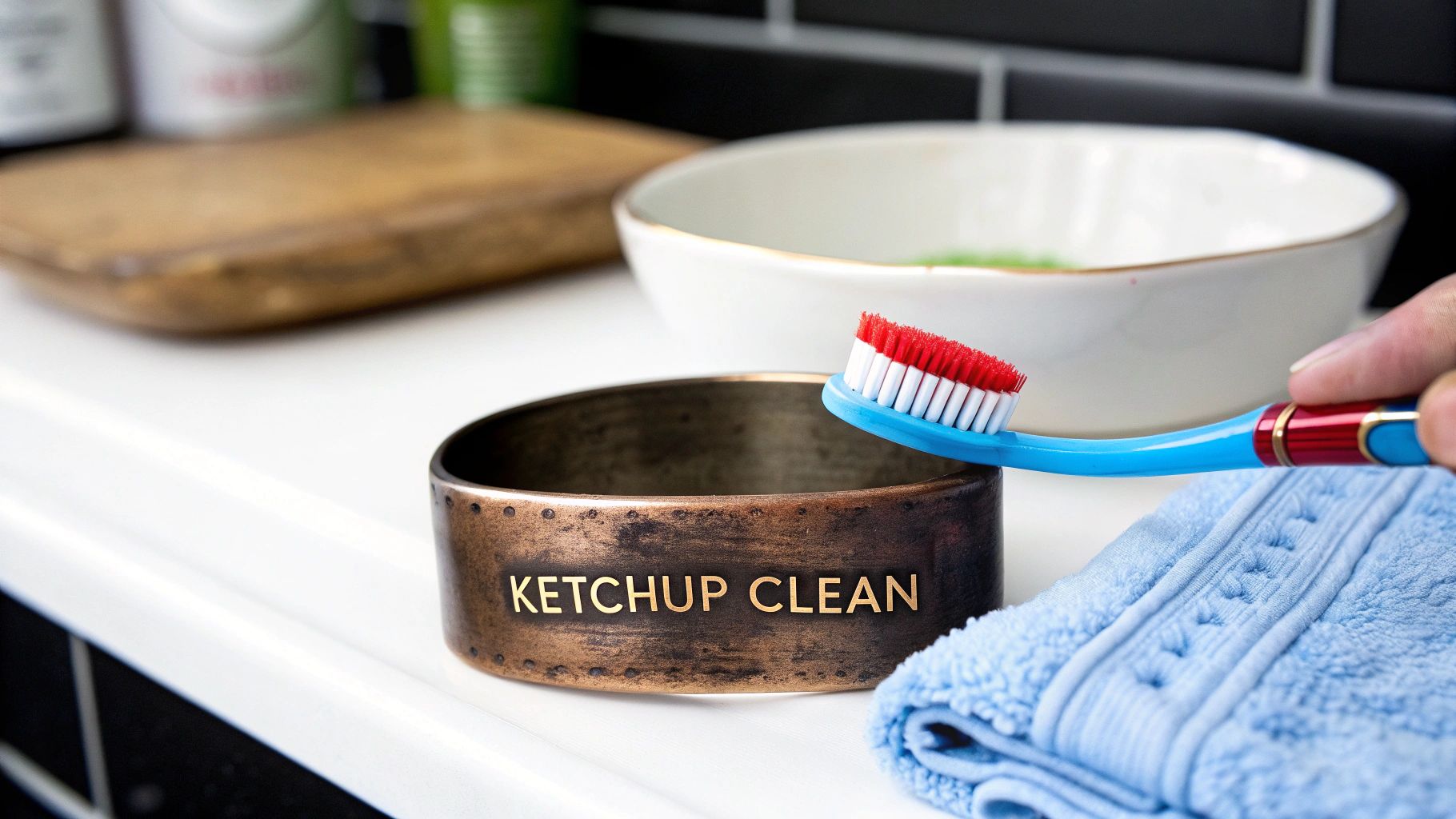
This kitchen staple works so well because it's more than just vinegar. Ketchup's unique blend of acids works in concert to dissolve that heavy copper oxide. This synergistic cleaning effect has made it a go-to alternative method among jewelry care buffs.
And it's not just an old wives' tale. Ketchup contains approximately 1.3-1.7% acetic acid from its vinegar, which gets a boost from the malic and citric acids in the tomatoes. This combo works around 40-50% faster than a straight vinegar solution. In fact, studies show ketchup can achieve a tarnish removal rate of 75-80% within just 15 minutes.
The Ketchup Deep-Cleaning Method
Let's imagine you've found a beautiful, wide copper cuff bracelet with intricate Southwestern stampings, but it's nearly black with tarnish. A simple polish just isn't going to cut it. This is the perfect time to reach for the ketchup.
First, give your jewelry a quick wash with mild soap and water to get rid of any surface dirt or oils, then dry it completely. Now, slather a thick, even layer of ketchup over the entire copper surface. Don't be shy here; you want the piece fully coated so the acids can get to work.
Let the ketchup sit for 10 to 20 minutes, depending on how severe the tarnish is. For those really stubborn, neglected pieces, you might even push it to 30 minutes. You’ll start to see the bright, rosy copper color peeking through the dark oxidation.
The Final Polish and Rinse
Once the ketchup has worked its magic, it’s time for a gentle scrub. A soft-bristled toothbrush is perfect for this, letting you get into all those little details and stamped grooves without scratching the metal.
Work in small, circular motions, and you'll see the tarnish lift away with ease. Make sure to give a little extra attention to recessed areas where grime tends to build up.
Pro Tip: If your piece has sterling silver accents, just be a bit more mindful. While this method is gentler than a salt scrub, it's best to focus your scrubbing on the copper areas. For more specific advice on silver care, check out our guide on how to remove tarnish from silver jewelry.
After scrubbing, these final steps are absolutely critical for a lasting shine.
- Rinse Thoroughly: Hold the jewelry under cool running water until every last trace of ketchup is gone. Any leftover sugary or acidic residue can get sticky and, ironically, cause the copper to tarnish even faster.
- Dry Completely: This step is non-negotiable. Use a soft, lint-free cloth to dry the piece meticulously. Moisture is tarnish's best friend, so make sure every nook and cranny is bone dry before you store it or put it on.
This simple technique is your secret weapon for reviving those deeply tarnished treasures. It brings back the warm, radiant glow of your Southwestern copper, making it look as vibrant as the day it was forged.
Protecting Turquoise and Silver During Cleaning
Southwestern jewelry rarely features just one material. Its soul comes from that beautiful interplay between warm, rustic copper, cool sterling silver, and vibrant pops of turquoise. While the acidic pastes we’ve talked about are fantastic for reviving copper, they can be risky business for these other, more delicate materials.
This is where precision becomes your most valuable tool.
Knowing how to clean copper jewelry naturally when it's woven together with other elements is a skill every estuarian cowgirl should master. The goal is simple: isolate the copper. Treat it without letting any of the cleaning solution touch the silver accents or porous gemstones. It requires a bit more patience, but the results are absolutely worth the effort.
A Masterclass in Precision Cleaning
The most common mistake I see is applying a cleaning paste too liberally. When it seeps into stone settings or spreads onto silver surfaces, you've got a problem. Sterling silver is a softer metal, and the abrasive salt in a lemon paste can easily leave fine scratches. More importantly, turquoise is highly porous and can be permanently discolored or dulled by acids.
Your best friends for this delicate operation are cotton swabs and a soft, fine-tipped artist's paintbrush. These tools give you the control you need to apply the cleaning solution exactly where you want it and nowhere else.
Here’s the technique I use for pieces with intricate details:
- Create Your Barrier: For pieces with large, prominent stones, you can create a simple protective shield. A small piece of painter's tape or even a dab of petroleum jelly carefully applied around the bezel setting of the stone will prevent any acidic cleaner from making contact.
- Apply with Precision: Dip just the tip of your cotton swab or paintbrush into your lemon-salt or ketchup paste. Gently "paint" the solution onto the copper surfaces only, working in small sections.
- Work Methodically: Take your time tracing the copper elements. Carefully maneuver around the edges of silver accents and turquoise inlays. This is the difference between a good cleaning and a great one.
Think of it like coloring within the lines. Your job is to brighten the copper without letting your "paint" bleed onto the other materials. This careful approach maintains the piece's integrity and value.
After letting the paste sit on the copper for a few minutes, use a clean, damp cotton swab to wipe it away. This targeted removal helps prevent residue from spreading during a full rinse. Once most of it is gone, you can give the entire piece a quick rinse under cool water and dry it immediately and thoroughly.
Emergency Care for Accidental Spills
Even with the most careful hand, accidents happen. If a drop of lemon juice or ketchup lands on a turquoise stone, the key is to act fast. Don't panic and don't scrub it.
Immediately hold the piece under cool, running water to flush the acid away. Let the water run over it for at least a full minute to ensure the stone is completely rinsed. Afterward, gently pat the entire piece dry with a soft cloth, paying special attention to the stone and its setting to prevent moisture from getting trapped.
Similarly, if you're working with mixed metals, it's wise to have separate polishing cloths. If you've been focused on the copper, it's easy to forget that silver has its own specific needs. For a deeper understanding, our complete guide on how to clean sterling silver jewelry at home provides specialized techniques that are much safer for silver's unique properties. This ensures every part of your Southwestern treasure gets the right kind of care.
How to Store and Maintain Your Copper Jewelry
Learning the tricks to clean copper jewelry naturally is a great start, but the real secret to lasting beauty is prevention, not just reaction. Once you’ve brought back that gorgeous, warm glow, the next step is making sure it stays that way. With the right storage and a few simple habits, you can keep tarnish at bay and ensure your Southwestern pieces are always ready to shine.
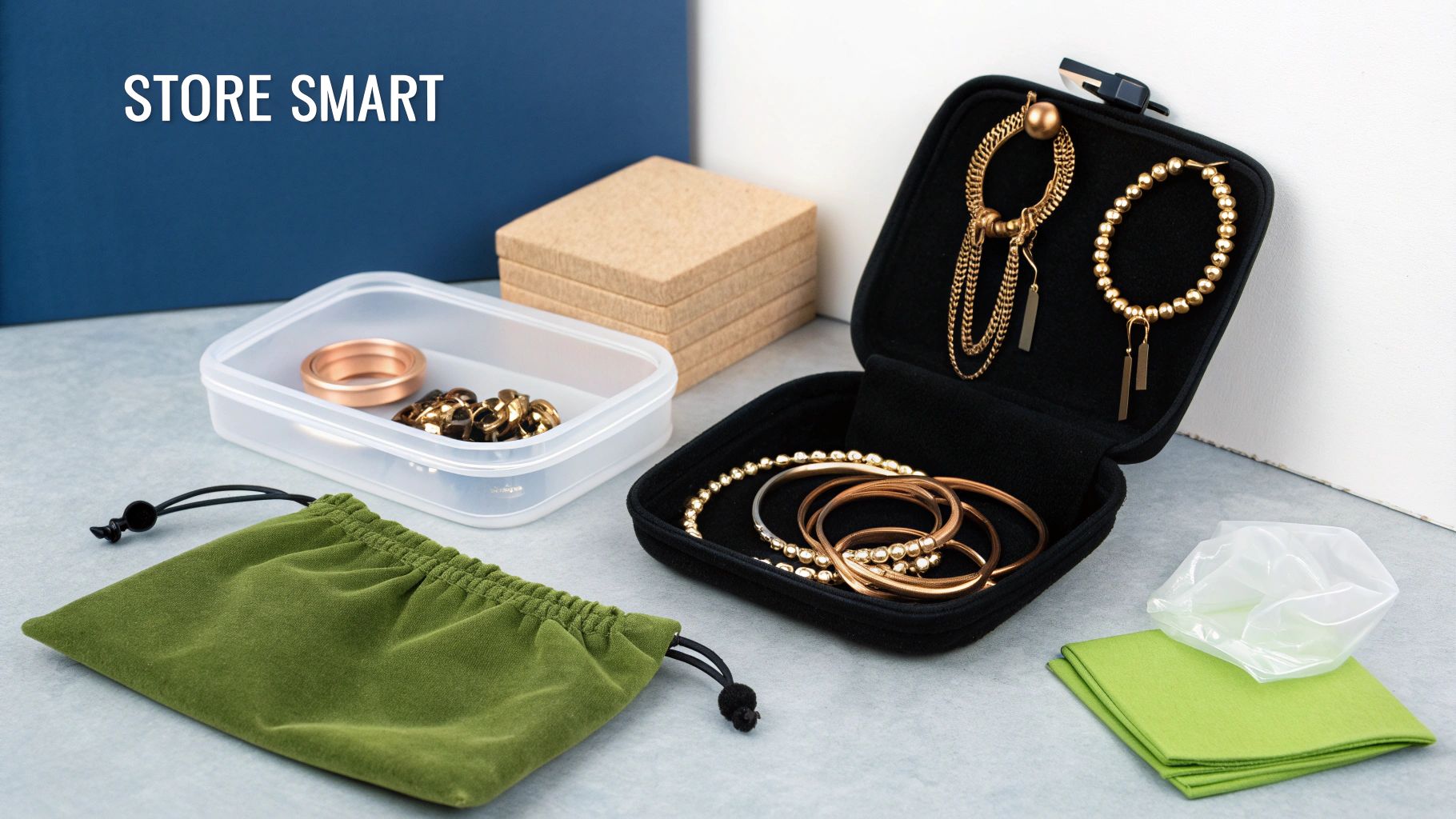
The two biggest culprits behind that dull, dark patina are humidity and air. When you limit your jewelry’s exposure to both, you dramatically slow down the oxidation process. This means it's time to stop leaving your favorite cuff on the nightstand and start being a little more intentional about where it lives when you're not wearing it.
Smart Storage Solutions for Copper
The perfect home for your copper is cool, dark, and dry. A steamy bathroom is pretty much the worst place you could store it—the high humidity will accelerate tarnish practically overnight. Instead, pick a spot in your bedroom or closet to create a safe haven for your collection.
Here are a few of the most effective methods I’ve come across:
- Individual Soft Pouches: Keeping each piece in its own soft fabric pouch is non-negotiable. It prevents scratches from other jewelry and cuts down on air exposure. Velvet or flannel bags work beautifully.
- Air-Tight Containers: A dedicated jewelry box with a lid that closes securely is a great first step. To really up your game, put your pouched items inside a sealed plastic bag or another air-tight container.
- Anti-Tarnish Strips: These little paper tabs are a game-changer. They actively absorb the airborne pollutants (like sulfur) that cause tarnish to form in the first place. Tucking one into your jewelry box or storage bag will make a huge difference in how long you can go between cleanings.
"Think of storage as putting your jewelry to bed. You want it to be in a comfortable, protected environment where it's safe from the elements that can cause it harm."
Taking these proactive steps does more than just save you time—it preserves the life of your jewelry. Consistent care is one of the most important essential jewelry care habits that keep pieces shining for years to come.
Creating a Simple Maintenance Routine
Beyond smart storage, a little daily attention goes a surprisingly long way. The natural oils from your skin, not to mention lotions and perfumes, can all react with copper and speed up oxidation. A quick wipe-down after each wear is an incredibly effective habit to get into.
Just take a soft, dry polishing cloth and gently buff the surface of your jewelry before you put it away for the night. This quick pass removes the day’s residue and restores a bit of shine, keeping your pieces looking their best between deeper cleanings.
So, how often do you need to do a full clean? It really depends on how often you wear a piece and the climate where you live. As a rule of thumb, industry pros suggest a thorough cleaning 3-4 times annually for your go-to items.
However, materials scientists have found that proper storage in an air-tight container with anti-tarnish strips can extend the time between cleanings by approximately 65-70%. That simple change can take you from quarterly cleanings to just once or twice a year. Over a lifetime, these habits can add 8-12 years to the lifespan of your copper jewelry compared to neglected pieces—a powerful testament to proactive care.
By combining these storage and maintenance tips, you can stop fighting a constant battle with tarnish and start enjoying the enduring warmth of your Southwestern copper jewelry.
Common Questions About Natural Copper Care
Even with the best at-home recipes, questions always pop up. It’s smart to be cautious, especially when you’re working with beloved pieces that blend copper with delicate stones or other metals. We’ve gathered some of the most common concerns to give you clear, confident answers for caring for your Southwestern treasures.
Can I Use These Methods on Copper Plated Jewelry?
This is a critical distinction, and the short answer is no—it’s best to avoid these acidic methods for anything copper-plated. Plated jewelry has only a razor-thin layer of copper over a different base metal, like brass or a zinc alloy.
The acids in things like lemon juice or ketchup are strong enough to eat right through that thin coating. When that happens, the copper can flake, peel, or simply wear away, exposing the less attractive metal underneath. Once that plating is gone, you can't get it back with a simple cleaning.
For plated items, you have to stick to the gentlest approach possible. A soft, damp cloth with a tiny drop of mild, non-citrus soap is your safest bet. Wipe it gently, rinse with another clean damp cloth, and dry it immediately and thoroughly. If you're ever unsure, always test your cleaning method on a small, hidden spot first.
Will These Cleaners Remove Intentional Dark Patinas?
Yes, they absolutely will, so you need to handle this with care. That beautiful dark background in the grooves of your stamped copper cuff isn't just tarnish; it's often an intentional patina, sometimes called an "antiqued" or "oxidized" finish. Artists use this technique to create depth and really make intricate designs pop.
The lemon, salt, and ketchup methods are designed to remove oxidation, and they can’t tell the difference between unwanted tarnish and artistic patina. If you slather the cleaner all over, you risk stripping away that beautiful contrast, leaving the piece looking flat and far less detailed.
This is where precision is key. To preserve the design's integrity, use a cotton swab or a fine-tipped paintbrush to apply the cleaning paste only to the raised, high-polish surfaces you want to shine. Carefully avoid the intentionally darkened recessed areas. It takes a little more time, but it protects the unique character of your Southwestern jewelry.
Why Does Copper Turn My Skin Green?
Seeing a green or bluish stain on your skin after wearing a copper ring or bracelet can be alarming, but it's a completely normal and harmless reaction. It is not an allergic reaction. This green tint is the result of a simple chemical reaction between the metal and the acids, oils, and sweat on your skin.
This reaction is more likely to happen in humid weather or if you tend to sweat more. While it's harmless, it can certainly be a nuisance. To minimize it, you can:
- Keep it clean: Regularly wiping down your jewelry removes the oils and residues that contribute to the reaction.
- Keep it dry: Always take your copper pieces off before you shower, swim, or wash your hands.
- Create a barrier: Applying a thin, clear coat of jeweler's lacquer or even clear nail polish to the inside of a ring or cuff can create a protective barrier between the copper and your skin. You'll need to reapply it periodically as it wears off.
Is It Possible to Over-Clean Copper Jewelry?
Absolutely. While copper is a durable metal, it's not immune to wear and tear. Over-cleaning is a real risk, especially when you're using abrasive materials like salt. Aggressive or frequent scrubbing can create a network of fine scratches on the surface over time, dulling its natural luster.
It’s best to clean your copper jewelry only when you notice visible tarnish, not as a weekly or monthly habit. For pieces you wear often, a deep clean 3-4 times a year should be plenty. For items you wear less frequently, once a year might be all it needs.
Between those deeper cleanings, a simple buff with a soft, dry polishing cloth is usually all that’s needed to remove fingerprints and bring back its shine. The goal is to care for your jewelry, not wear it out with excessive cleaning.
At Silver Elegant, we believe that caring for your jewelry should be as joyful as wearing it. We hope these tips help you keep your Southwestern treasures looking their best for years to come. Explore our full collection of handcrafted copper and sterling silver pieces to find your next story-filled accessory.
Discover your perfect piece at https://silverelegant.com.