

The easiest and most reliable way to check for nickel in your jewelry is with a dimethylglyoxime (DMG) spot test kit. These kits are designed to reveal any nickel presence by turning a cotton swab pink. For a much less precise but sometimes helpful quick check, you can try a magnet; since nickel is magnetic, it might give you a hint.
Why Your Favorite Turquoise Jewelry Needs a Nickel Check
That stunning turquoise cuff or rustic sterling silver ring is meant to channel your inner estuarian cowgirl spirit, not leave you with an itchy, uncomfortable rash. But for many jewelry lovers, a surprise nickel allergy can turn a beloved accessory into a real source of irritation. It’s a lot more common than you might think—studies show that up to 17% of women and 3% of men have some sensitivity to nickel.
The problem is that this sneaky metal is often used as an alloy to strengthen softer metals and keep production costs down. That means it can pop up in the most unexpected places.
For those of us who live in our jewelry, learning how to spot potential irritants is a game-changer. It's frustrating, but even pieces labeled "hypoallergenic" can sometimes have trace amounts of nickel, which is more than enough to trigger a reaction if you're highly sensitive. Knowing for sure what's in your collection is the only way to wear your handcrafted treasures with complete confidence.
The Southwestern & Estuarian Style Connection
The rugged, earthy beauty of Southwestern jewelry often involves mixed metals and wonderfully intricate designs that feel right at home from the high desert to the coastal marshes. A vintage concho belt, a handcrafted cuff, or even a simple pair of earrings might have nickel hiding in a few common places:
- The base metal: Sometimes, a piece is just plated with silver, and the core metal underneath is a nickel alloy waiting to cause trouble.
- Clasps and findings: Those small, functional parts of a necklace or bracelet are very common culprits for hidden nickel.
- Soldering materials: Nickel can sometimes be found in the solder used to join different parts of a piece together.
A quick test gives you more than just an answer; it brings peace of mind. It ensures your unique style stays comfortable and free from irritation, letting you fully appreciate the artistry and story behind each piece. The enduring legacy of turquoise jewelry is all about beauty and connection, and making sure your pieces are safe to wear really honors that tradition. Knowing how to test for nickel empowers you to build a collection that is as kind to your skin as it is beautiful.
The Best At-Home Method: The DMG Spot Test
When you absolutely need to know if a piece of jewelry contains nickel, the dimethylglyoxime (DMG) spot test is your best friend. It’s the go-to for a quick and reliable answer at home. This simple chemical test gives you a clear visual result in less than a minute, completely removing any guesswork. You can find these affordable kits easily online or sometimes at your local pharmacy.
Using one is incredibly simple. Inside the kit, you’ll find a small bottle of DMG solution and some cotton swabs. Just put a drop or two onto the swab and rub it against a hidden area of your jewelry for about 30 seconds. Good spots to test are the back of a belt buckle, the inside of a ring band, or the clasp of a necklace—anywhere that isn't normally seen.
This simple check is the first step toward wearing your jewelry comfortably and safely.
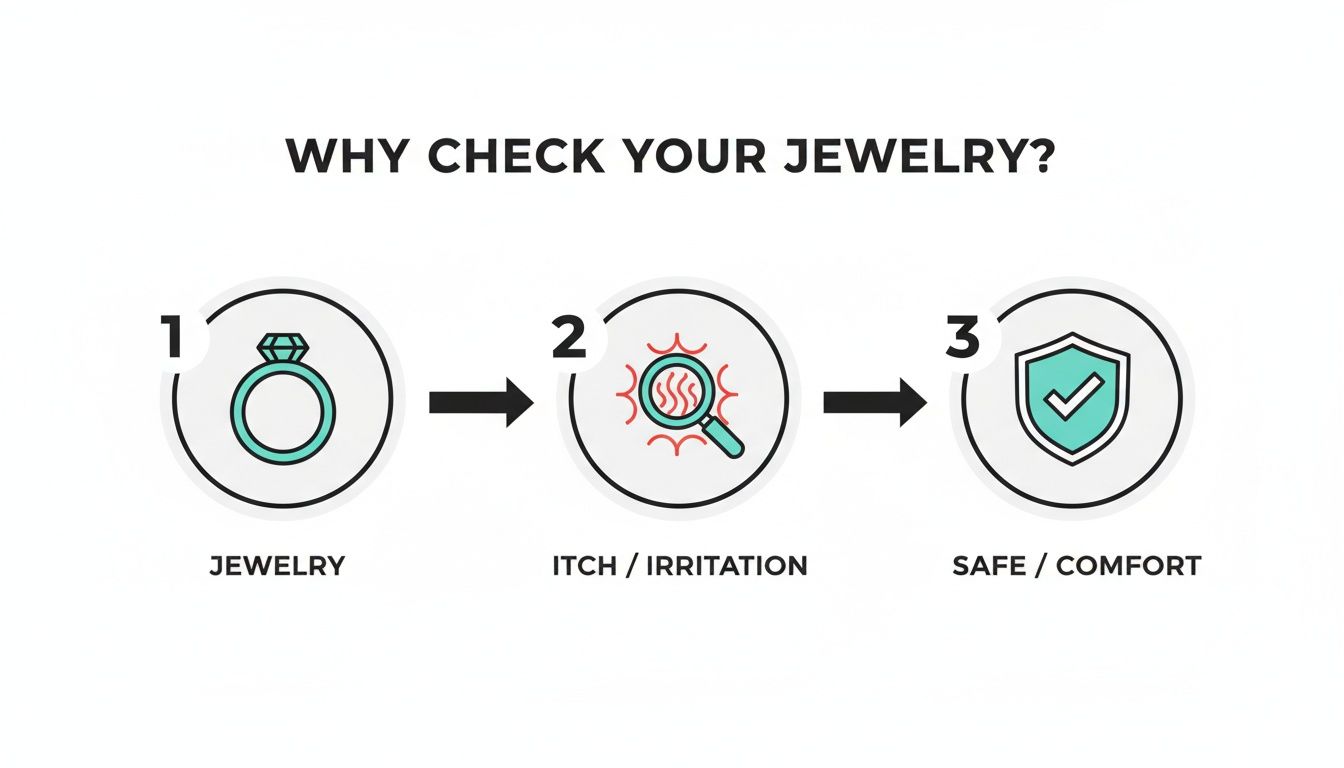
As the guide shows, what starts as a favorite accessory can quickly become an itchy nuisance. A quick test ensures your pieces remain a source of joy, not irritation.
Interpreting Your DMG Test Results
The real magic of the DMG test is its simple color-changing reaction. If your cotton swab turns pink or red, that’s a positive result. It means there are free nickel ions present—the kind that can trigger an allergic reaction.
If there’s no color change at all, you can breathe easy. It means no detectable nickel is being released, and the piece is likely safe for you to wear. A positive result is a clear warning sign to be cautious with that piece, especially if you have sensitive skin.
Why This Simple Test Matters So Much
You might be thinking, "Do I really need to test higher-quality jewelry?" The answer, surprisingly, is yes. Market surveys have found that a significant number of jewelry items release nickel above legally safe limits.
One Danish study of over 300 pairs of earrings, for example, found that nearly 15% released nickel above the standard EU limit for piercings. This really highlights how important it is to verify what your jewelry is made of, because even items that look reputable can hide allergens.
Knowing how to test for nickel empowers you to protect your skin and build a jewelry collection you can truly trust. If you're curious about identifying other metals, our guide on how to tell if jewelry is sterling silver is a great place to start.
Quick DIY Checks Without a Test Kit
While a DMG spot test is the most definitive way to check for nickel at home, you’re not out of options if you don’t have one handy. Sometimes, a few simple observations can give you all the clues you need before putting on a new piece of jewelry. These methods aren't foolproof, but they’re great first-line checks for your Southwestern and estuarian treasures.
You can still play detective with your jewelry collection using a few easy screening methods. These checks help you assess your pieces quickly, giving you a better idea of what might be lurking in the metal before you commit to wearing it all day.
Try The Magnet Test
One of the quickest ways to screen your jewelry is with a common household magnet. Nickel is a ferromagnetic metal, which means it’s attracted to magnets. Metals like sterling silver, copper, and platinum—staples in our Southwestern and estuarian cowgirl collections—are not magnetic.
Just hold a strong magnet (even a good refrigerator magnet will do) close to your jewelry. If the piece jumps to the magnet or shows a strong pull, it’s a red flag. This suggests it could contain a significant amount of nickel or another magnetic metal like iron.
Keep in mind, though, that this isn't perfect science. Some nickel alloys aren't magnetic, and some non-nickel alloys are. Think of this test as a quick initial indicator, not a final verdict.
Conduct a Careful Visual Inspection
Sometimes, your eyes are your best tool. A close look at your jewelry, especially vintage or second-hand finds, can reveal a lot about what it's made of.
If you have a magnifying glass, grab it and look for these specific signs:
- Flaking or Chipping: See a silver or gold coating flaking off to reveal a different-colored metal underneath? Be cautious. That hidden base metal is often a nickel alloy used to keep costs down.
- Telltale Green Tarnish: While sterling silver naturally tarnishes to a dark grey or black, a greenish tint can sometimes point to the presence of nickel reacting with your skin's oils or the air.
- Look for Stamps: Reputable jewelers almost always stamp their pieces. Look for marks like "925" for sterling silver or karat markings for gold (e.g., "14K"). Pieces without any markings are more of a gamble.
A close visual check is an essential skill for any jewelry lover. It empowers you to understand the story and quality of each piece, ensuring your collection is filled with treasures you can trust and wear comfortably.
Perform a Cautious Wear Test
If you only have a very mild sensitivity and the other checks have come back clear, you might consider a cautious "wear test." This is a practical but careful way to see how your skin reacts directly to a new piece.
The idea is simple: wear the jewelry for a short, controlled period—maybe just an hour or two while you're at home. Check your skin immediately afterward for any signs of redness, itching, or irritation. If you see any reaction, take the jewelry off right away. This approach helps you understand how a piece will behave in a real-world scenario, but it should only be attempted by those with minor sensitivities.
If you have a severe nickel allergy, it's best to skip this test entirely and stick to more definitive methods.
Comparing At-Home Nickel Screening Methods
Here’s a quick look at these DIY methods to help you decide which preliminary check is right for your Southwestern jewelry.
| Method | What It Indicates | Reliability | Best For |
|---|---|---|---|
| Magnet Test | Presence of ferromagnetic metals (like nickel or iron). | Low | A very quick, initial screening for obviously magnetic pieces. |
| Visual Inspection | Signs of plating, low-quality base metals, or lack of authenticity stamps. | Medium | Spotting potential red flags on vintage, costume, or unmarked jewelry. |
| Wear Test | Direct skin reaction to the metal alloy. | High (for you) | People with very mild sensitivities who want a real-world reaction test. |
These at-home checks are all about gathering clues. While none are as conclusive as a chemical test, they empower you to make more informed decisions about the jewelry you wear and love.
When Professional Testing Is the Right Move
While at-home tests can give you a pretty good idea of what you're dealing with, there are times when you just need absolute certainty. For serious collectors, jewelry retailers, or anyone with a severe nickel allergy, professional lab testing is the only way to know for sure. This kind of analysis cuts through all the guesswork and gives you scientific proof of a metal's composition.
These labs go beyond a simple "yes" or "no." They measure something called nickel release, which is the real heart of the matter. It tells you exactly how much nickel could potentially leach from the jewelry onto your skin when you sweat. This is the gold standard for verifying if a piece truly meets strict hypoallergenic standards.
Understanding Safety and Legal Limits
Reputable jewelry brands and retailers lean on these precise measurements to make sure their products are safe. It's not just about good practice; it's often about complying with international regulations. Professional testing is how they prove a piece is legally compliant with established safety thresholds.
For example, European REACH regulations have strict rules for items that have prolonged skin contact. The migration limit for nickel is set at a tiny 0.5 µg/cm²/week for most jewelry. For pieces used in new piercings, like earring posts, the standard is even tougher at 0.2 µg/cm²/week. Accredited labs use a standardized test that mimics sweat exposure to get these measurements, offering the final word on a piece's safety.
Professional testing provides undeniable proof of compliance and safety. For a business, this builds customer trust; for a person with severe allergies, it provides essential peace of mind. It’s the difference between guessing and knowing.
When to Invest in Lab Testing
So, when does it make sense to go this route? Professional testing is the right move when the stakes are high and you can't afford to be wrong.
You should seriously consider professional testing if:
- You are a retailer or designer: Ensuring your Southwestern or estuarian cowgirl jewelry meets hypoallergenic claims is crucial for protecting both your customers and your brand's reputation.
- You have a severe nickel allergy: If you've had extreme reactions before, lab testing a beloved heirloom can tell you if it's safe to wear. You can learn more about the signs of an allergic reaction in our guide to sterling silver allergy symptoms.
- You're buying high-value vintage items: Verifying the composition of an expensive antique cuff or ring confirms its authenticity and safety before you make a big investment.
Ultimately, professional analysis offers a level of detail that home methods just can't touch. It’s the most reliable way to know for sure, giving you a scientifically backed answer so that every piece you own or sell is as safe as it is beautiful.
What to Do if Your Favorite Piece Contains Nickel
That sinking feeling when you discover a beloved piece of jewelry contains nickel is all too real. Maybe it’s a unique turquoise cuff or a pair of earrings that perfectly captures your estuarian cowgirl style. But don't despair—a positive nickel test doesn’t mean you have to retire your favorite accessory for good.
With a few smart solutions, you can often make it perfectly wearable again. The idea is to create a safe, effective barrier between the metal and your skin, preventing that irritating nickel from ever making contact. It’s all about finding a fix that protects you without compromising the beauty of your jewelry.
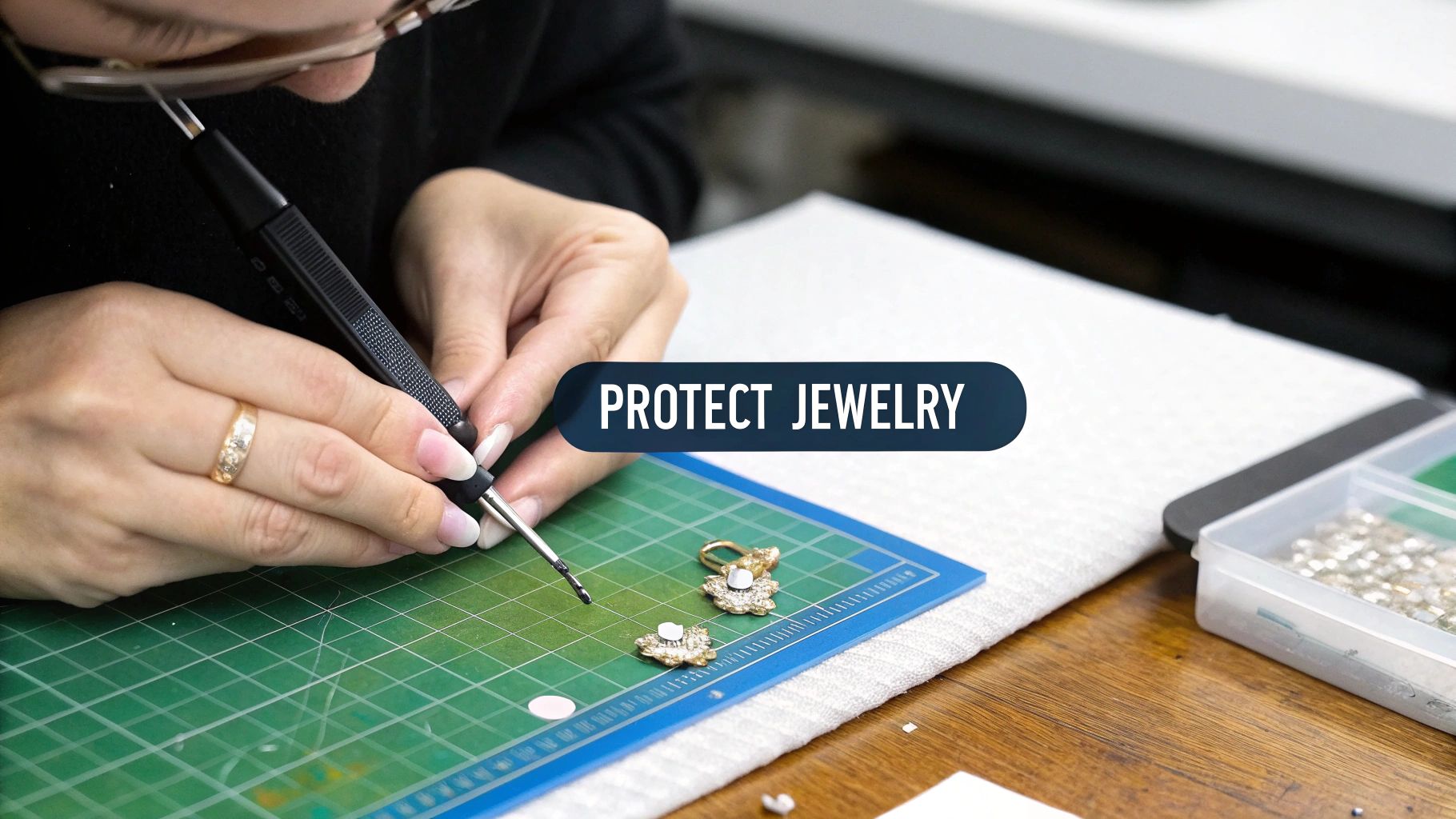
Creating a Protective Barrier at Home
For a quick and easy fix, a simple coating can work wonders. This approach is perfect for pieces where only a small part touches your skin, like the back of an earring or the inside of a ring.
One of the most common DIY tricks is applying a thin layer of clear nail polish to the metal surface. It’s a simple, temporary solution that effectively blocks direct contact. Just remember to let it dry completely before you wear it and reapply it every so often, as the coating can wear off over time.
Looking for something more durable? Consider buying a jewelry-specific sealant. These clear polymer coatings are made to bond securely to metal and are much more resistant to wear and tear than nail polish. They give you a longer-lasting protective layer without changing the look of your cherished Southwestern pieces.
When to Seek a Professional Jeweler
If a temporary coating just won't cut it, or if the problem area is a key part of the piece, it's time to call in a professional. This is usually the best path forward for high-value items or jewelry you wear every single day. A skilled jeweler can make permanent modifications that solve the problem while respecting the original design.
Here are a couple of professional options to consider:
- Component Replacement: A jeweler can easily swap out irritating parts like earring posts, necklace clasps, or jump rings. They'll replace them with hypoallergenic alternatives made from materials like surgical steel, titanium, or sterling silver.
- Professional Plating: For some pieces, a jeweler can apply a thick, durable layer of a safe metal—think rhodium or platinum—right over the existing surface. This permanently seals the nickel underneath, making it completely safe to wear.
Choosing a permanent fix is an investment in your jewelry's longevity and, more importantly, your comfort. It ensures you can keep wearing a sentimental piece without a second thought about skin reactions, keeping its story alive for years to come.
By exploring these options, you never have to choose between your health and your style. Whether you opt for a quick home fix or a professional modification, there are plenty of ways to keep your favorite nickel-containing jewelry in your rotation.
For more tips on selecting safe and stylish accessories from the start, check out our complete nickel-free jewelry and hypoallergenic style guide.
Common Questions About Nickel in Jewelry
Navigating the world of jewelry when you have sensitive skin can feel like walking through a minefield. Over the years, our community has shared some excellent questions about spotting and avoiding nickel. We've gathered the most common ones here to give you clear, straightforward answers for your Southwestern and estuarian cowgirl jewelry collection.
One of the biggest questions we get is, "What does 'hypoallergenic' actually mean?" You see that word everywhere, but it isn't strictly regulated. A piece labeled hypoallergenic is simply less likely to cause an allergic reaction.
It doesn't guarantee the complete absence of nickel, though reputable brands use it to indicate their jewelry is made from safer metals.
Can Sterling Silver or Copper Contain Nickel
This is a fantastic and really important question. By definition, sterling silver ("925") is an alloy made of 92.5% pure silver and 7.5% other metals—usually copper. High-quality, properly made sterling silver should not contain any nickel.
But here's the catch: in some lower-quality or unverified pieces, nickel can sneak its way into that 7.5% mix to add durability or cut costs.
Copper is a similar story. Pure copper is nickel-free. When it's used in alloys for jewelry, especially in fast-fashion or costume pieces, it can absolutely be mixed with nickel. This is why knowing how to check for nickel, even in metals you assume are safe, gives you an essential layer of security. It’s a key step in building a collection you can truly wear and love.
Why Do Some People React and Others Don't
The mystery of why one person can wear a piece without a problem while another gets an itchy rash comes down to individual body chemistry. A nickel allergy is a type of allergic contact dermatitis. It happens when your immune system mistakenly identifies nickel ions as a threat and launches an inflammatory response.
This sensitivity isn't something you're born with; it often develops over time with repeated exposure. It’s not about being "weak" or "strong"—it's just how your unique immune system is wired to respond to certain metals.
This is exactly why personal testing is so valuable. Once you know your own sensitivity level, you can choose pieces that work for you. If you’re exploring different styles, like the free-spirited vibe of boho pieces, understanding the materials is the best place to start. You can learn more about what is boho jewelry in our detailed guide. At the end of the day, feeling confident and comfortable in your accessories is what makes your style shine.