
The surest way to know if your Southwestern jewelry is sterling silver is to look for a tiny stamp, usually "925," "Ster," or "Sterling." These little marks, called hallmarks, guarantee the piece is made of 92.5% pure silver. If you don't see a stamp on your turquoise cuff or concho belt, don't worry—a few simple at-home tests, like checking for magnetism (real silver isn't magnetic), can help you figure out what you have.
The Enduring Spirit of Sterling Silver Jewelry
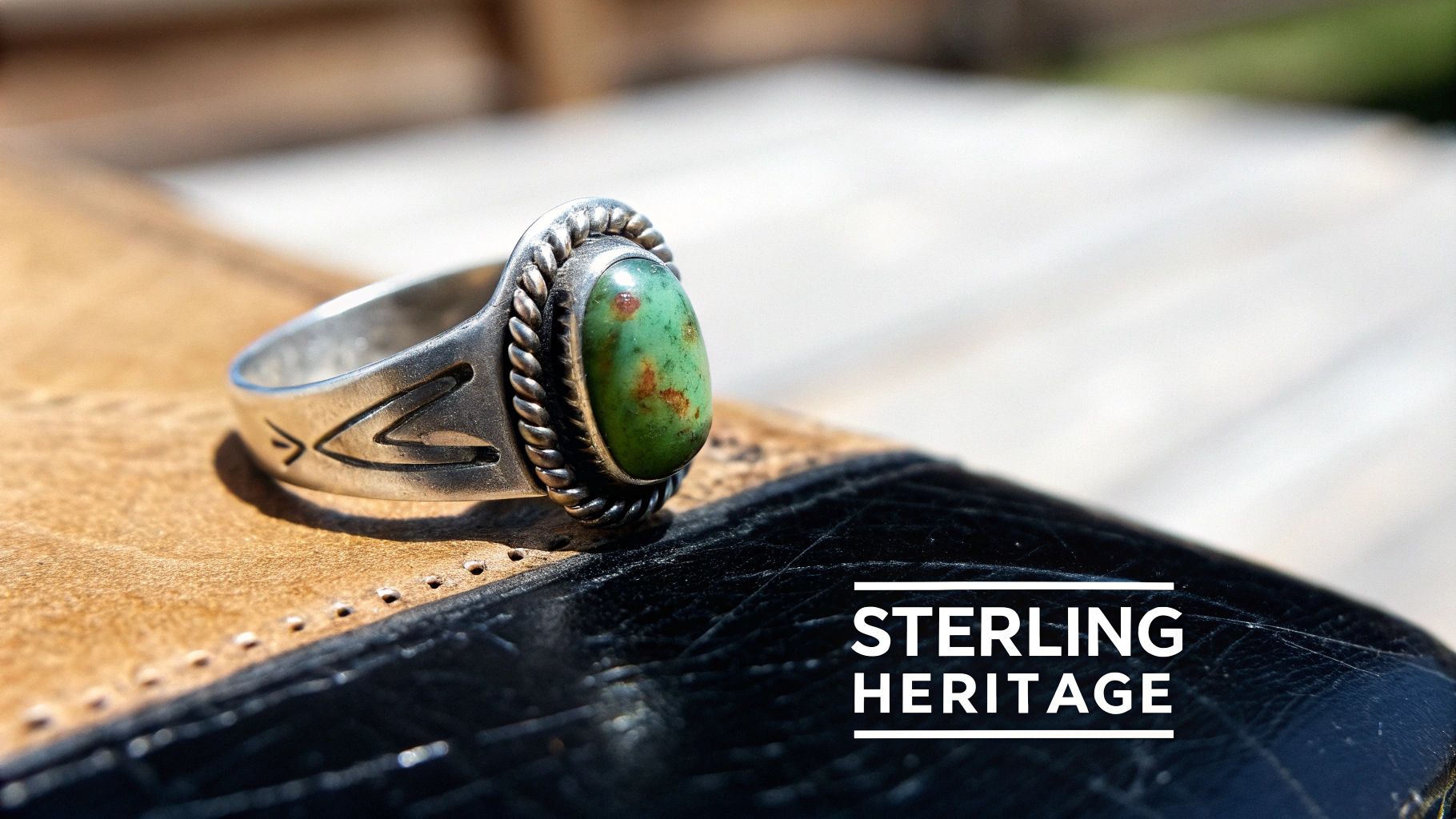
Before we jump into the tests, it’s worth taking a moment to understand why authenticity matters so much, especially with Southwestern and estuarian cowgirl jewelry. It goes way beyond just the monetary value. It’s about the story, the artist's touch, and that unique, beautiful patina that only genuine sterling silver develops over time under a western sun.
That soft, unmistakable glow on a turquoise ring or the satisfying heft of a classic concho belt is part of its soul. This guide will give you the tools to verify that legacy, whether you're looking at a cherished family heirloom passed down through generations or a new treasure you just found at a dusty roadside market.
Connecting with Craftsmanship
Learning how to tell if jewelry is sterling silver isn't just a technical skill—it's a way to connect more deeply with the piece and the hands that made it. From deciphering the tiny stamps on a clasp to performing simple, hands-on tests you can do right now, each step confirms the quality and artistry.
The rich history of Native American jewelry is deeply woven with the use of authentic silver, making verification a key part of appreciating its cultural weight.
Think of it this way: verifying the silver in a Navajo cuff isn't just about checking a box. It’s about honoring the tradition and skill passed down through generations, ensuring the piece you wear carries the true spirit of its creation.
This guide will walk you through everything you need to know, starting with the most reliable methods first. We'll cover:
- Reading the Marks: How to find and understand common hallmarks on Southwestern pieces.
- Simple Home Tests: Easy, non-damaging ways to check for authenticity.
- Knowing When to Ask an Expert: Recognizing when a professional opinion is your best bet for a vintage piece.
By the end, you'll feel confident in your ability to spot genuine articles from imitations, preserving the integrity and story of your Southwestern collection.
Quick Guide to Sterling Silver Identification
Here's a quick summary of the most common methods for identifying sterling silver, their reliability, and what they reveal about your Southwestern jewelry.
| Method | What It Checks For | Reliability Score | Best For |
|---|---|---|---|
| Hallmark Check | Official purity marks (925, Sterling) | 9/10 | The fastest and most reliable first step for most jewelry. |
| Magnet Test | Magnetic properties (silver is non-magnetic) | 7/10 | Quickly ruling out common fakes made of steel or iron. |
| Ice/Thermal Test | Silver's high thermal conductivity | 8/10 | A safe, non-damaging test for flat-surfaced pieces like a buckle or pendant. |
| Acid Test | Chemical reaction to nitric acid | 9/10 | Conclusive results, but requires caution and a small scratch. |
| Professional Appraisal | X-Ray Fluorescence (XRF) and expert eye | 10/10 | Verifying high-value, antique, or unmarked Southwestern items. |
While no single home test is completely foolproof, using a combination of these methods will give you a very clear picture of what your jewelry is made of.
Decoding Hallmarks and Maker's Marks
The first and most reliable way to figure out if your jewelry is sterling silver is to look for a hallmark. Think of these tiny stamps as the jewelry world’s quality guarantee—they're your best initial clue, especially on artisan-made Southwestern pieces.
On Southwestern and estuarian cowgirl-style pieces, these marks are often tucked away in discreet spots. You'll definitely need to look closely. Grab a magnifying glass, a jeweler’s loupe, or even just use the zoom feature on your phone’s camera to get a good look.
Common Hiding Spots for Hallmarks
Before you can read the mark, you have to find it. Artisans are clever about placing them where they won't interrupt the design, so check these spots first:
- Inside a Ring Band: This is the go-to spot for a classic turquoise or coral ring.
- On the Clasp: For necklaces and bracelets, check the toggle, lobster clasp, or the tiny tag dangling next to it.
- The Back of a Pendant: Flip over that beautiful Zuni pendant; the artist's mark is probably on the flat back surface.
- On the End Caps of a Cuff: Take a look at the very tips of a cuff bracelet, right where the silver terminates.
Understanding Common Silver Stamps
Once you've located the mark, you need to know what it means. Sterling silver has a few internationally recognized stamps that certify its purity. These are the ones you're most likely to see.
The hallmark test really is the gold standard. The '925' stamp tells you the piece is 92.5% pure silver, with the remaining 7.5% being other metals like copper to give it durability. This standard is recognized all over the world. Here in the US, Federal Trade Commission (FTC) guidelines are strict: any stamp like 'STERLING' or '.925' has to mean at least 92.5% silver content.
Unfortunately, counterfeiters have gotten good at faking these marks. It's estimated that 30-40% of fake pieces flooding online marketplaces have fraudulent stamps, many imitating Southwestern designs.
Key Takeaway: A real hallmark should look crisp, clear, and evenly stamped. If the mark is blurry, shallow, or has uneven lettering, that's a huge red flag. Trust your gut—a sloppy stamp often means it's a sloppy imitation.
While the purity mark is crucial, many Southwestern pieces also include a maker's mark. This might be the artist’s initials, a unique symbol, or their full name. This mark doesn't guarantee the silver content by itself, but it adds to the piece’s story and authenticity and often lets you research the artisan who made it. You see similar historical marks on old silverware, a topic we explore more in our guide to 1847 Rogers Bros silverware patterns.
For the full picture, you always want to look for both—a purity stamp and a maker's mark.
Simple Hands-On Tests You Can Do at Home
So, what if your piece doesn't have a hallmark, or you have a sneaking suspicion the stamp isn't legitimate? Don't sweat it. There are several simple, non-destructive tests you can perform right in your own home. These hands-on methods tap into silver's unique physical properties to help you get closer to the truth.
One of the quickest and easiest checks is the magnet test. This is a fantastic first step because it’s a no-cost way to immediately spot many fakes. Real sterling silver is non-magnetic—it won't react to a magnet at all.
Grab a strong magnet, something like a rare-earth or neodymium magnet, and hold it right up to your jewelry. If you feel any kind of pull or the piece sticks firmly, it's almost certainly not sterling silver. This simple trick is great for telling the difference between a heavy, authentic Navajo cuff and a cheap, silver-plated steel imitation.
Just keep in mind, this test isn't foolproof. Some counterfeit pieces are made from other non-magnetic metals, and many clasps have tiny steel springs inside that will be magnetic, even if the rest of the jewelry is genuine silver.
The Feel And Weight Test
Beyond magnetism, authentic sterling silver has a very particular density and feel. Once you've handled a few confirmed silver pieces, you'll start to develop an intuition for its substantial weight. Go ahead and pick up the item you're testing. Does it feel heavier than it looks for its size?
For instance, a large sterling silver concho belt buckle should have a satisfying heft to it. If it feels oddly light, almost like a toy, it might be made of aluminum or a tin alloy instead. This test is less about getting precise numbers and more about your tactile impression. A piece of silver-plated jewelry often feels lighter and less solid than its sterling counterpart. Understanding how different metals feel is key, which you can learn more about in our detailed comparison of sterling silver versus stainless steel jewelry.
The Ice Test for Thermal Conductivity
Another fascinating and completely safe method is the ice test. This one feels a bit like a magic trick. Silver has the highest thermal conductivity of any common metal, which just means it transfers heat incredibly fast. This unique property makes for a dramatic and revealing little experiment.
Here's how to do it:
- Lay the silver item on a flat, room-temperature surface.
- Place one ice cube directly on the jewelry and another one on the surface right next to it.
- Now, just watch what happens.
If your jewelry is real sterling silver, the ice on it will start melting almost instantly—way faster than the ice cube sitting next to it on the counter. The silver will feel icy cold to the touch very quickly as it pulls heat away from the ice. This test is perfect for items with a flat surface, like the back of a large pendant or a wide cuff bracelet.
Pro Tip: This test is an excellent, non-damaging way to verify authenticity. Because silver conducts heat so efficiently, it will feel like the ice is melting from the bottom up due to the metal's influence, not just from the ambient air temperature.
Comparing At-Home Sterling Silver Tests
Not sure which test to start with? Each at-home method offers different clues. This table breaks down the most common ones to help you decide which is best for your situation, comparing how they work, what the results mean, and any potential risks involved.
| Test Method | How It Works | What a 'Pass' Means | What a 'Fail' Means | Risk of Damage |
|---|---|---|---|---|
| Magnet Test | Sterling silver is non-magnetic. Hold a strong magnet to the item. | No attraction. This is a strong indicator it might be silver or another non-ferrous metal. | The item sticks to the magnet. It's definitely not sterling silver (likely steel-based). | None |
| Weight/Feel Test | Silver has a distinct density. Compare its heft to known silver pieces. | Feels substantial and heavier than it looks. This suggests a dense metal like silver. | Feels too light or hollow. It could be aluminum, tin, or a plated base metal. | None |
| Ice Test | Silver is a powerful thermal conductor. Place an ice cube on the item. | Ice melts almost instantly, much faster than a control cube. | Ice melts at a normal rate. The metal is not a good thermal conductor like silver. | None |
Ultimately, using a combination of these simple tests will give you a much more confident assessment of your jewelry before you consider more advanced or potentially destructive methods.
This quick decision tree can help guide your initial inspection process.
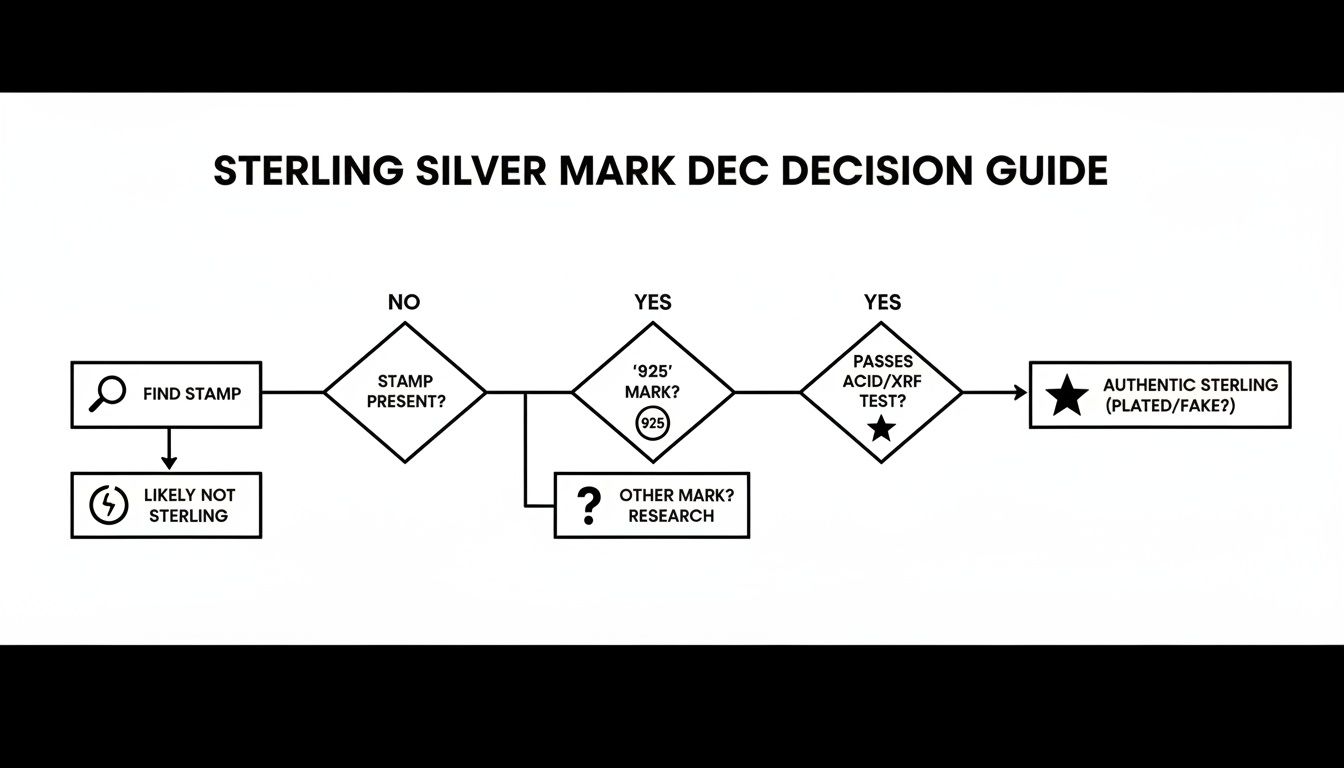
The flowchart visualizes the logical flow of authentication, starting with the easiest step—finding and reading a stamp—before moving on to more involved quality checks if needed.
When You Need a Professional Opinion
While the at-home tests are fantastic for sorting through a flea market find or checking a piece you're curious about, there are times when they just don't cut it. Guesswork has no place when you're dealing with a high-value antique squash blossom necklace or a deeply sentimental family heirloom.
When the stakes are high, it's time to call in a pro. This is especially true for older, intricate Southwestern pieces where hallmarks have worn away over decades or were never there to begin with. Sometimes, the only way to get a definitive, 100% certain answer is through methods that require professional skill and specialized equipment.
The Professional Chemical Acid Test
You've probably heard of chemical acid tests that use nitric acid to confirm silver content. A jeweler will make a tiny, hidden scratch on the piece and apply a single drop of acid. The color the acid turns tells the story—for sterling silver, it usually flashes a creamy white or a bright, vibrant red, depending on the specific testing kit.
But let's be clear: this is not a DIY project. Nitric acid is incredibly corrosive and can cause serious chemical burns or permanently scar your jewelry if you don't know exactly what you're doing. It can completely ruin the beautiful, earned patina on an old cuff or eat away at delicate turquoise settings. This is precisely why the acid test is a job strictly for trained jewelers in a controlled, safe environment.
Seeking a Professional Jeweler or Appraiser
For your most cherished or valuable pieces, taking them to a certified appraiser or a reputable jeweler is the safest and most conclusive route you can take. A true expert doesn't just rely on a single test; they combine years of experience with advanced tools to give you the complete picture.
When you bring a piece in, they're looking at so much more than just the silver. They'll examine:
- Maker's Marks: They can often identify the artist's or workshop's signature stamp, which is crucial for authenticating Native American or other artisan jewelry.
- Construction Quality: An experienced eye can assess the craftsmanship, from the quality of the soldering to the overall build and finish.
- Gemstone Authenticity: They'll be able to tell you if that beautiful blue stone is natural, stabilized, or simulated turquoise.
Many top-tier jewelers now use a game-changing tool called an X-Ray Fluorescence (XRF) scanner. This high-tech device is completely non-destructive. It bombards the jewelry with X-rays and reads the energy that reflects back to determine the exact elemental composition. It gives you a precise percentage of silver, copper, and any other metals present without leaving a single mark.
An appraisal gives you more than a simple "yes" or "no" on silver content. It delivers a comprehensive evaluation of your piece's origin, materials, and current market value—something that's absolutely essential for insurance purposes or if you ever decide to sell.
When you're looking for an expert, seek out a certified gemologist or an appraiser who specializes in Southwestern or antique jewelry. Don't be shy about asking about their process, the tools they use (specifically mention an XRF scanner), and their fees. This small investment buys you the ultimate peace of mind.
Caring for Your Authentic Sterling Silver
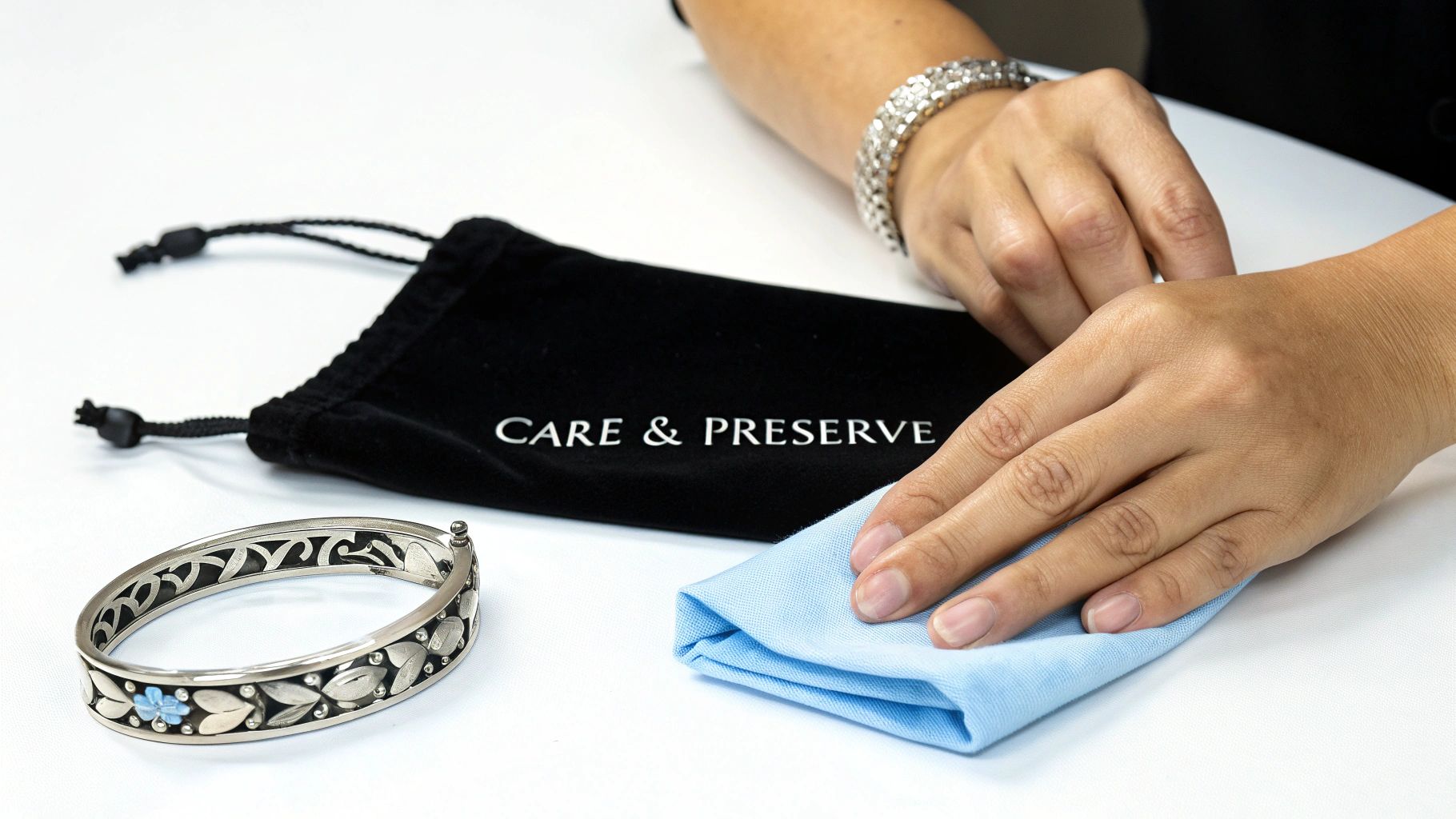
So, you’ve done your homework, run the tests, and confirmed your piece is the real deal. Congratulations! The next step is just as important: preserving its unique character and beauty for years to come. Proper care is everything, especially for Southwestern and estuarian cowgirl pieces where the silver is a canvas for intricate stamp work and stunning gemstones.
The first thing you need to know is that tarnish is not a flaw. In fact, that slow darkening over time is a completely natural chemical reaction and one of the best signs that your jewelry is genuine sterling silver. The small amount of copper in the alloy reacts with sulfur in the air, creating a patina that many collectors actually love because it adds so much depth and history to the design.
Safe Cleaning for Pieces with Stones
When your silver does need a polish, remember that gentle is always the way to go. This is critical for jewelry featuring turquoise, a true hallmark of Southwestern style. Turquoise is a porous stone, which means it can literally soak up chemicals, oils, and even water, potentially changing its color forever.
For that reason, you should never use harsh chemical dips or ultrasonic cleaners on pieces set with turquoise or other soft, porous stones. These aggressive methods can strip the natural oils right out of the stone, making it brittle or discolored.
Instead, stick with these much safer methods:
- A Soft Polishing Cloth: For everyday maintenance, a simple, non-abrasive silver polishing cloth is your best friend. Just gently rub the silver surfaces, being careful to avoid the stone itself.
- Mild Soap and Water: If you’re dealing with more significant buildup, a simple mix of warm water and a few drops of mild, phosphate-free soap will do the trick. Use a soft-bristled brush to gently scrub the silver, then rinse it thoroughly and dry it immediately with a soft cloth to avoid water spots.
Remember, the goal is to brighten the silver, not erase the character-building patina that has settled into the crevices of the design. A careful polish highlights the craftsmanship without stripping the piece of its story.
Smart Storage to Prevent Tarnish
How you store your jewelry matters just as much as how you clean it. Since tarnish is caused by exposure to air and humidity, the right storage can slow the process down dramatically. The best practice is to keep each piece in its own airtight container.
Consider tucking your jewelry into anti-tarnish bags or cloths. These are treated with special compounds that neutralize the airborne sulfur that causes tarnish. Storing a concho belt or a favorite statement cuff this way can keep it ready to wear for months. It also helps to avoid leaving your silver out in humid spots like a bathroom.
For more in-depth advice, you can explore our complete guide on how to clean sterling silver jewelry at home, which offers even more great tips for all types of pieces.
Common Questions About Identifying Sterling Silver
Even with the best guides, you're bound to run into questions when you're learning the ropes of identifying sterling silver. From wondering if tarnish is a good or bad sign to second-guessing a hallmark, some curiosities pop up time and time again when authenticating your favorite Southwestern and estuarian cowgirl-style pieces.
Getting clear answers is the key to building confidence. It helps you learn to spot the difference between a treasured family heirloom and a clever imitation. Let’s tackle some of the questions we hear most often from fellow jewelry lovers.
Does Real Sterling Silver Tarnish?
Yes, real sterling silver absolutely tarnishes, and that's actually a good thing! Tarnish is just the natural result of the 7.5% copper in the alloy reacting with sulfur in the air. When you see a piece develop that classic dark patina over time, it's a strong clue that you're holding the genuine article.
In fact, this slow oxidation process is what gives so many antique Southwestern pieces their beautiful, deep character. If you have a piece that stays perfectly bright and never seems to change, it might be made of stainless steel or coated with a non-tarnishing metal like rhodium.
Can Jewelry Marked 925 Still Be Fake?
Unfortunately, yes. While the "925" stamp is the international standard for sterling silver, determined counterfeiters will slap it on their pieces to try and pass them off as legitimate. It’s one of the oldest tricks in the book.
The good news is that a fake stamp often gives itself away under a little scrutiny. Grab a magnifying glass and look closely. Fake marks often look blurry, unevenly spaced, or too shallow. This is exactly why you should never rely on the stamp alone. Think of it as your first clue, but always back it up with a second test, like the magnet test, to be sure.
Expert Insight: A legitimate hallmark is almost always crisp, clean, and professionally applied. If that "925" looks sloppy or is surrounded by other weird marks you don't recognize, it’s a major red flag that calls for a closer look.
Sterling Silver vs. Silver Plated Jewelry
This is a really important distinction to understand. Sterling silver is a solid precious metal alloy—it's 92.5% pure silver all the way through. On the other hand, silver-plated jewelry just has a microscopic layer of silver coated over a core of a much cheaper base metal, like brass, copper, or nickel.
That super-thin plating can wear away with use, especially on high-contact spots like the inside of a ring band. When it does, you'll see the different-colored metal peeking through from underneath. Because it's a solid alloy, sterling silver is far more valuable, more durable, and much better for people with sensitive skin. For anyone who struggles with skin reactions, understanding whether sterling silver is hypoallergenic is a game-changer, as the nickel often used in plated items is a very common irritant.
At Silver Elegant, we're passionate about the timeless beauty and lasting quality of authentic sterling silver. Our collections of Southwestern and estuarian cowgirl-inspired jewelry are crafted to honor tradition while fitting your modern style. Explore our stunning turquoise rings, statement cuffs, and elegant necklaces today. Find your next heirloom piece at https://silverelegant.com.