
Let’s get straight to it: for most people, high-quality sterling silver is a fantastic hypoallergenic choice. The secret is in its composition—92.5% pure silver—which is why it's so trusted for sensitive skin, especially for those who love the rugged elegance of Southwestern jewelry. Pure silver itself is incredibly non-reactive.
The potential for a reaction, however, lies in the other 7.5% of metals mixed in for strength. And the primary culprit behind most so-called 'silver' allergies? It's almost always nickel, a metal rarely used in authentic, handcrafted jewelry.
Is Sterling Silver Hypoallergenic and Safe For Skin
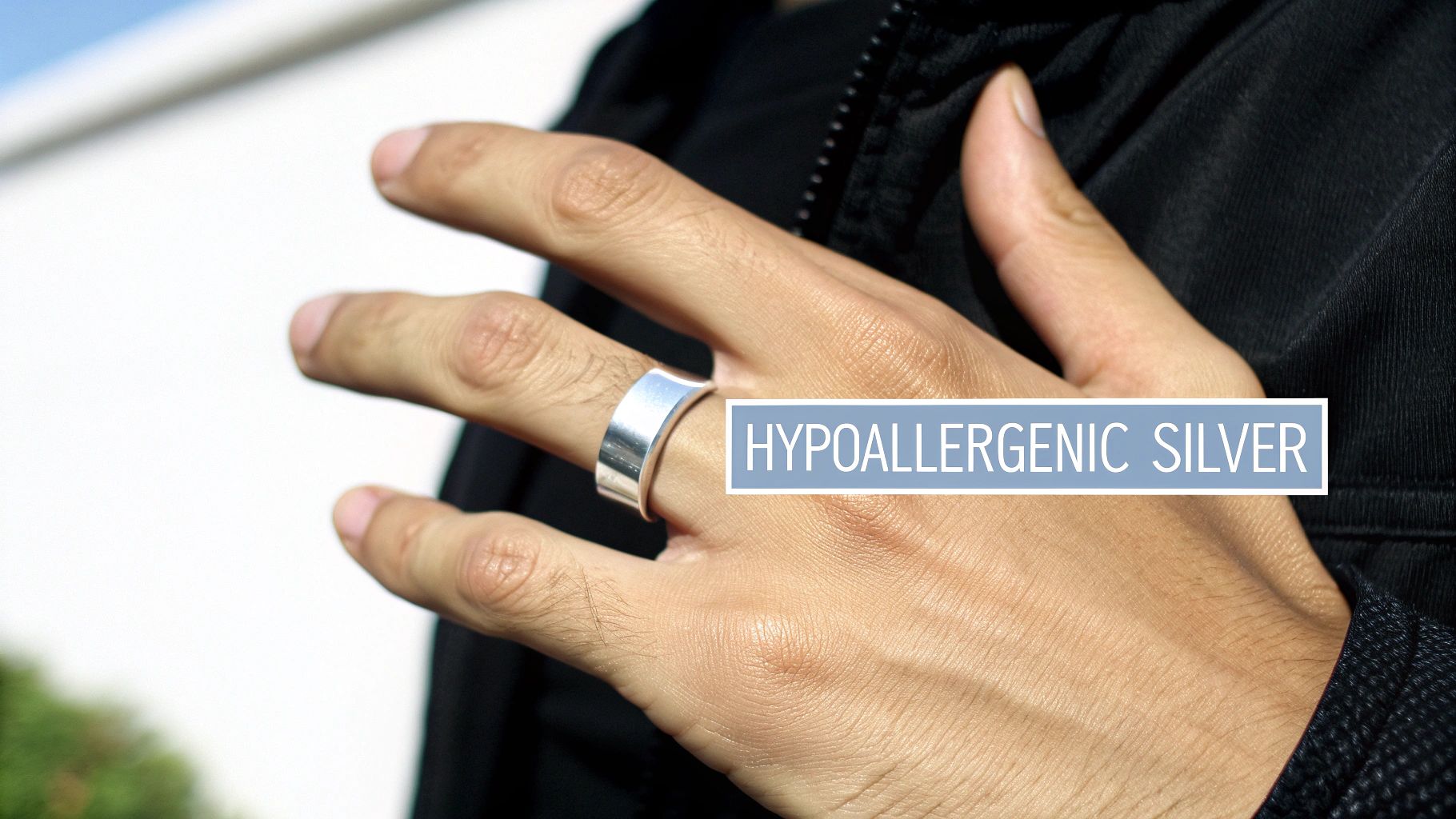
When you're drawn to the rustic charm of an estuarian cowgirl cuff or a bold turquoise ring, the last thing you want is an itchy, uncomfortable skin reaction. The good news is that genuine sterling silver is one of the safest and most beautiful choices you can make, especially if you have sensitive skin.
Think of sterling silver as a recipe that’s been perfected over centuries for both beauty and strength. On its own, pure silver is just too soft for crafting the durable, intricate designs we love in Southwestern jewelry. To solve this, artisans blend it with other metals, creating a much stronger material known as an alloy. This is where the magic—and the details—of sterling silver really shine.
The 925 Sterling Silver Standard
What truly defines sterling silver is its purity. By law and tradition, sterling silver is an alloy made of 92.5% pure silver combined with 7.5% of other metals. This high silver content is precisely why it's generally considered hypoallergenic; pure silver is biocompatible and almost never triggers an allergic reaction.
The catch? That little 7.5% can make all the difference. If a manufacturer cuts corners and uses nickel in that alloy, it can cause a reaction in sensitive individuals. Thankfully, you can find out more about what causes these reactions from the experts at Wyndly.com on silver allergy triggers.
The secret to comfortable, beautiful jewelry is hidden in that 7.5%. Reputable jewelers, especially those crafting authentic Southwestern pieces, almost exclusively use copper. This time-honored combination delivers the durability needed for statement jewelry without introducing common allergens.
To give you a clearer picture of what's what, here is a quick breakdown of the common components in sterling silver and their allergy risks.
Sterling Silver Hypoallergenic Quick Guide
This table summarizes the key metals involved in sterling silver and how they contribute to its hypoallergenic properties—or lack thereof.
| Component | Role in Jewelry | Allergy Risk Level |
|---|---|---|
| Pure Silver (92.5%) | The primary metal, providing the signature luster and value. | Very Low |
| Copper (Often in the 7.5%) | The most common alloy, adds strength and durability. | Low |
| Nickel (Sometimes in the 7.5%) | A cheaper alloy used to add hardness and shine. | High |
| Plating (e.g., Rhodium) | A thin outer layer used to prevent tarnish and add shine. | Very Low |
As you can see, the choice of alloy metal is everything. High-quality, nickel-free sterling silver is an excellent choice for just about anyone.
So, in short, when you choose high-quality sterling silver from a trusted source, you are selecting a metal that is:
- Primarily Pure Silver: With 92.5% pure silver, the risk of a reaction is naturally very low.
- Typically Nickel-Free: True artisans and reputable brands avoid nickel, favoring copper instead.
- A Time-Tested Material: For centuries, it has been the go-to metal for comfortable, beautiful, and long-lasting jewelry.
Understanding The 925 Stamp On Your Jewelry
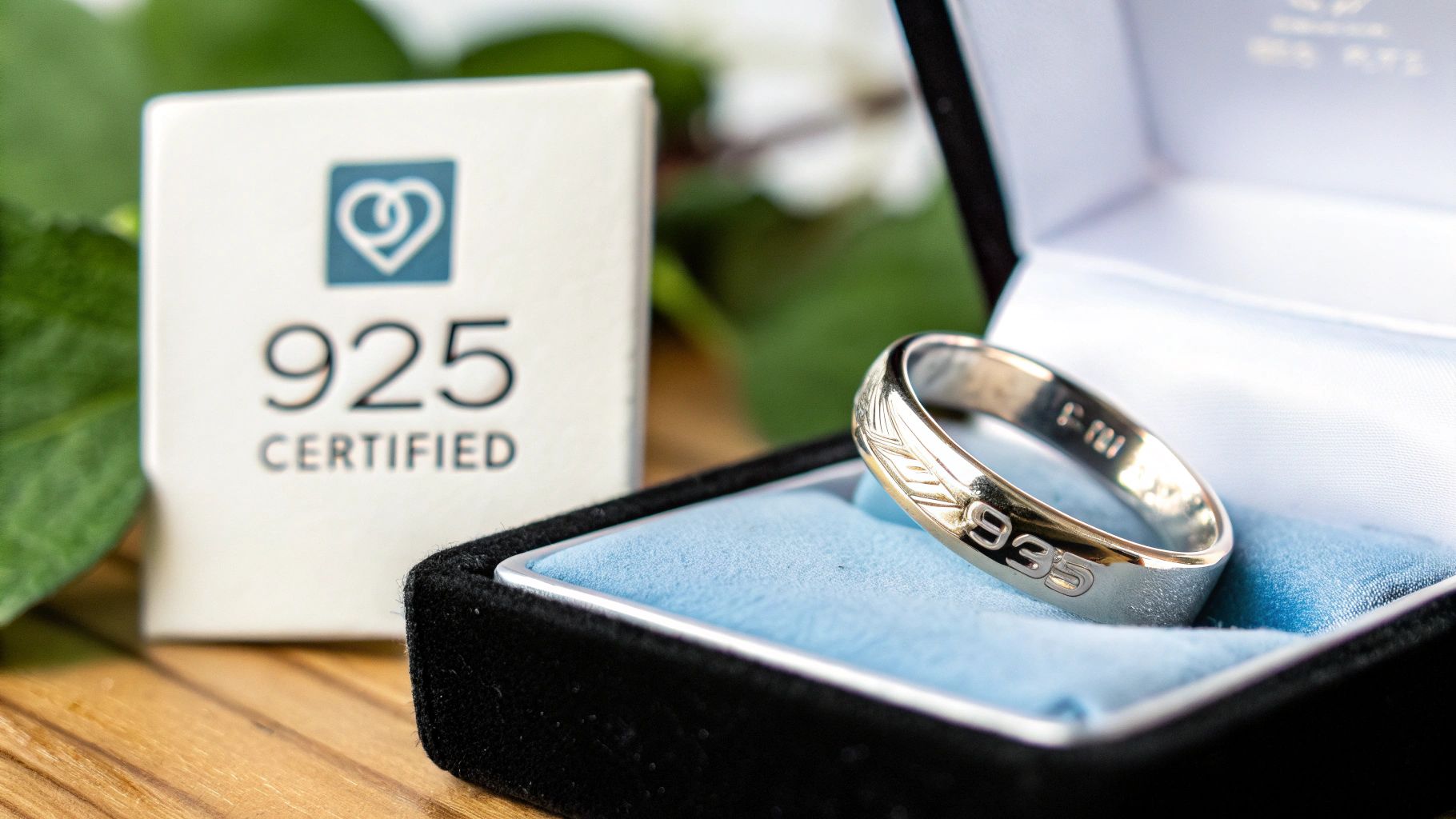
That tiny "925" mark tucked away on your favorite silver cuff or turquoise ring is more than just a small detail—it's a stamp of authenticity and a guarantee of quality. This mark certifies that the piece is genuine sterling silver, containing 92.5% pure silver by weight. It's the industry standard for high-quality silver jewelry all around the world.
But what about the remaining 7.5%? This is where the story gets interesting, especially when we're talking about whether sterling silver is hypoallergenic. Pure silver is just too soft for crafting the durable, intricate designs we love in Southwestern jewelry. To create pieces that can stand up to daily life, artisans mix it with stronger metals, known as alloys.
The Role Of Copper The Trusted Ally
In the world of authentic, handcrafted silver, copper is the most common and trusted alloy. For centuries, silversmiths have chosen copper because it adds the necessary strength and durability without messing with the silver's beautiful color or introducing common allergens.
This classic blend is what allows for the creation of bold, stamped silver pieces that define Western style. You can dive deeper into the rich history and techniques in our guide to western jewelry explained from turquoise to stamped silver.
This time-tested combination is exactly why most people can wear sterling silver comfortably for years. The high silver content keeps it safe, while the copper provides the resilience a cherished piece of jewelry needs to last a lifetime.
Think of the 925 stamp as a maker's promise. It assures you that you're investing in a precious metal that meets a rigorous purity standard, not a cheap imitation that might cause irritation.
Why Nickel Is The Real Problem
So, if copper is the preferred alloy, why do some people still have a bad reaction? The issue almost always points to one specific culprit: nickel.
In lower-quality, mass-produced jewelry, nickel is sometimes used as a cheap alternative to copper. It’s an effective hardening agent, but it’s also the number one cause of metal allergies, leading to the redness and itching we associate with contact dermatitis.
A piece of jewelry without a 925 stamp is a major red flag. Its composition is a complete mystery, and it has a much higher chance of containing nickel or other strange metals that can irritate your skin. Reputable artisans and brands, especially those dedicated to the Southwestern tradition, avoid nickel entirely.
By understanding what that 925 stamp really means, you empower yourself as a buyer. You can confidently choose authentic, skin-friendly jewelry that’s not only beautiful but also built with integrity and quality materials. Always look for that stamp—it’s your best guide to a safe and stunning purchase.
The Real Reason Your Jewelry Causes A Reaction
Have you ever slipped on a beautiful silver ring, only to find an itchy, red rash a few hours later? It’s a frustrating experience, and it's natural to blame the jewelry itself. But when it comes to sterling silver, the silver is almost never the problem.
The real culprit is usually an unwelcome guest in the metal mix, triggering what’s known as allergic contact dermatitis.
Think of your immune system as a super-vigilant security guard. Most of the time, it knows a real threat from a false alarm. But sometimes, it mistakes a harmless substance—like a particular metal—for a dangerous intruder and sounds the alarm. That overreaction is what causes the redness, itching, and rashes we associate with a metal allergy.
The Number One Culprit: Nickel
When it comes to metal allergies, one name stands above all others as the primary troublemaker: nickel. It's an inexpensive metal often mixed into lower-quality jewelry to add hardness and a bright shine. Unfortunately, it's also the single most common cause of allergic contact dermatitis from jewelry.
A true nickel allergy will show up with some pretty clear symptoms right where the metal touches your skin. You might notice:
- Intense itching and redness
- A rash or a series of small bumps
- Dry patches that almost look like a burn
These symptoms pop up because your skin is having a direct immune response to the nickel ions. High-quality sterling silver should always be nickel-free, which is a huge reason why it’s considered a hypoallergenic choice for most people.
Understanding The Green Tint From Copper
Another common concern is that harmless green or dark smudge jewelry can sometimes leave on your skin. People often mistake this for an allergic reaction, but it’s something else entirely. This tint is a simple chemical reaction, not an immune response.
It happens when the copper in the sterling silver alloy reacts with the natural oils, acids, and salts in your sweat. Lotions and perfumes can speed up the process, too. The result is a harmless layer of copper salt—the same stuff that gives the Statue of Liberty its iconic green color. While a true copper allergy is technically possible, it is extremely rare.
That green stain is simply chemistry in action, not a sign of an allergy. It can be easily washed off your skin with soap and water and doesn't say anything about the jewelry's quality. Learning some essential jewelry care habits that keep pieces shining can help minimize this effect.
The good news is that, statistically, the vast majority of people can wear sterling silver without any issues at all. Research shows that around 90-95% of the population can wear 925 sterling silver without skin irritation, thanks to its high silver content. When reactions do occur, they are almost always linked to nickel contamination. Knowing the difference between an allergy and a simple chemical reaction empowers you to choose your pieces with confidence.
Comparing Different Types Of Silver Jewelry
Not all silver is created equal, and knowing the difference is the key to picking out jewelry that feels as good as it looks. When you're choosing a piece that speaks to your estuarian cowgirl style, the type of silver used is going to have a huge impact on its beauty, durability, and whether or not your skin will get along with it.
Think of it like picking out a great pair of cowboy boots. The softest leather might feel luxurious, but it’s not practical for a ride along the shore. In the same way, the purest silver isn't always the best choice for a rugged turquoise cuff that’s meant to see you through years of adventures.
Fine Silver The Purest Form
First up is Fine Silver, which is an impressive 99.9% pure. This makes it the most hypoallergenic silver you can find, since there are virtually no other metals mixed in that could cause a reaction. For anyone with extreme metal sensitivities, this is the ultimate choice.
But that purity comes with a trade-off: strength. Fine silver is incredibly soft and easy to bend, which means it's prone to scratching, denting, and losing its shape over time. That delicate nature makes it a tough sell for the kind of detailed, durable jewelry we love in Southwestern designs.
Sterling Silver The Perfect Balance
And that brings us back to 925 Sterling Silver, the tried-and-true standard for high-quality jewelry. It’s made of 92.5% pure silver and 7.5% alloy (usually copper), creating the perfect sweet spot between purity and strength.
You get that gorgeous silver luster, but with the toughness needed for pieces you can wear every single day. For the vast majority of people, nickel-free sterling silver is the ideal hypoallergenic choice, offering a beautiful balance of comfort and resilience that’s perfect for those statement pieces you never want to take off.
Modern Innovation Argentium Silver
A newer player on the scene, Argentium silver, takes things a step further. It swaps some of the copper in the sterling alloy for a metal called germanium. This little switch makes it way more resistant to tarnish and keeps it highly hypoallergenic. It's a fantastic premium option if you're looking for maximum comfort with minimal upkeep.
To help you navigate these options, here's a quick breakdown of how these different silver types stack up, especially for those of us with sensitive skin.
Comparing Silver Types for Sensitive Skin
| Silver Type | Purity | Common Alloys | Hypoallergenic Rating | Best For |
|---|---|---|---|---|
| Fine Silver | 99.9% | None | Excellent | Individuals with extreme metal sensitivities. |
| Sterling Silver | 92.5% | Copper | Very Good (if nickel-free) | Everyday Southwestern wear, balancing beauty and durability. |
| Argentium Silver | 93.5%+ | Copper, Germanium | Excellent | Those wanting tarnish resistance and top-tier comfort. |
| Silver-Plated | Varies | Nickel, Brass, Copper | Poor to Fair | Costume jewelry; not for sensitive skin or long-term wear. |
Ultimately, choosing solid, nickel-free silver like sterling or Argentium is your best bet for avoiding irritation and enjoying your jewelry for years to come.
A Word Of Caution On Silver-Plated Jewelry
Finally, it’s really important to be careful with silver-plated pieces. This type of jewelry has a super-thin layer of silver coated over a base metal, which is often a mix of cheaper materials like brass, copper, or even nickel.
The following infographic highlights the key differences between a true nickel allergy and a simple reaction to copper.
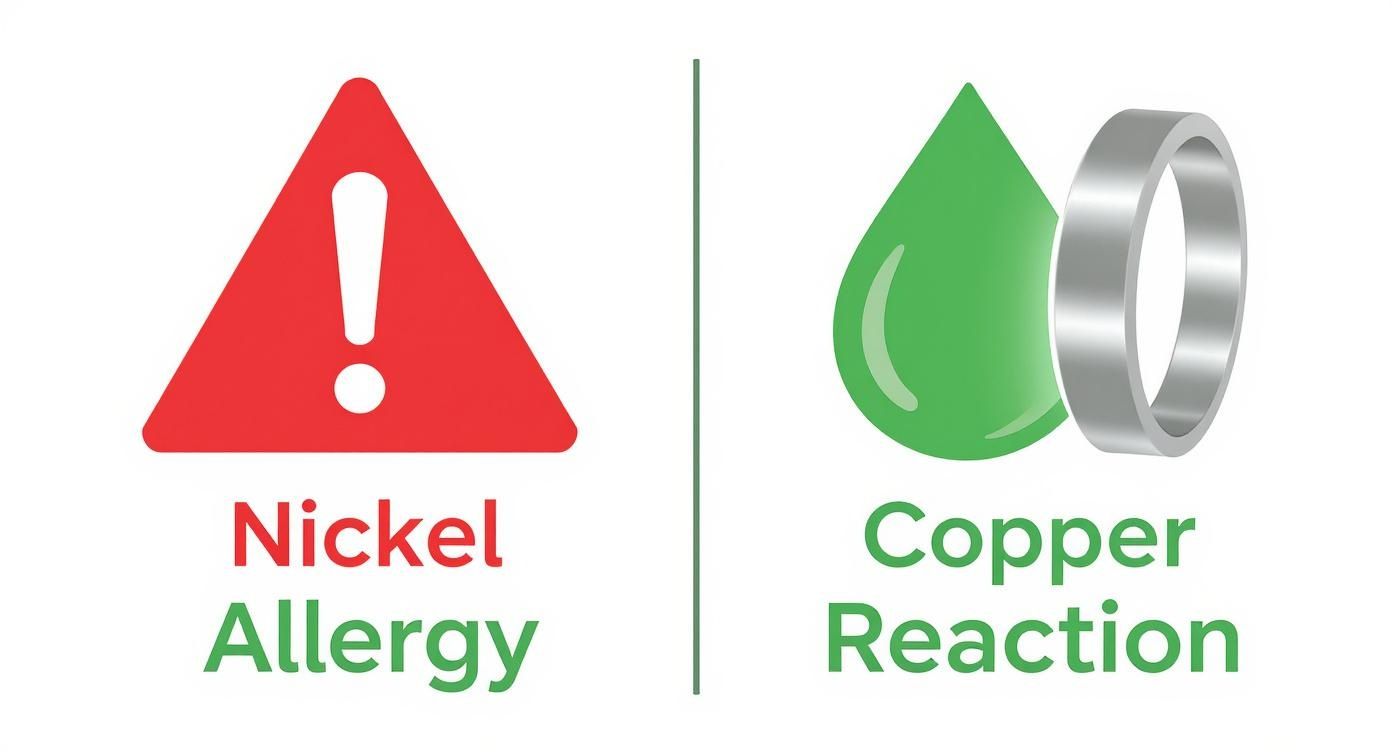
This visual shows that a nickel allergy is a real immune response, while that green tint you might get from copper is just a harmless chemical reaction. While silver plating looks pretty at first, it inevitably wears away, exposing your skin to whatever mystery metals are underneath. This is exactly why investing in solid 925 sterling silver is always the smarter, safer, and more durable choice for your collection.
For a deeper dive into how different jewelry metals compare, you might also be interested in our guide on sterling silver vs stainless steel jewelry.
How To Wear Sterling Silver Without Irritation
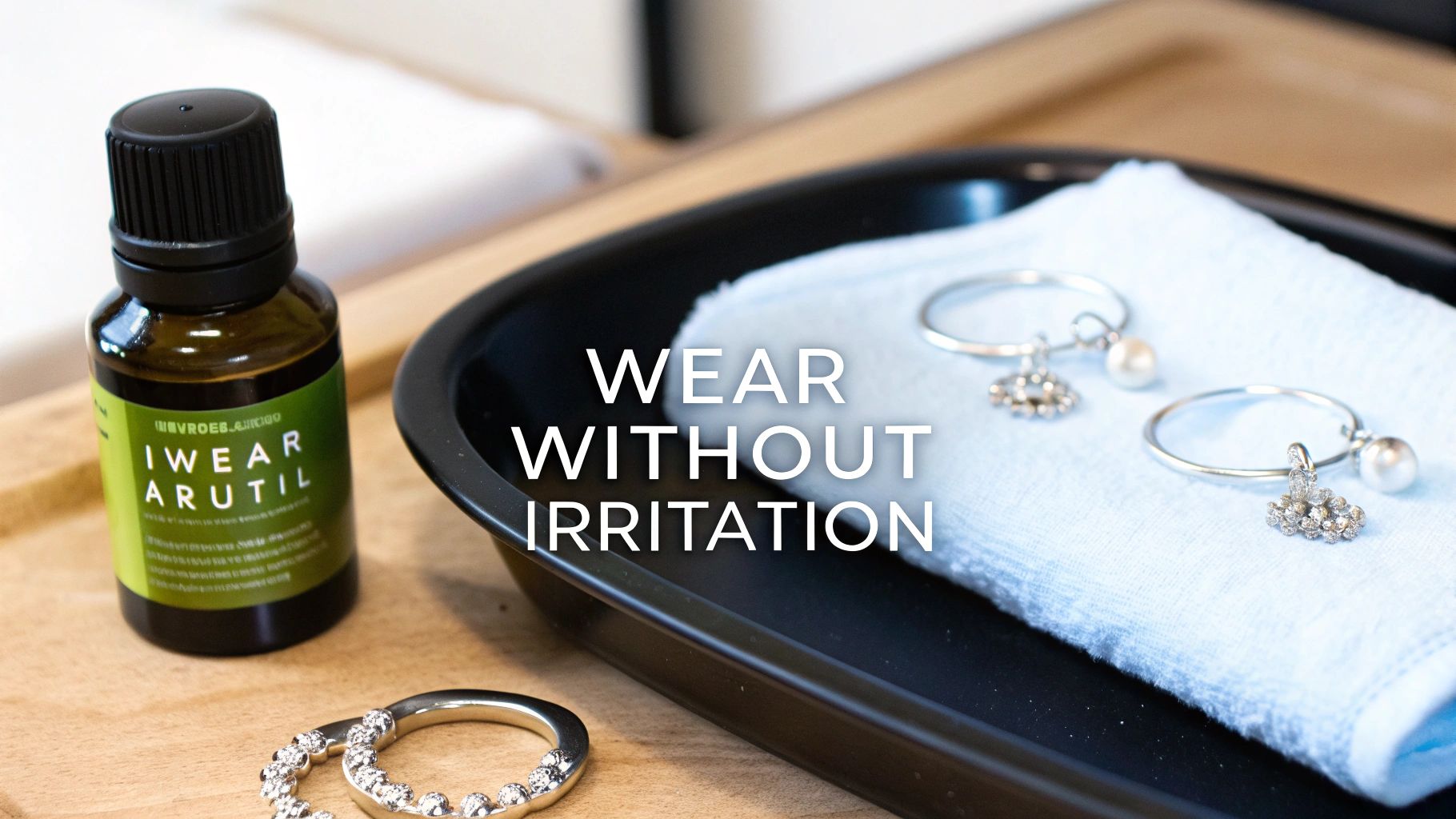
Loving your Southwestern jewelry shouldn’t come with the nagging worry of a skin reaction. Thankfully, with a few smart strategies, you can wear your favorite silver pieces confidently and comfortably. It all comes down to blending smart shopping habits with a solid care routine, ensuring your skin and your jewelry stay in perfect harmony.
The journey to irritation-free wear begins before you even bring a piece home. When you find that perfect ring or cuff that speaks to your inner estuarian cowgirl, don't be shy—connect with the artisan or seller. Just ask them directly about the alloys they use. A passionate creator will be more than happy to confirm their pieces are nickel-free, giving you immediate peace of mind.
Proactive Steps for Sensitive Skin
Once you’ve acquired a new treasure, a simple 'patch test' can save you a world of discomfort. Just wear the new piece for a few hours around the house on a cool, dry day. This is a great way to see how your skin reacts in a low-stakes environment before you commit to wearing it all day long.
What about pieces you already own that you suspect are causing a mild issue? There's an easy at-home fix for that. Applying a thin layer of clear, skin-safe jewelry lacquer or even just clear nail polish to the parts that touch your skin creates a protective barrier. This simple trick prevents any potential irritants in the alloy from making direct contact.
Historically, silver held a prestigious status, second only to gold. Its hypoallergenic nature was known anecdotally for centuries, simply because people had far fewer reactions to it compared to metals like nickel. This historical trust is why genuine sterling silver remains a go-to for those with sensitive skin.
The Importance of a Good Care Routine
Beyond just creating barriers, how you care for your jewelry plays a huge role in keeping irritation at bay. Proper maintenance is about more than just shine; it minimizes the chemical reactions between the metal, your skin’s natural oils, and elements in the environment.
Follow these simple care tips to keep both your jewelry and your skin happy:
- Keep It Dry: Always take your silver jewelry off before you swim, shower, or work out. Moisture is the number one accelerator for the oxidation process that can sometimes lead to sensitivity.
- Clean It Gently: Make a habit of wiping your pieces with a soft polishing cloth to remove tarnish and daily buildup. For a deeper clean, using the right methods keeps the metal pure and less likely to react.
- Last On, First Off: This is the golden rule of jewelry. Always make your pieces the final touch, putting them on after you’ve applied any lotions, perfumes, or hairspray. These products have chemicals that can tarnish silver and irritate your skin when trapped underneath a ring or bracelet.
By adopting these habits, you’re turning technical know-how into a practical part of your passion for wearable art. It’s the best way to ensure every piece you own brings you nothing but joy.
Finding Your Perfect Hypoallergenic Jewelry
Once you know what you’re looking for, building a jewelry collection you love without fear of irritation becomes so much easier. The key takeaway? High-quality, nickel-free 925 sterling silver is a beautiful and safe choice for the vast majority of people. Its purity and trusted copper alloy make it the perfect foundation for pieces you'll wear for years.
But what if you have extremely sensitive skin or just want to explore other materials? The world of hypoallergenic jewelry is full of fantastic options that pair beautifully with the estuarian cowgirl aesthetic. These metals give you peace of mind without ever sacrificing style.
Beyond Silver: Hypoallergenic Alternatives
For anyone needing an alternative to silver, several other metals offer incredible hypoallergenic properties and look stunning alongside turquoise and other natural stones. They carry that same rugged, free-spirited vibe you're after.
Here are a few amazing options to consider:
- Surgical-Grade Stainless Steel: This metal has a slightly deeper, rugged silver tone and is incredibly durable. It’s a fantastic, budget-friendly choice for bold cuffs and rings that can handle anything.
- Titanium: Known for being exceptionally lightweight and strong, titanium is a top-tier hypoallergenic material. It’s so comfortable you’ll barely feel it, making it perfect for everyday earrings and larger necklaces.
- Niobium: This one is a hidden gem in the jewelry world. Niobium is highly biocompatible and can be anodized to create a stunning rainbow of colors, which looks absolutely breathtaking next to vibrant turquoise.
Ultimately, knowing what is hypoallergenic jewelry means you can stop asking, "Can I wear this?" and start confidently saying, "I know what I love." It’s all about finding pieces that feel as good as they look.
This knowledge empowers you to choose jewelry that not only speaks to your style but also respects your skin. Whether you stick with trusted sterling silver or venture into other skin-safe metals, your collection can finally be a source of pure joy and self-expression—no irritation required.
Frequently Asked Questions About Sterling Silver
Even when you know the basics, a few specific questions always pop up. Let's clear the air on some of the most common concerns so you can wear your Southwestern treasures with complete confidence.
Can You Suddenly Develop An Allergy To Sterling Silver?
It’s almost unheard of to develop an allergy to pure silver itself. What’s far more likely is that you’re finally seeing a reaction to nickel after years and years of exposure.
If a piece you’ve worn forever suddenly starts causing a rash, it could be that a protective outer layer has worn off. This can finally let the nickel hidden in the base alloy come into contact with your skin. The best move is to stop wearing the piece and check in with a dermatologist to get a clear answer.
Why Does Sterling Silver Turn My Skin Green?
That green or black mark on your skin isn't an allergic reaction—it's just a bit of harmless chemistry at work, a process called oxidation. It happens when the copper in the sterling silver alloy reacts with things like your skin's natural oils, sweat, or even the lotions and perfumes you use.
This is more common in humid weather and washes right off with soap and water. It's actually a sign of authentic sterling silver, not a sign of poor quality.
Don't mistake a simple chemical reaction for an allergy. The harmless green tint from copper is temporary and washable, while a true nickel allergy involves itching, redness, and irritation from an immune system response.
Is Argentium Silver Better Than Sterling Silver For Allergies?
For anyone with extreme sensitivities, Argentium silver is absolutely a superior choice. It takes the classic 925 formula and improves it by swapping out some of the copper for a metal called germanium, which is highly hypoallergenic.
This updated recipe makes Argentium an amazing option for those who might even react to the small amount of copper in standard sterling. As a bonus, it’s also way more resistant to tarnish, keeping its bright shine with a lot less polishing.
At Silver Elegant, we believe everyone deserves to wear beautiful jewelry without a second thought. Our collections of Southwestern and estuarian cowgirl pieces are crafted from high-quality, nickel-free sterling silver, ensuring comfort even for the most sensitive skin. Explore our stunning selection of turquoise bracelets, statement rings, and more, all designed to celebrate your unique spirit. Find your perfect hypoallergenic piece at Silver Elegant today.