

If you’ve ever worn a stunning new pair of turquoise earrings only to find an itchy, red rash a few hours later, you know the frustration of a metal allergy. It's a common problem, but one that has a simple solution: hypoallergenic jewelry.
These pieces are made from materials that are far less likely to trigger that annoying reaction. They're a safer bet for anyone with sensitive skin, especially for jewelry that sits against your skin all day, like a favorite sterling silver ring or a signature Southwestern-style bracelet.
Decoding Hypoallergenic Jewelry
So, what does "hypoallergenic" actually mean? The term literally translates to "below normal" or "slightly" allergenic. It's a key distinction—it doesn't mean your jewelry is 100% allergy-proof for every single person on the planet.
Instead, it signals a massively reduced risk of causing skin irritation. Think of it as a promise to avoid the usual suspects that cause those red, itchy flare-ups, so you can wear your Southwestern treasures without a second thought.
At the top of that list is nickel. It's the number one cause of contact dermatitis from jewelry. Manufacturers often mix it into other metals (creating an alloy) to add strength and keep costs down, but for many people, it’s just not worth the discomfort. Choosing hypoallergenic means you're opting for pieces crafted from purer, kinder materials that let you express your estuarian cowgirl style without worry.
The Rise of Skin-Friendly Choices
As more people have become aware of metal sensitivities, the demand for skin-friendly jewelry has skyrocketed. It's not a niche market anymore. With studies suggesting that up to 15-20% of the population is sensitive to nickel, it’s no wonder that alternatives like sterling silver and other safe alloys are more popular than ever.
This shift is great news for shoppers. It means you can find beautiful pieces that fit your style—whether it's a bold turquoise cuff or a delicate silver chain—without having to compromise on comfort and well-being.
To make things easier, we've put together a quick guide to help you know what to look for and what to steer clear of.
Hypoallergenic Jewelry At a Glance
This table breaks down the basics, highlighting the common metals that cause problems and the safer alternatives you should seek out for your Southwestern collection.
| Concept | Common Irritants to Avoid | Safer Hypoallergenic Alternatives |
|---|---|---|
| Basic Definition | Materials with a high likelihood of causing skin reactions. | Biocompatible materials that are far less likely to cause irritation. |
| Primary Culprit | Nickel is the most frequent cause of contact dermatitis from jewelry. | Sterling Silver (925), Titanium, and Surgical-Grade Stainless Steel. |
| Other Potential Irritants | Low-karat gold, copper, brass, and mystery metal alloys. | High-Karat Gold (14k+), Platinum, and Niobium. |
This is just a starting point, of course. For deeper dives into specific materials, styling tips, and care guides, be sure to check out our other articles on the Silver Elegant blog.
Why Some Jewelry Causes Skin Reactions
Have you ever slipped on a new pair of earrings, only to find your earlobes red, swollen, and impossibly itchy just a few hours later? It’s an incredibly common experience, and it’s your body’s way of sounding an alarm. This reaction is a form of contact dermatitis—a rash caused by direct contact with a substance your body has decided it just doesn't like.
Think of it as a case of mistaken identity. Your immune system is like a vigilant security guard, constantly on the lookout for threats. When tiny metal ions from certain types of jewelry—most often nickel—leach into your skin, your immune system can misread them as harmful invaders. It then launches a full-scale defense, leading to all those uncomfortable symptoms we associate with a metal allergy.
This whole process is often sped up by moisture. Sweat, for instance, can cause metals to break down more quickly, releasing more ions onto your skin and triggering a stronger, faster reaction. It’s why that favorite sterling silver concho necklace might feel perfectly fine in the winter but suddenly cause a rash on a warm summer day.
The Telltale Signs of a Metal Allergy
Recognizing an allergic reaction is the first real step toward finding a solution. While the symptoms can vary from person to person, they almost always pop up right where the jewelry touches your skin. Learning to spot these signs helps you understand what your skin needs and allows you to choose pieces that work for you, not against you.
Keep an eye out for these classic indicators:
- Redness and Swelling: The skin directly under and around the jewelry becomes visibly red and puffy.
- Intense Itching: An annoying, persistent itch that makes you want to take the jewelry off immediately.
- Rashes or Small Bumps: A rash or tiny, raised blisters might form on the skin’s surface.
- Skin Discoloration: Sometimes, the skin might darken or even turn a greenish hue, especially with metals like copper.
For some, the effects of certain metals can go beyond simple irritation. While many people love the look and feel of a copper flexible bracelet for arthritis, those with a specific sensitivity to copper might notice some skin discoloration. It's a perfect example of how differently our bodies can react to various metals.
Key Takeaway: A jewelry allergy is just your immune system overreacting to specific metal ions—it’s not a sign that something is wrong with your skin. Understanding this helps normalize the experience and empowers you to make smarter choices.
By figuring out the root cause—the specific metal triggering the reaction—you can start building a beautiful collection of Southwestern and estuarian cowgirl jewelry that you can wear with complete confidence and comfort. It's time to leave the irritation behind for good.
Exploring The Best Metals For Sensitive Skin
Finding jewelry that doesn't irritate your skin can feel like navigating a minefield, especially when you love the bold, expressive styles of the Southwest. The great news is you don't have to choose between comfort and fashion. Certain metals are exceptionally kind to the skin, letting you rock your favorite pieces with total confidence.
The right material is everything. These superior metals aren't just safer—they're chosen for their beauty, strength, and ability to showcase intricate designs, from stamped silver to inlaid turquoise. From the cool luster of sterling silver to the rugged power of titanium, there’s a perfect hypoallergenic option for every estuarian cowgirl's taste.
This simple concept map shows how an irritant like nickel can trigger an immune response that results in skin irritation.
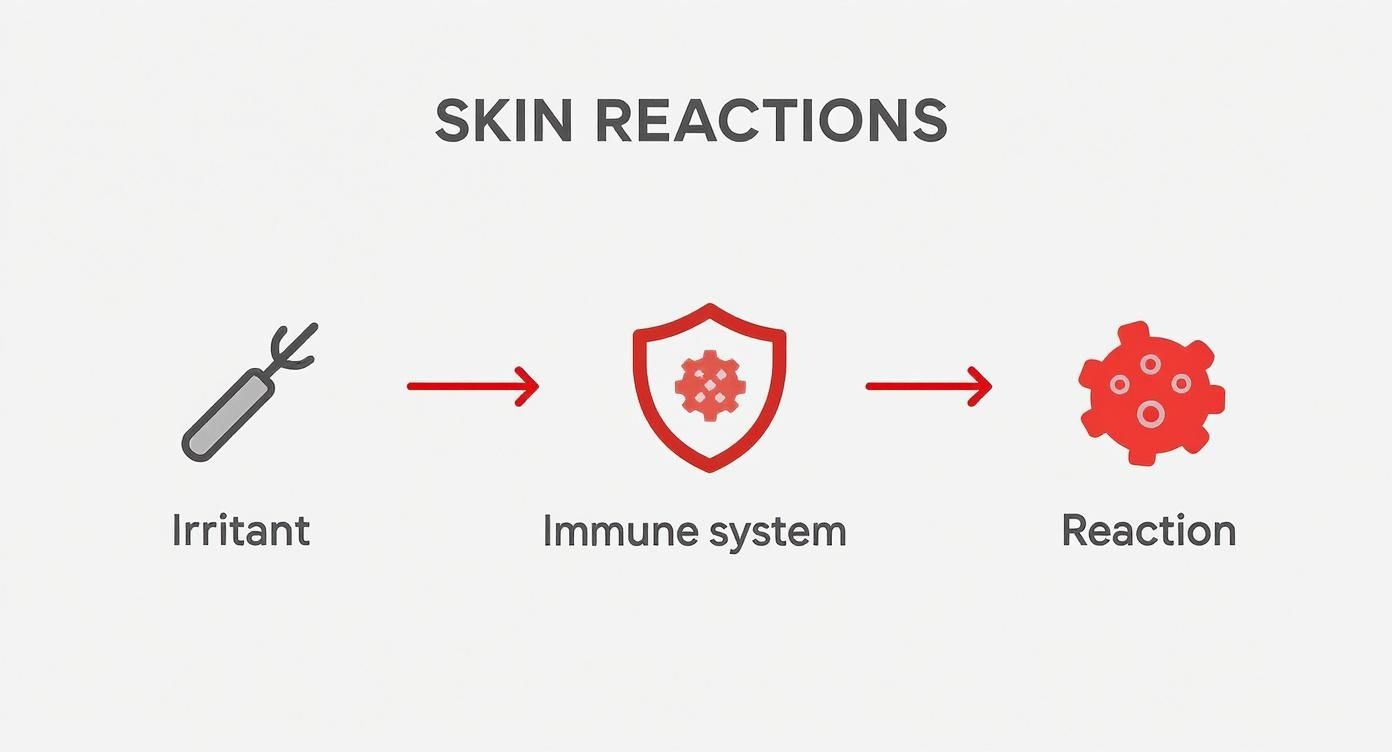
This visual flow underscores why selecting a biocompatible metal is so crucial—it stops the reaction before it even starts.
Sterling Silver And Stainless Steel
Sterling silver, a cornerstone of Southwestern jewelry, is easily identified by its "925" stamp. This means it's made of 92.5% pure silver mixed with 7.5% other metals (usually copper), making it a fantastic hypoallergenic choice for most people. Its brilliant shine is the perfect partner for turquoise and other gems, beautifully capturing the spirit of desert landscapes.
Surgical-grade stainless steel is another go-to, prized for its incredible durability and wallet-friendly price. Although it does contain some nickel, the alloy is so stable that the nickel stays tightly locked in, making it highly unlikely to leach into your skin. This makes it a safe bet for the vast majority of people, even those with mild sensitivities. You can see how these two stack up in our detailed comparison of sterling silver versus stainless steel jewelry.
Titanium And Platinum
For anyone with extreme sensitivities, titanium is the undisputed champion. It’s 100% nickel-free and completely biocompatible—in fact, it's the same material trusted for surgical implants. Lightweight yet stronger than steel, titanium is ideal for everyday rings and bracelets that need to keep up with an adventurous lifestyle on the ranch or coast.
On the luxury end, we have platinum. As the most premium hypoallergenic metal, it’s incredibly dense, durable, and naturally white, meaning it will never need plating to maintain its color. Its purity and resistance to tarnish make it the ultimate choice for heirloom-quality pieces designed to last a lifetime.
Understanding Gold Jewelry
Gold is a timeless classic, but its hypoallergenic properties all come down to purity, which is measured in karats.
- 24k Gold: This is pure gold, so it's completely hypoallergenic. The catch? It’s far too soft for most jewelry designs and daily wear.
- 18k Gold (75% Gold): An excellent choice for sensitive skin. It offers a rich, warm color with a much lower risk of causing a reaction.
- 14k Gold (58.5% Gold): This is generally safe for most, but the higher percentage of other metals in the alloy could pose a problem for highly sensitive individuals.
It’s also crucial to know the difference between plating and filling. Gold-plated pieces have just a whisper-thin layer of gold over a base metal (often an irritant like nickel or brass), which can easily wear off and expose your skin. Gold-filled jewelry, on the other hand, has a much thicker layer of gold mechanically bonded to the base, making it far more durable and a much safer option for sensitive skin.
To help you decide, here's a quick look at how these skin-friendly metals compare.
Comparing Common Hypoallergenic Metals
| Metal Type | Hypoallergenic Rating | Average Cost | Durability | Best For |
|---|---|---|---|---|
| Sterling Silver | High | $$ | Very Good | Everyday wear, intricate Southwestern designs |
| Surgical Steel | High | $ | Excellent | Body jewelry, budget-friendly pieces |
| Titanium | Highest | $$ | Exceptional | Extremely sensitive skin, activewear |
| Platinum | Highest | $$$$ | Wedding bands, heirloom pieces | |
| 18k Gold | Very High | $$$ | Good | Fine jewelry for sensitive skin |
| 14k Gold | Good | $$$ | Very Good | General wear, but test if very sensitive |
Each metal offers a unique blend of benefits, ensuring you can find the perfect piece that looks great and feels even better against your skin.
How To Shop Confidently For Hypoallergenic Jewelry
Now that you know which metals are your friends, you’re ready to start building an irritation-free jewelry collection. Shopping with confidence is all about learning to read the signs of quality so you can invest in beautiful Southwestern pieces that feel as good as they look.
The first step to becoming a savvy buyer? Check for the quality stamps. These tiny markings are your best friend, acting as a guarantee of the metal's purity.
- ‘925’ or ‘Sterling’: This stamp is your confirmation that the piece is genuine 92.5% pure silver.
- ‘Ti’ or ‘Titanium’: You'll see this on pieces made from highly biocompatible titanium.
- Karat Marks (‘14k’, ‘18k’): These tell you the exact purity of the gold.
These stamps are a hallmark of transparency from the maker. They let you quickly identify high-quality materials and steer clear of mystery metals that could cause a reaction. For a deeper dive on why sterling silver is such a reliable choice, check out our guide on why sterling silver rings win for everyday style and value.
Decoding Common Marketing Terms
While you're shopping, you’ll run into phrases like "nickel-free" and "surgical grade." They’re helpful, but it's important to understand what they really mean so you can see past the marketing hype and focus on what matters for your skin.
"Nickel-free" is the most straightforward promise. It means the jewelry was made without the number one metal allergen.
"Surgical grade" usually refers to 316L stainless steel. While it's considered safe for most people, it can contain trace amounts of nickel that are locked into the alloy. This distinction is especially critical in the body jewelry market, where demand for truly inert materials like titanium is rising to prevent reactions in new piercings.
Pro Tip: When in doubt, always prioritize transparency. A reputable seller will be open and honest about the exact materials they use. If they can't tell you what their jewelry is made of, it's a red flag—it's probably best to walk away.
Ultimately, shopping confidently comes down to trusting your source. When you choose artisans and brands who are passionate about their materials and committed to quality, you’re not just buying a piece of jewelry. You’re choosing gorgeous, handcrafted art you can wear with total comfort, knowing it was made with your well-being in mind.
Caring For Your Skin-Friendly Jewelry
Picking out the perfect piece of hypoallergenic jewelry is just the beginning of the journey. To keep your Southwestern accessories looking beautiful and feeling comfortable, a little bit of mindful care goes a long way. This ensures each piece remains a treasured part of your collection for years to come.
Not all metals are created equal, and their care routines reflect that. Sterling silver, for example, has a tendency to tarnish when it's exposed to air and moisture. Don't worry, though—this is a natural process that’s incredibly easy to manage.
Proper storage is your first and best line of defense against tarnish. Simply keeping your sterling silver pieces in a soft, airtight bag or a lined jewelry box can dramatically slow down the oxidation process. This one simple habit preserves the brilliant shine of your favorite turquoise rings and cuffs.
Smart Cleaning For Every Metal
When it comes to cleaning, a gentle touch is always the right approach. For most hypoallergenic metals, a quick wipe-down with a soft, lint-free cloth is all you need to remove the day's oils and dust.
For more stubborn buildup, especially on those intricate silver designs, a mild soap and warm water solution works wonders. Just be sure to rinse every nook and cranny thoroughly and dry your jewelry completely before putting it away. For a deeper dive, our complete tutorial on how to clean sterling silver jewelry at home offers detailed, step-by-step instructions.
Important Note: Stay far away from harsh chemicals. Chlorine from swimming pools, lotions, perfumes, and even common household cleaners can wreak havoc on your jewelry, potentially compromising its hypoallergenic properties and definitely dulling its finish.
Here are a few universal tips to keep in your back pocket:
- Remove Before Activities: Always take your jewelry off before you hop in the pool, hit the gym, or start cleaning. This protects it from both chemicals and accidental dings.
- Last On, First Off: Think of your jewelry as the finishing touch. Put it on after applying makeup, lotions, and perfumes, and make it the first thing you take off at night.
- Store Separately: Keeping pieces from touching each other prevents them from scratching, which is especially important for delicate items or those with gemstones.
On the other hand, some metals are celebrated for being incredibly low-maintenance. Materials like titanium and surgical-grade stainless steel are powerhouses against corrosion and tarnish, meaning they require very little upkeep to stay looking brand new. A quick clean now and then is usually all they'll ever need.
A Few More Things You Might Be Wondering
Even after getting the basics down, a few questions always pop up. Let's clear up any last-minute doubts so you can feel totally at ease with your Southwestern jewelry choices.
Is Sterling Silver Always Hypoallergenic?
For the most part, yes. Genuine sterling silver is made of 92.5% pure silver, and the other 7.5% is usually copper—a metal that almost everyone can wear without a problem. This high purity is exactly why it’s a go-to for skin-friendly Southwestern and estuarian cowgirl designs.
The one thing to watch out for? Unverified or cheap pieces that might have nickel mixed in to keep costs down. You can sidestep this issue by always buying from reputable sellers who guarantee their sterling silver is nickel-free. It's a simple move that protects both your skin and your investment.
Can Gold Jewelry Cause an Allergic Reaction?
It's not common, but it can happen. A true allergy to pure gold is extremely rare; the real troublemakers are the other metals blended into the alloy. Since pure 24k gold is far too soft for jewelry you'd wear every day, it's mixed with other metals to make it stronger.
If your skin is especially reactive, the solution is to aim for a higher karat. Gold marked 18k (which is 75% gold) or higher has a much smaller amount of those other metals, which dramatically lowers the risk of any irritation. It’s a much safer bet for fine jewelry you plan to wear constantly.
Good to Know: The word "hypoallergenic" really means "less likely to cause an allergy," not "100% allergy-proof." It’s a way of saying the jewelry is made without the most common irritants, making it a safe choice for the vast majority of people with sensitive skin.
So, Is It a Guarantee I Won’t Have a Reaction?
There's no absolute guarantee, but it gets you incredibly close. Think of it less like an unbreakable promise and more like a smart safety measure. Hypoallergenic materials are chosen specifically because they cut out the number one cause of skin reactions: nickel.
For over 95% of people, that’s all it takes to wear jewelry comfortably. In very rare cases, someone might have a unique sensitivity to a different metal, like copper. But choosing hypoallergenic pieces is still the best step you can take to wear the styles you love without a second thought.
At Silver Elegant, we feel that everyone should get to wear beautiful jewelry with total confidence. Our collections are brought to life with high-quality, hypoallergenic materials, so you can show off your unique Southwestern style without ever having to worry about comfort.