
When it comes to authentic Southwestern jewelry, the metal holding those gorgeous turquoise stones is just as important as the design itself. Whether you’re by the salty air of the coast or deep in desert country, the core of the matter boils down to a simple trade-off: strength versus purity.
You have pure silver, which is 99.9% silver and incredibly soft. On the other hand, you have sterling silver, a durable alloy made of 92.5% silver and 7.5% other metals like copper. That small addition makes it the perfect, hard-wearing choice for our signature Southwestern and estuarian cowgirl jewelry.
Unveiling the Essential Differences in Silver
While both pure and sterling silver offer that iconic, luminous shine we all love, their composition dictates how they perform in the real world—whether you're wearing a cuff on a day at the ranch, stacking rings for a coastal bonfire, or showing off a concho belt at the rodeo.
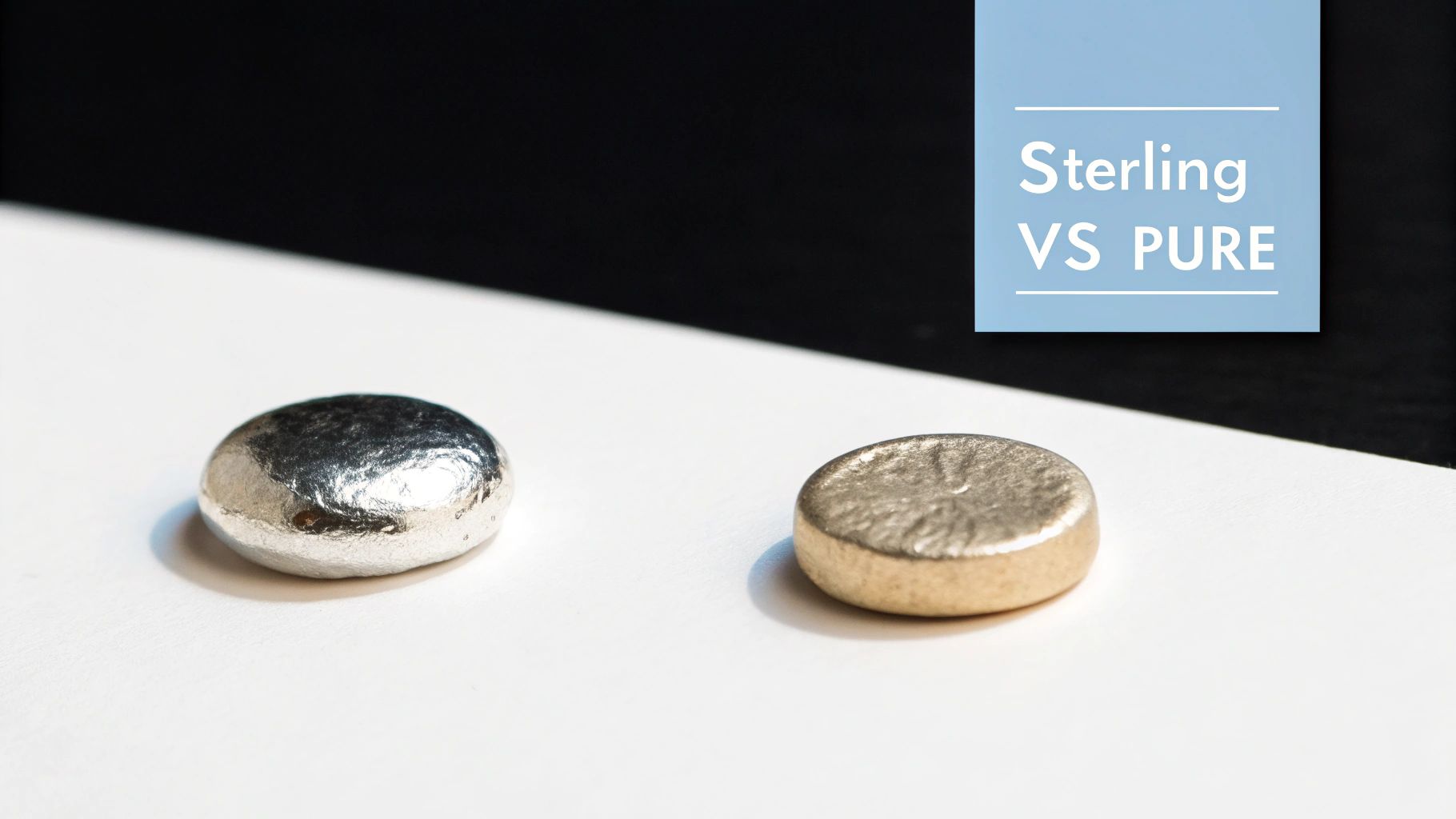
The choice between them isn’t about which one is “better.” It’s about which one is right for the job. For intricate turquoise settings and bold cuffs that need to stand up to daily life, from the dusty trail to the salty spray, the answer becomes crystal clear.
Sterling Silver vs Pure Silver At-a-Glance
To make it simple, here’s a quick look at how these two metals stack up. It really highlights why sterling silver is the go-to for functional, beautiful estuarian cowgirl jewelry.
| Attribute | Sterling Silver (.925) | Pure Silver (.999) |
|---|---|---|
| Silver Content | 92.5% pure silver | 99.9% pure silver |
| Hardness & Durability | Strong and resilient; ideal for jewelry | Very soft and easily scratched or bent |
| Best For | Everyday wear, turquoise settings, detailed cuffs, concho belts | Collectible coins, bullion, delicate artisan pieces |
| Appearance | Bright, classic silver shine | Slightly brighter, whiter luster |
As you can see, the differences are practical and significant.
This isn't some modern invention, either. The sterling silver standard—that exact 92.5% pure silver alloy—was legally established in England way back in 1275. Jewelers and silversmiths realized early on that pure silver was just too soft for functional items. It would bend and scratch far too easily.
By adding 7.5% copper, its tensile strength gets a boost of about 50%. This creates a metal tough enough for jewelry that can be passed down for generations. If you're interested in the details, you can learn more about the history of this durable alloy and its standards.
The bottom line is this: Sterling silver was engineered for beauty and resilience. It's the backbone of authentic Southwestern jewelry because it provides the strength needed to secure precious stones like turquoise and hold intricate stamped designs, ensuring your favorite pieces can be worn and loved for a lifetime.
Understanding the Makeup of Each Silver
To really get the difference between sterling silver and pure silver, you have to look deeper than the surface—right into their very makeup. That little percentage difference isn't just a number; it’s a deliberate choice by silversmiths that completely defines how a piece of jewelry will look, feel, and hold up over the years.
It’s the reason one is perfect for a rugged turquoise cuff and the other is better suited for stacking away as an investment. You can learn more about silver as an asset in our guide on investing in a 1 oz silver bar.
Think of sterling silver as a well-conditioned leather saddle—it's been reinforced to be tough. Pure silver, on its own, is beautiful but just too delicate for the demands of the cowgirl life.
The Strength of Sterling Silver
Sterling silver is an alloy, which is just a fancy way of saying it’s a thoughtful blend of metals designed for a specific job. It’s made of 92.5% pure silver mixed with 7.5% other metals, usually copper. That small bit of copper is the secret ingredient that gives it resilience.
The copper atoms work their way into the silver’s molecular structure, creating a much stronger, more durable material. This reinforcement is what lets artisans craft those intricate, stamped designs and create secure bezel settings that can confidently hold a prized piece of turquoise or oyster shell without you ever having to worry about it coming loose.
The Softness of Pure Silver
Pure silver, often called fine silver, is 99.9% elemental silver. This incredible purity gives it a bright, almost white luster that’s second to none, but it also makes it incredibly soft and easy to shape.
It can be bent, dented, or scratched with very little effort. That makes it a poor choice for most jewelry, especially the bold, hard-wearing pieces that are central to the estuarian cowgirl aesthetic.
This softness isn't a minor flaw; it's a defining trait. A pure silver cuff worn during a day on the ranch or mending nets by the shore would quickly lose its shape, and a ring would be covered in scratches almost immediately.
This isn't just a feeling—it's measurable. Pure silver has a Brinell hardness of only 25-30 HB, while sterling silver, thanks to the copper, clocks in at 75-100 HB. This makes pure silver impractical for jewelry; in lab tests simulating daily wear, it scratches three to five times faster. It's no wonder sterling silver makes up 85-90% of the global jewelry market, while pure silver remains below 5%. You can dive deeper into these metallurgical properties over at Garfield Refining.
Ultimately, the makeup of each silver decides its destiny. Pure silver’s softness makes it perfect for investment bullion or delicate pieces that are rarely worn, while sterling silver's engineered strength makes it the undisputed champion for creating beautiful, lasting Southwestern jewelry.
Real-World Durability for the Modern Cowgirl
Beyond the workshop and the display case, the real test of any Southwestern jewelry is how it holds up to life. Imagine wearing a silver cuff while you're working on the ranch or even just taking a trip out to the coast—this is where the differences between sterling silver and pure silver become impossible to ignore. A modern estuarian cowgirl needs jewelry that’s as resilient as she is.
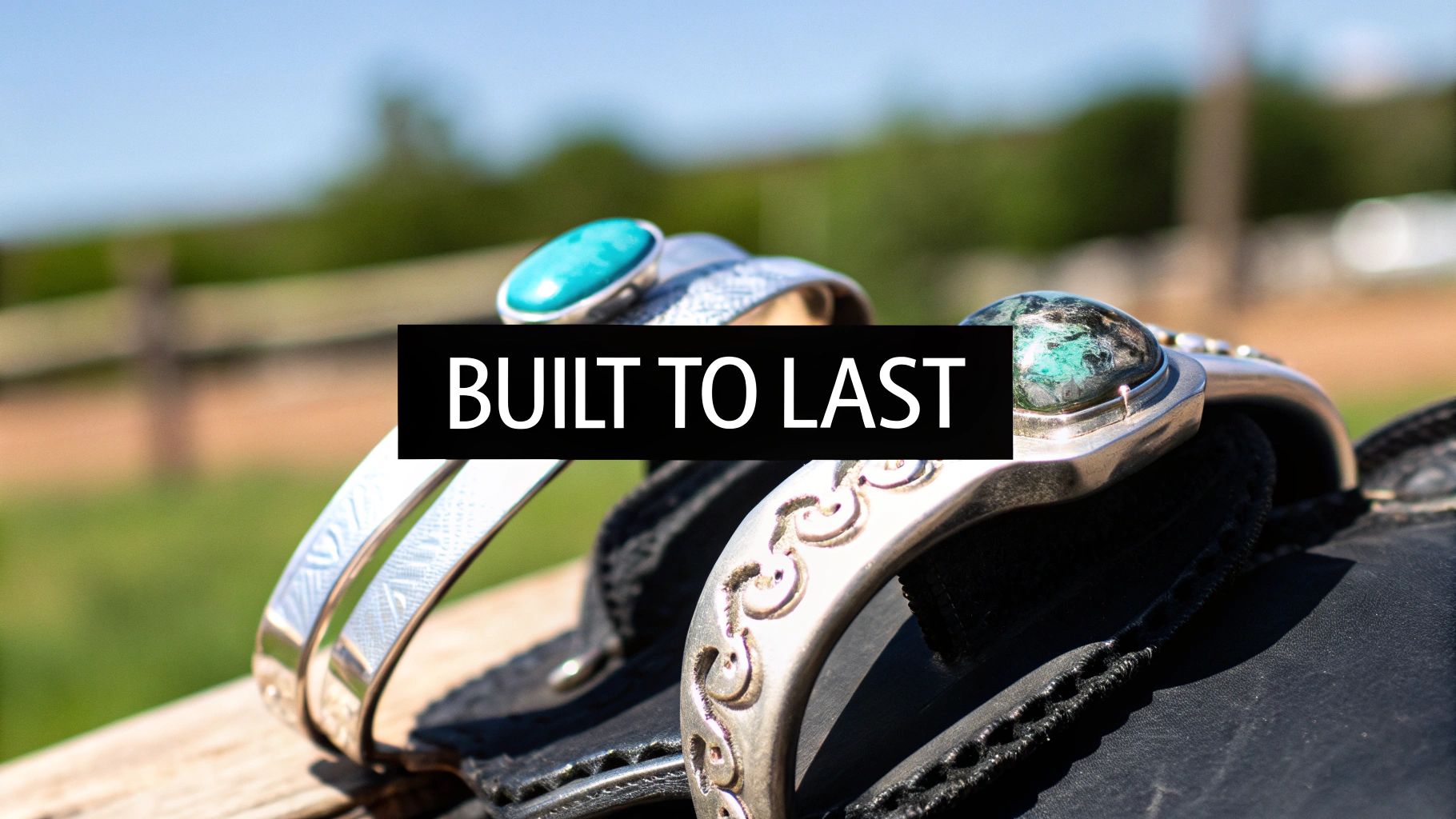
Let's put that into perspective. A bold, heavy cuff bracelet crafted from pure silver would be a beautiful liability. Because it's so soft, even a minor bump against a fence post or a boat railing could leave a noticeable dent. Over time, it would inevitably warp and lose its shape from the simple pressures of daily wear.
A sterling silver cuff, on the other hand, is built for this. The addition of copper makes it far more resistant to the scratches and dents of an active life, ensuring it looks just as stunning after a long day as it did when you first put it on.
The Foundation for Iconic Southwestern Stones
The strength of sterling silver isn’t just about preventing cosmetic damage; it's absolutely essential for protecting the iconic gemstones that define Southwestern jewelry, like turquoise, spiny oyster, and coral. These stones are the heart and soul of the design, and they need a secure and stable home.
Pure silver is simply too malleable for this critical job. The prongs or bezel walls holding a precious stone in place could easily bend or stretch, putting your beautiful turquoise at risk of loosening or, worse, falling out completely.
Sterling silver's structural integrity provides the necessary tension and rigidity to create durable, lasting settings. It’s the trusted framework that allows artisans to confidently set stones, knowing they will remain secure through a lifetime of adventure.
This is exactly why nearly all authentic, high-quality Southwestern jewelry is crafted from sterling silver. Its strength ensures that both the intricate metalwork and the prized gems it holds are built to last for generations. While other metals also offer durability, many wonder how they stack up. For a deeper dive, you can explore the differences in our guide comparing sterling silver vs stainless steel jewelry.
A Practical Comparison of Daily Wear
To really get a feel for the difference, think about these common cowgirl situations and how each metal would fare.
- Ranch & Estuary Life: Sterling silver will resist most minor impacts and scratches from daily chores. A pure silver piece would likely end the day with multiple dents and a warped shape.
- Stacking Jewelry: When you stack bracelets or rings, they naturally rub against each other. Sterling silver’s hardness minimizes scuffing, while pure silver pieces would quickly show wear and tear from that friction.
- Setting Integrity: A sterling silver bezel will hold a turquoise cabochon securely, even with regular movement. The same setting in pure silver could loosen over time, requiring constant checks and repairs.
Ultimately, the choice comes down to purpose. For wearable art that is meant to be part of your daily life—not just kept in a box—sterling silver is the only practical option. It was engineered to offer that perfect blend of beauty and resilience, making it the undisputed champion for the modern cowgirl’s jewelry collection.
Tarnish, Shine, and Skin Sensitivity
Beyond pure strength, the most practical differences between sterling and pure silver boil down to two things you'll notice every day: how the metal ages and how it feels against your skin. One develops a celebrated, soulful character over time, while the other stays consistently bright.
The visual journey of a piece of sterling silver is part of its charm. The small amount of copper in the alloy reacts with sulfur in the air (and even the salt in the sea breeze), creating a gradual darkening we call tarnish. In Southwestern and estuarian cowgirl jewelry, this isn't a flaw—it's a feature. This natural patina settles into the crevices of detailed stamp work, highlighting the artist's design and giving the piece an authentic, well-loved soul.
Pure silver, on the other hand, is highly resistant to tarnish because it lacks that copper content. It holds onto its brilliant, almost-white luster with very little upkeep, but it will never develop that sought-after antiqued character that defines so much iconic cowgirl jewelry.
Hypoallergenic Qualities and All-Day Comfort
For those of us with sensitive skin, the choice of metal is everything. There’s a common myth that people are allergic to silver, but that's incredibly rare. The real culprit behind most skin reactions is nickel, an allergenic metal often used as a cheap filler in lower-quality silver alloys.
High-quality sterling silver, like the kind we exclusively use in our collections, is nickel-free. It relies on copper for its strength, making it hypoallergenic and comfortable for the vast majority of people to wear daily. This makes it a dependable choice for everything from delicate earrings to heavy statement cuffs. To dive deeper, check out our guide on why sterling silver is generally hypoallergenic.
Of course, since fine silver is 99.9% pure, it’s the most hypoallergenic option you can find. However, its softness makes it impractical for most jewelry designs, which is why sterling silver remains the best all-around choice for those with sensitive skin who also want their jewelry to last.
The copper in sterling silver doesn't just add strength; it's the very ingredient that creates the signature patina, giving Southwestern pieces their soulful, timeless appeal. It's the mark of a well-loved treasure.
Visual Luster and Shine
The difference in composition also creates a subtle but distinct look. When you see the two side-by-side, you'll notice it.
- Pure Silver: Has a very bright, white, almost mirror-like luster. Its high reflectivity gives it a cool, brilliant shine that really pops.
- Sterling Silver: Offers a slightly deeper, warmer shine. While still incredibly bright, the copper alloy lends it a classic silver hue that perfectly complements the earthy tones of stones like turquoise and the sunset hues of spiny oyster.
That 7.5% copper in sterling silver doesn't just harden the metal; it’s key to its dominance in the jewelry world. This perfect blend of affordability, beauty, and resilience is why it continues to be the standard over pure silver, which is more often reserved for investment bullion.
Reading the Signs: Hallmarks and the True Value of Your Silver
Becoming a smart collector of Southwestern jewelry really comes down to learning how to read the story stamped into each piece. These tiny markings, known as hallmarks, are your secret decoder ring for understanding the metal’s purity and origins. Think of them as a guarantee of quality, connecting you directly to the artisan's craft.
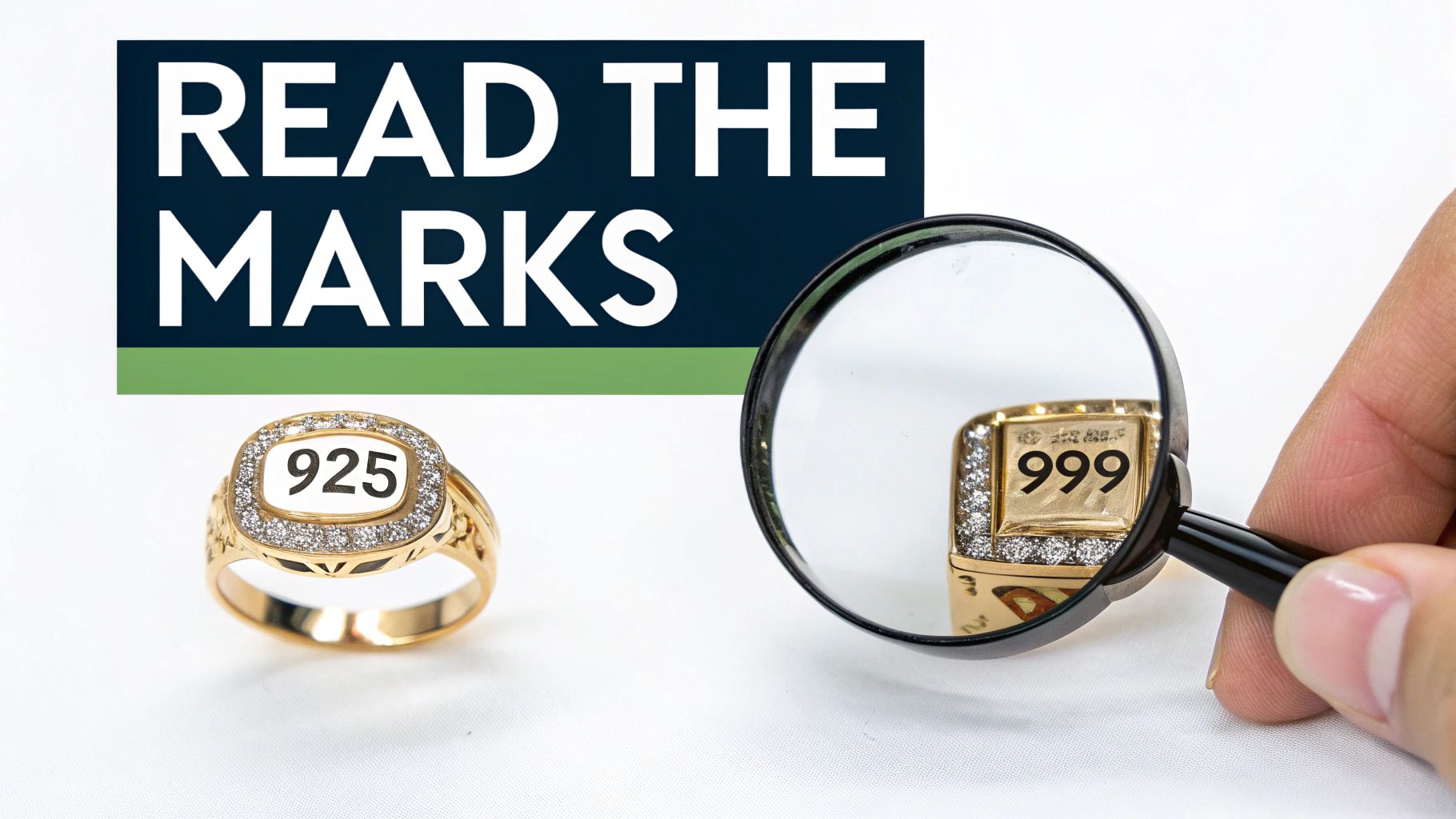
Once you learn how to spot these stamps, you can easily tell the difference between sterling and pure silver. It gives you the confidence to know exactly what you're buying and adding to your collection.
Common Hallmarks on Silver Jewelry
When you’re looking at a piece of Southwestern jewelry, just flip it over and look for small, stamped impressions. These marks are a universal language in the jewelry world, and they’re pretty straightforward.
Here’s what to look for:
- Sterling Silver: The most common mark by far is the number “925,” which tells you the piece is 92.5% pure silver. You might also see the words “Sterling,” “Sterling Silver,” or the abbreviation “Ster.”
- Pure Silver: Since it’s much softer and less common for durable jewelry, pure silver is marked differently. Look for the number “999” or phrases like “Fine Silver” or “.999 Fine Silver” to confirm its 99.9% purity.
If a piece doesn’t have a hallmark, that’s a good reason to pause and ask more questions. For a deeper dive, check out our guide on how to tell if jewelry is sterling silver.
Understanding What Your Jewelry is Really Worth
When we talk about value, it's about so much more than the percentage of silver in the metal. While pure silver has a higher price per gram on the commodities market, that rarely makes it more valuable in the world of wearable art.
In Southwestern jewelry, the value of a sterling silver piece is deeply tied to its artistry, design, and durability—not just its material weight. A masterfully crafted turquoise cuff holds cultural and aesthetic value that far surpasses its simple melt value.
A simple, unadorned ring made of soft, pure silver might have more silver content, but its practical worth is pretty limited. On the other hand, an intricate sterling silver concho belt or a statement ring with a rare spiny oyster stone is valued for the skill it took to create it and its ability to be worn and loved for generations.
The sterling silver provides the strength needed to make the artist's vision a reality, ensuring the piece lasts as a functional work of art. That's the real difference when you're evaluating jewelry.
Looking After Your Southwestern Silver Treasures
Keeping your silver jewelry looking as brilliant as the day you got it is pretty straightforward, but the right touch makes all the difference. Knowing how to care for sterling silver versus pure silver is the key to making sure your Southwestern collection lasts a lifetime—or even longer. The very things that make each metal special are what guide how we should look after them.
Sterling silver's classic, moody patina? That's the 7.5% copper in the mix doing its thing, reacting with the air and causing tarnish. For simple pieces without any stones, a quick buff with a soft cloth is all it takes to bring back that mirror-like shine. But our kind of jewelry often showcases porous stones like turquoise, which really don't play well with harsh chemical dips or cleaners.
Here's the most important thing to remember when cleaning sterling silver with turquoise: never, ever submerge it. Those chemical dips will stain or dry out the stone, causing damage that you just can't undo. Stick to a polishing cloth for the metal, and work carefully around the gem.
Protecting Delicate Stones and Softer Metals
When you’re dealing with intricate stamped pieces, a gentle approach is everything. A soft-bristle toothbrush can work wonders for getting into those tiny crevices to remove buildup without scuffing the stones. If you want a complete rundown of all the best practices, our detailed guide on how to care for sterling silver covers it all, from daily wear tips to long-term storage solutions.
Pure silver, on the other hand, barely tarnishes, so you won't be polishing it much at all. Its biggest weakness is its softness. The main goal here is just to protect it from the scratches, dents, and dings that can easily mark up its beautiful surface.
A few simple storage habits will protect both types of silver:
- Store Separately: Tuck each piece away in its own soft cloth pouch or a lined jewelry box. This is the best way to stop them from scratching each other.
- Keep it Dry: Humidity is the enemy of sterling silver, speeding up tarnish. Store your treasures somewhere dry.
- Last On, First Off: Always put your jewelry on after you've applied lotions, hairspray, or perfume. This little habit helps avoid chemical exposure that can harm both the metal and the stones.
By tailoring your care routine like this, you ensure that both your tough sterling and your delicate pure silver pieces will stay beautiful enough to become treasured heirlooms.
Common Questions About Silver Jewelry
When you're diving into the world of Southwestern jewelry, you start to notice the little details—like the difference between metals that bring these gorgeous designs to life. To help you feel completely confident in your collection, I've gathered answers to some of the most common questions our estuarian cowgirl community asks about sterling and pure silver.
Think of these as quick insights to help you choose, wear, and care for your pieces like a seasoned collector.
Is Sterling Silver Considered Real Silver?
Absolutely. Sterling silver is 100% authentic, high-quality silver. It's an alloy, which just means it's made of 92.5% pure silver mixed with a small amount of other metals.
So, why the mix? Pure silver is beautiful but incredibly soft—too soft for a ring or cuff you want to wear every day. That small addition of other metals gives it the strength it needs to be shaped into durable, practical jewelry that you can cherish for a lifetime. It's as "real" as it gets.
Which Silver Is Better for Sensitive Skin?
For most people, high-quality sterling silver is perfectly comfortable for all-day wear. Skin reactions are almost always caused by nickel, a common allergen that reputable jewelers (like us!) never use in their sterling silver.
While pure silver is technically the most hypoallergenic option because it's 99.9% pure, its extreme softness makes it a poor choice for most jewelry designs. It would bend and scratch far too easily.
The bottom line is that well-crafted, nickel-free sterling silver offers the best combination of beauty, durability, and comfort for sensitive skin, making it the superior choice for wearable art.
Why Does Sterling Silver Sometimes Tarnish?
Tarnish is just a natural chemical reaction. It happens when the small amount of copper in the sterling silver alloy interacts with sulfur compounds floating around in the air. This process creates a dark layer, or patina.
Many of us who love Southwestern jewelry actually appreciate this effect! It can bring out the intricate details in a piece and give it a beautiful, antique character. And the best part? It's easily removable with a gentle polish.
This simple decision tree helps visualize the best care approach for your silver.
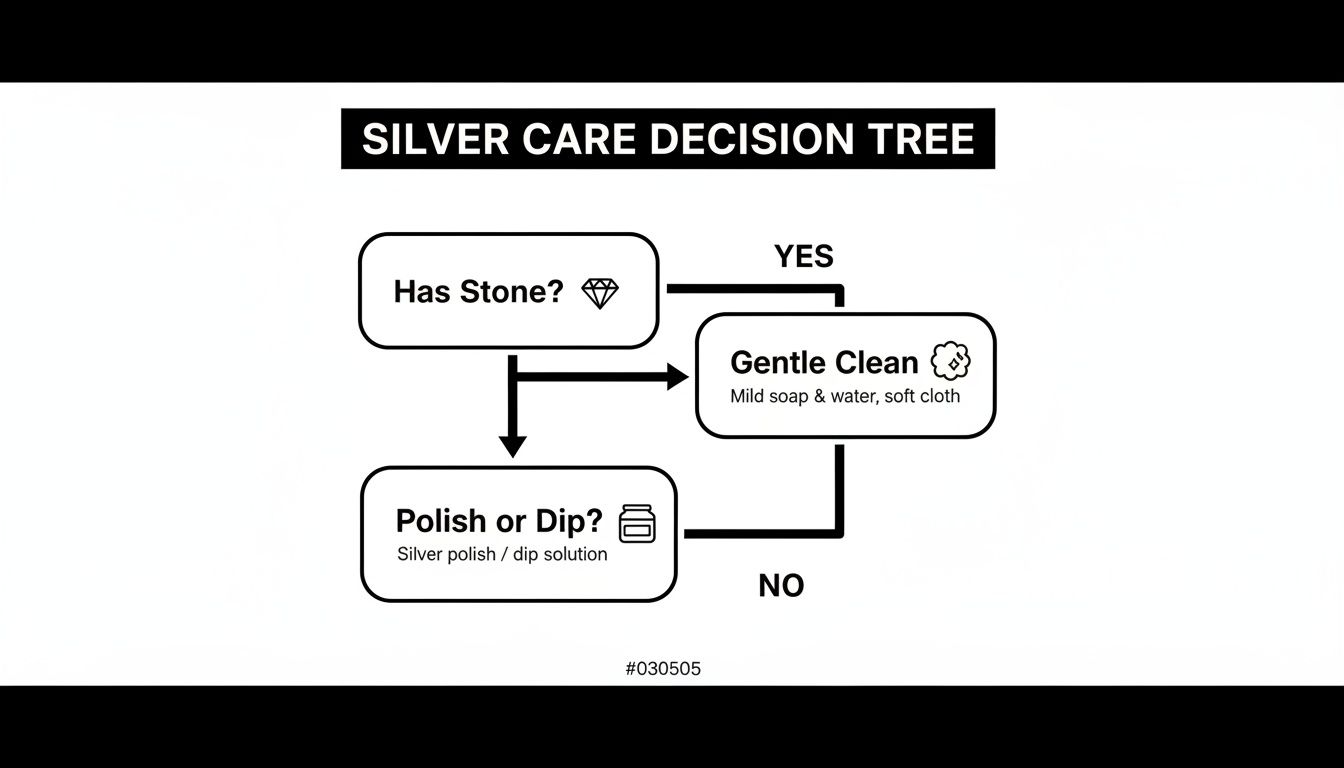
As the chart shows, the most critical factor in silver care is to always prioritize the safety of any gemstones. For pieces with stones like turquoise, stick to gentle, non-chemical cleaning methods to protect their natural beauty.
At Silver Elegant, we craft each piece with the finest nickel-free sterling silver, ensuring your Southwestern and estuarian cowgirl jewelry is both beautiful and built to last. Explore our full collection of authentic designs at https://silverelegant.com.