
Caring for your sterling silver is a simple, proactive routine. The most important thing? Wear it often. After that, just give it a quick wipe-down with a soft cloth and store it in an airtight container to keep tarnish at bay.
The golden rule I always tell people is to make your jewelry the last thing you put on and the first thing you take off. This little habit helps you avoid direct contact with lotions, perfumes, and water, which are the main culprits behind tarnish.
Why Your Southwestern Silver Needs Special Attention
Your Southwestern sterling silver jewelry isn't just another accessory; it's a piece of wearable art, a direct connection to a deep tradition of incredible craftsmanship. Every cuff, concho belt, and turquoise ring tells a story. But sterling silver itself, which is an alloy made of 92.5% pure silver and 7.5% other metals like copper, has a natural tendency to react with the elements in the air.
This reaction, known as oxidation, creates tarnish—that dark, dull layer that can obscure the metal’s brilliant shine. It's not a sign of poor quality at all; in fact, it's proof that your piece is genuine sterling silver. While the dry air of the Southwest can be forgiving, things like humidity from a coastal breeze, lotions, and even your own skin's chemistry can speed up the tarnishing process. Especially for pieces with intricate stamp work or delicate stone settings, preventing tarnish is always, always easier than removing it.
The Science of Tarnish and Prevention
So what is tarnish, really? It's primarily silver sulfide, which forms when silver meets sulfur compounds floating around in the atmosphere. You’d be surprised where these come from—everyday items like wool, rubber bands, and even some foods can release these compounds. Humidity acts as a catalyst, kicking the chemical reaction into high gear. This is exactly why a necklace left on a dresser in a steamy bathroom will tarnish way faster than one stored properly.
A 2019 survey really drove this point home, finding that 68% of sterling silver owners saw tarnish within the first year. But here’s the interesting part: the study also revealed that 42% of those who stored their pieces in sealed, anti-tarnish bags reported significantly less discoloration. You can dig into more of these findings over at jewelseterna.com.
The key takeaway is simple: controlling your jewelry's environment is the single most effective way to keep it bright. An airtight space starves the chemical reaction of the air and moisture it needs to tarnish your silver.
Sterling Silver Care At a Glance
To make things even simpler, here’s a quick-reference table. Think of it as the ultimate cheat sheet for keeping your silver looking its best day in and day out.
| Action | Why It Matters | Frequency |
|---|---|---|
| Wear it often | The natural oils in your skin help keep silver clean. | Daily |
| Wipe with a soft cloth | Removes oils, sweat, and residue after wearing. | After each use |
| Store in an airtight bag | Prevents exposure to air and humidity, which cause tarnish. | Every time it's not worn |
| "Last on, first off" | Avoids contact with lotions, perfumes, hairspray, and water. | Daily |
| Avoid harsh chemicals | Bleach, chlorine, and ammonia can damage the silver. | Always |
Following these simple steps is the foundation of great jewelry care and will dramatically reduce the amount of deep cleaning you'll ever need to do.
Establishing a Daily Care Routine
Protecting your collection doesn't require a huge time commitment—just a little consistency. Making a simple daily habit your go-to defense against tarnish is the best way to go.
Create a small ritual of gently wiping down your earrings, bracelets, and rings with a soft, lint-free cloth, like a microfiber or a dedicated jewelry polishing cloth, at the end of the day. This simple action whisks away the oils, sweat, and residues that build up during wear. For more specific advice on different types of pieces, our guide on authentic Southwestern earrings craftsmanship and care tips offers some great insights.
Honestly, this tiny step takes less than a minute, but it does wonders to preserve the brilliant luster of your silver and honor the artistry poured into each piece.
Gentle and Safe Silver Cleaning Methods
When your Southwestern silver cuff or pendant needs more than a quick wipe-down, it’s time for a proper, gentle cleaning. The whole point is to bring back that incredible shine without scratching the metal or damaging any of the delicate details the artist worked so hard to create.
My rule of thumb is to always start with the mildest method first. You can always escalate to something a bit stronger, but you can't undo damage from being too aggressive right out of the gate.
The Gentle Soap and Water Bath
For routine upkeep, you really can't beat a simple soap and water bath. This is my go-to for pieces that have picked up a bit of dust, skin oils, or everyday grime but aren't seriously tarnished. Think of it as the first line of defense in your silver care arsenal.
It's perfect for a simple silver chain or those earrings you wear almost daily that just need a little freshening up.
- Prep the Bath: Grab a small bowl and fill it with warm—not hot—water. Add just a couple of drops of a mild, phosphate-free dish soap and give it a little swish to get some suds going.
- A Quick Soak: Pop your jewelry into the water and let it sit for just a few minutes. This is usually enough time to loosen up any surface residue.
- Softly Clean: Take a very soft-bristled toothbrush (a baby toothbrush is absolutely perfect for this) and gently work into any crevices or detailed stamp work. The key word here is gently. You're not scrubbing a floor!
- Rinse and Dry Immediately: Rinse the jewelry well under cool, running water. This next part is critical: you must dry it immediately and completely with a soft, lint-free cloth. Any lingering moisture can cause water spots and, ironically, lead to more tarnish.
For most pieces that are regularly worn and cared for, this is often all you need to restore that beautiful luster. But what about when tarnish has already started to creep in? That's when we need a slightly different approach.
A DIY Paste for Light Tarnish
If you’re seeing that tell-tale yellowish or brownish tint of early tarnish, a simple homemade paste can give you a bit more cleaning power without resorting to harsh chemicals. I find this technique works especially well on pieces with lots of texture or deep stamp work where tarnish loves to hide.
Just mix a little baking soda with a few drops of water until you have a paste about the consistency of toothpaste. You want it thick enough to stick, but not so dry that it's gritty.
Using your fingers or a soft cloth, gently rub the paste onto the silver. Here's a pro tip: always rub in a straight, back-and-forth motion, not in circles. This helps prevent the fine, circular scratches that can dull a polished surface. Once you're done, rinse it thoroughly and dry it completely.
A Word of Caution: While this baking soda paste is effective, it is slightly more abrasive than plain soap and water. Use it sparingly and with a very light touch, especially on anything with a high-polish, mirror-like finish. And never, ever use this on pieces with porous gemstones like turquoise or opal.
This infographic breaks down the core ideas of proactive daily silver care into a super simple guide.
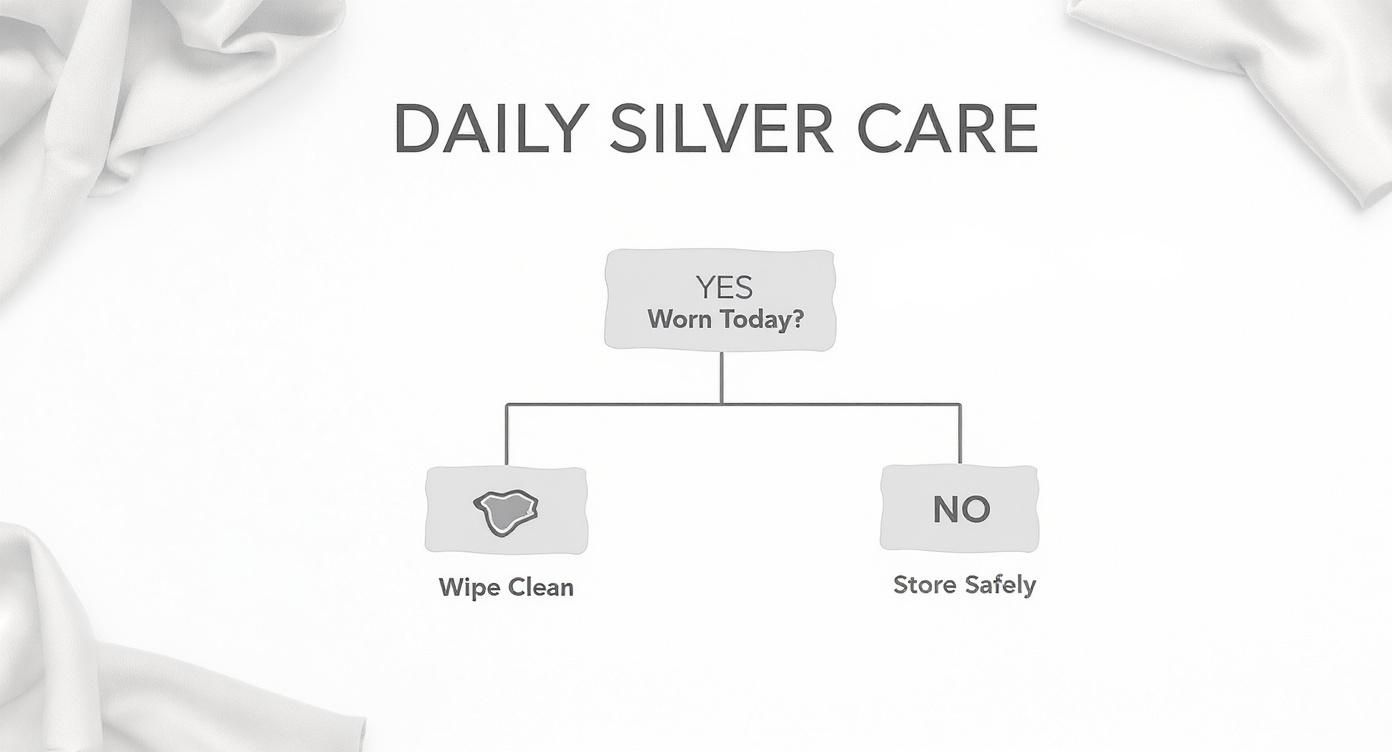
As you can see, the most important actions are the simple, daily habits—like wiping your jewelry down after wearing it and storing it properly. Getting those right dramatically reduces how often you'll even need to think about a deep clean.
Commercial Polishing Cloths and Solutions
Sometimes, you just want reliable, no-fuss results. That's where professionally formulated products really shine. They're designed specifically for sterling silver and can make your care routine so much easier.
- Polishing Cloths: Honestly, a high-quality, two-part polishing cloth is one of the best investments you can make for your jewelry collection. One side is treated with a very fine cleaning agent that whisks away tarnish (this is the part that turns black as it works), and the other side is for the final polish and buff. They are absolutely perfect for giving a pendant a quick shine before you head out the door.
- Silver Dips and Solutions: Liquid cleaners, or "dips," can be incredibly effective at zapping heavy tarnish in seconds. However, they are powerful and can be quite harsh. They must be used with extreme caution, as they can easily strip away the intentional oxidation (the blackening in the details) that gives Southwestern jewelry its depth and character. They can also cause severe, irreversible damage to porous gemstones.
The longevity of your pieces is directly tied to how you care for them. A 2020 report found that sterling silver jewelry cleaned every few months and stored correctly retains its luster for an average of 25 years, compared to just 7 years for neglected pieces. The analysis of over 5,000 items also showed that 89% of regularly maintained jewelry had minimal tarnish after a decade.
The right cleaning method always depends on the specific piece and what it needs. A heavily tarnished, simple chain with no stones might be a candidate for a quick, careful dip. But for an intricate cuff with oxidized details and a turquoise stone, a polishing cloth used only on the raised, polished surfaces is the much safer, smarter bet.
If you're facing some stubborn discoloration and want to dig deeper, check out our complete guide on how to remove tarnish from silver jewelry. Just remember to always start with the least aggressive option to preserve the integrity and beauty of your cherished silver.
Protecting Turquoise and Porous Gemstones
The soul of Southwestern jewelry often lies in its stunning gemstones. Vibrant turquoise, deep red coral, and iridescent mother-of-pearl are more than just accents; they're the centerpiece. But these natural beauties are far more delicate than the sterling silver that cradles them.
Unlike hard, non-porous stones like diamonds, materials like turquoise are soft and porous. You can almost think of them like a natural sponge. This means they can absorb liquids and chemicals from their environment, leading to permanent discoloration or damage. A cleaning method that’s perfectly safe for a plain silver chain can be disastrous for a classic Zuni inlay bracelet or a Navajo squash blossom necklace.
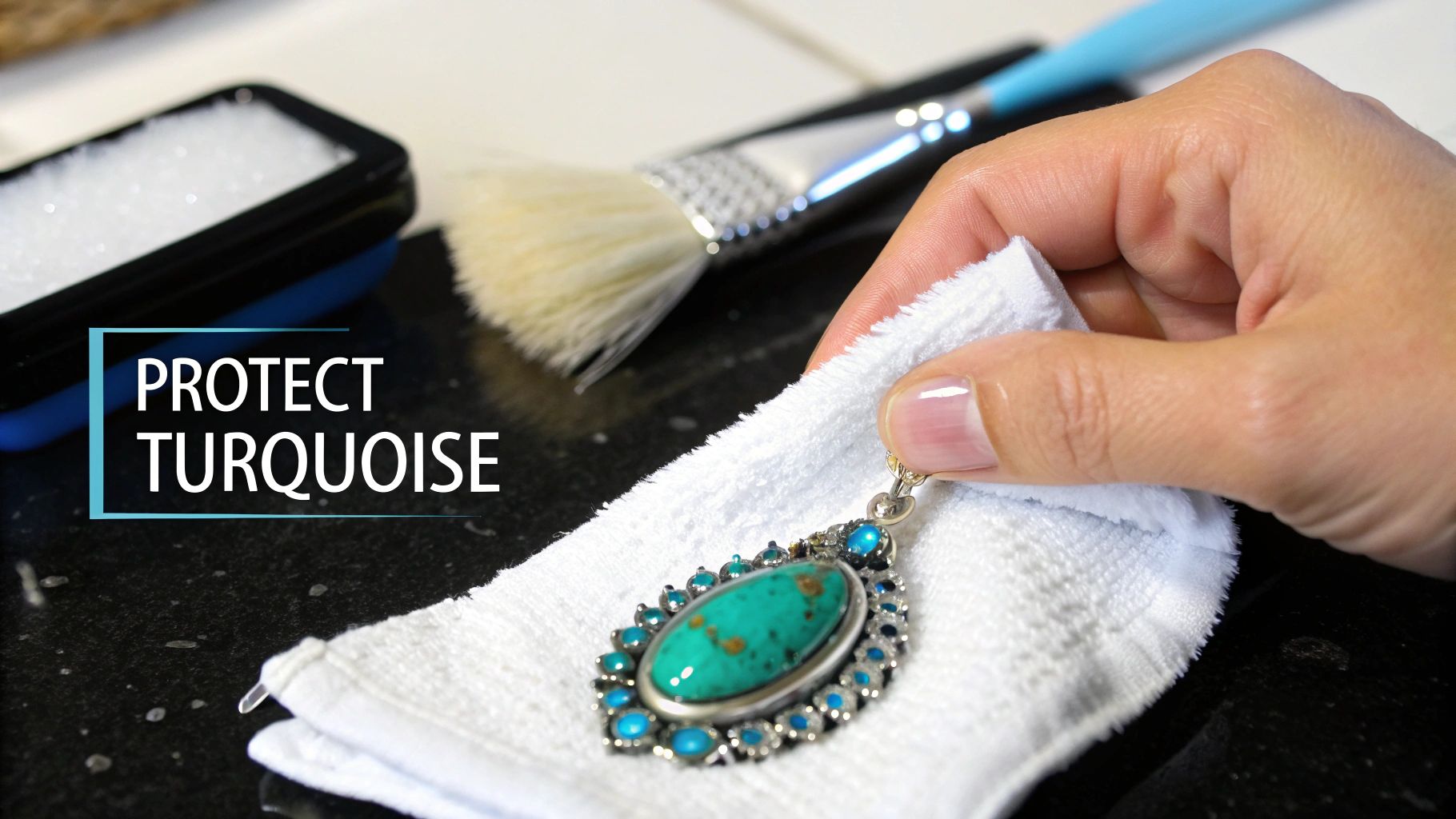
Why Water Is The Enemy of Turquoise
If there's one rule to remember when caring for silver with porous stones, it’s this: never submerge it in water or any cleaning solution. Soaking a piece with turquoise can cause the stone to absorb moisture and chemicals, which can darken its color or create nasty splotches. Unfortunately, this kind of damage is often irreversible, forever changing the stone's natural beauty.
The same hard-and-fast rule applies to ultrasonic cleaners. The intense vibrations are simply too harsh for these softer gems, potentially causing them to crack or even pop out of their settings. It's a risk that's just not worth taking with these handcrafted treasures.
The Art of Cleaning Around Gemstones
So, how do you clean the silver without putting the stone in harm's way? It all comes down to precision and a gentle touch. Your goal is to clean the metal around the gemstone, treating the stone itself as a strict no-go zone for cleaners.
Here’s a practical, safe approach I use all the time:
- Use a Barely-Damp Cloth: Lightly dampen a small section of a soft, lint-free cloth with water. Wring it out until it's almost completely dry. Carefully wipe only the silver portions of your jewelry, making sure to avoid any contact with the turquoise or coral.
- Target Crevices with a Soft Brush: For detailed stamp work or intricate settings near a stone, a very soft, dry brush is your best friend. An old, clean baby toothbrush or a small, soft makeup brush works perfectly to gently flick away dust and debris from tight spots without scratching the stone.
- Polish with Precision: When using a polishing cloth, I like to use my fingertip to guide it over the raised silver surfaces. Go slowly and be meticulous, ensuring you only buff the metal. You want to leave the gemstone and any intentionally oxidized (darkened) areas untouched.
Remember, the goal isn't just to make the silver shine, but to preserve the entire piece as the artist intended. Gentle, targeted cleaning protects the delicate balance between the gleaming metal and the vibrant, natural stone.
For a deeper dive into general cleaning techniques that you can adapt for stone-free pieces, our guide on how to clean sterling silver jewelry at home has some great additional tips.
Shielding Stones From Everyday Chemicals
Damage doesn't just happen during cleaning sessions; it can happen during everyday wear. Things like lotions, perfumes, hairspray, and even the natural oils from your skin can build up on porous stones and get absorbed, causing a dull film or permanent stains.
This is where the "last on, first off" rule becomes absolutely critical. Always put your jewelry on after you’ve applied all your cosmetics and let them fully dry. At the end of the day, make it a habit to take your jewelry off first, before washing your face or applying night creams. This simple routine creates a protective barrier and will significantly extend the life and vibrancy of your gemstones.
Knowing which gems need special attention is half the battle. This chart breaks down the safest approaches for the most common stones in Southwestern jewelry, reinforcing what works and—more importantly—what to avoid.
Cleaning Methods for Common Southwestern Gemstones
| Gemstone Type | Safe Cleaning Method | Methods to Avoid |
|---|---|---|
| Turquoise | Wipe silver with a barely-damp cloth. Use a dry, soft brush for crevices. | Soaking, ultrasonic cleaners, chemical dips, abrasive pastes, harsh soaps. |
| Coral | Gently wipe with a soft, dry, or very slightly damp cloth. | All liquids, especially acidic ones like vinegar or lemon juice. Avoid harsh chemicals. |
| Mother-of-Pearl | Polish with a dry, soft cloth. A very light touch with a slightly damp cloth is okay. | Soaking, chemicals, and abrasive cleaners which will scratch the delicate surface. |
| Opal | Clean with a soft, dry cloth. Avoid getting it wet whenever possible. | Sudden temperature changes, soaking, detergents, and ultrasonic cleaners. |
As you can see, a gentle hand and the right technique are all you need to keep these unique pieces looking their best without risking their most precious elements.
Preserving Oxidized Finishes and Mixed Metals
So much of the soul in Southwestern jewelry comes from those beautiful, intentionally darkened details. We call this oxidation, or an antiqued finish, and it’s what makes the intricate stamp work pop and gives a piece its incredible depth. This isn't tarnish; it's a deliberate part of the design.
The single biggest mistake you can make is treating this finish like unwanted tarnish. If you use aggressive polishes or—even worse—a chemical dip, you’ll strip away that beautiful contrast in a heartbeat. Doing so permanently alters the artist's original vision. Learning to clean your silver while protecting these details is a crucial part of caring for your collection. It’s about honoring the craftsmanship.
The Selective Polishing Technique
The real secret to preserving that beautiful, rustic look is all about selective cleaning. Your goal here is to brighten up the raised, high-polish surfaces while leaving the recessed, darker areas completely untouched.
This is where a good quality polishing cloth becomes your best friend. Instead of rubbing the entire piece like you're trying to start a fire, use your fingertip to guide a small corner of the cloth over just the high points.
- Focus on Raised Surfaces: Gently buff the areas that are meant to shine. Think of the smooth parts of a cuff or the outer edges of a pendant.
- Avoid the Crevices: Stay far away from the deep grooves of stamp work or the darkened background areas. That black residue you see on your cloth is a good sign—it means it's working! Just make sure it's only coming from the right spots.
This careful approach is what maintains the stunning visual contrast that truly defines so many Southwestern and western-inspired designs.
Think of it this way: you are enhancing the artist's work, not erasing it. The contrast between light and dark is what tells the story of the piece. Your job is simply to keep the highlights bright.
Managing Mixed Metal Pieces
Many of my favorite Southwestern designs beautifully weave in other metals like copper or brass. This creates a warm, earthy palette against the cool shine of silver. But these metals tarnish at different rates and develop their own unique patinas over time.
Trying to make a copper accent as bright as sterling silver would completely ruin the intended aesthetic. The key here is to embrace the warm patina of the copper or brass while gently cleaning the silver portions. You can use the exact same selective polishing technique I mentioned, carefully working only on the silver. For really intricate mixed-metal pieces, I sometimes use a smaller cloth or even a cotton swab for extra precision.
Understanding how different metals behave is essential for proper care. For instance, our detailed comparison of sterling silver vs. stainless steel jewelry dives into how various metals wear over time. This mindful approach ensures you maintain the beautiful interplay of colors and textures, respecting the materials and preserving the integrity of the design for years to come.
Smart Storage and Wearing Habits That Prevent Tarnish
When it comes to caring for sterling silver, the old saying holds true: prevention is always easier than a cure. Adopting just a few smart habits for storing and wearing your treasured Southwestern pieces can drastically cut down on how often you need to clean them. This keeps them bright and ready to wear at a moment's notice.
Think of tarnish as a chemical reaction that needs a couple of key ingredients to get started, mostly sulfur compounds in the air and a bit of moisture. Your goal is to cut off that supply chain. That's why proper storage is about more than just avoiding scratches; it's about creating a safe, controlled environment for your silver.
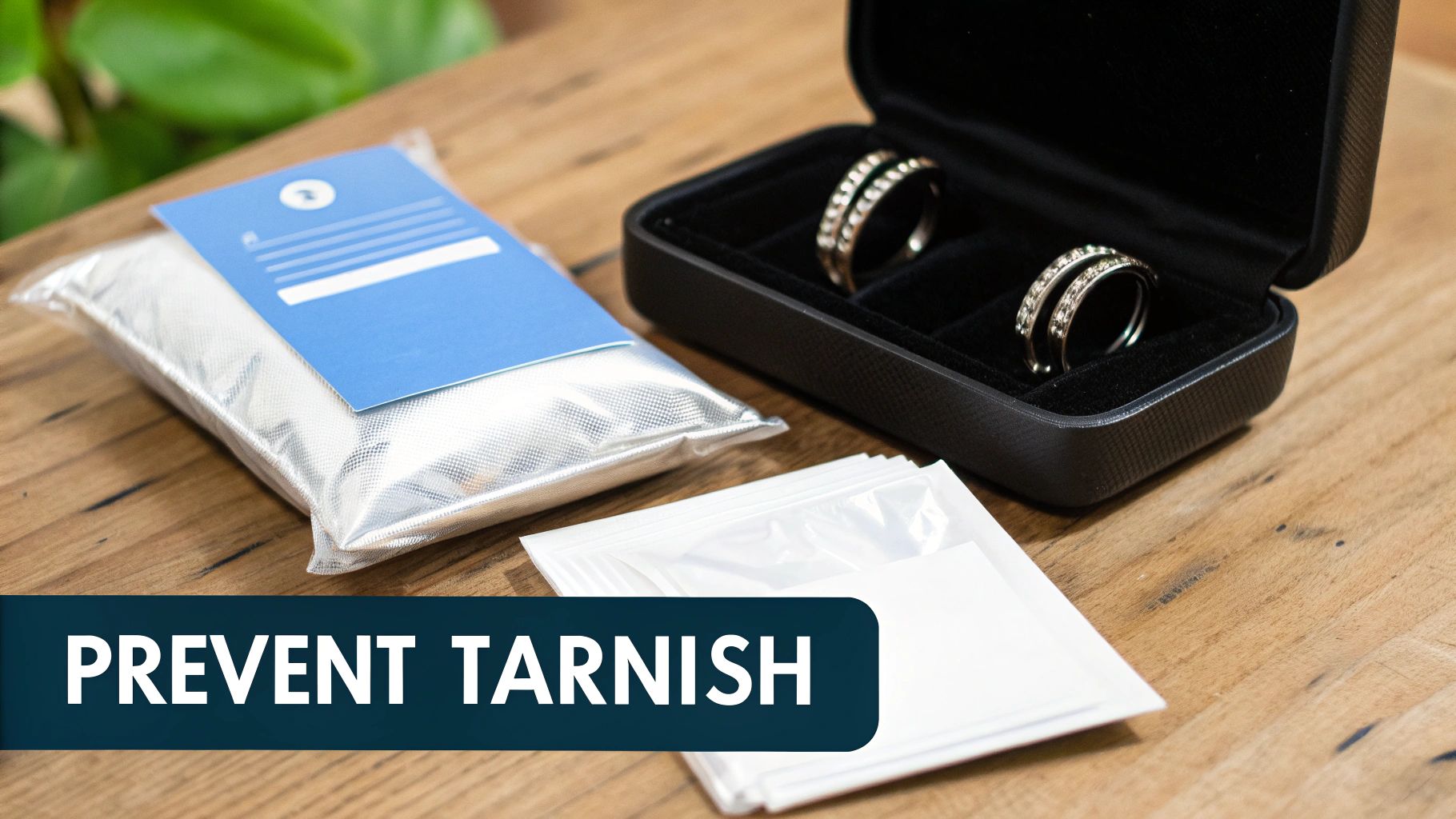
Making Airtight Storage Your Best Friend
Humidity and open air are the biggest culprits behind tarnish. Leaving a beautiful concho belt or a pair of turquoise earrings out on a dresser is like sending an open invitation for silver sulfide—the technical term for tarnish—to form. The solution is simple: limit your jewelry’s exposure to air when you're not wearing it.
An airtight container is your silver's best friend. This doesn't mean you need some expensive, high-tech vault. A few practical solutions work wonders:
- Anti-Tarnish Jewelry Boxes: Many jewelry boxes come with specially treated linings designed to absorb the very sulfur pollutants that cause tarnish. They’re a fantastic combination of organization and protection.
- Sealed Bags: It doesn’t get much easier than this. Simple, individual zip-top plastic bags are an incredibly effective and affordable option. Just squeeze out as much air as possible before sealing to create a mini-vacuum that slows oxidation to a crawl.
- Anti-Tarnish Strips: For an extra layer of defense, tuck a small anti-tarnish strip into your jewelry box or bag. These little squares act like a security guard for your silver, absorbing airborne pollutants before they can do any harm.
By using these simple storage methods, you create a stable environment that keeps your pieces looking pristine. You can find more tips on building these routines in our guide on essential jewelry care habits that keep pieces shining.
Navigating Everyday Tarnish Accelerators
Beyond the air itself, plenty of common substances we encounter daily can dramatically speed up the tarnishing process. Being mindful of these everyday chemicals is a huge part of proactive sterling silver care.
The impact of chemical exposure is well-documented. A 2021 study highlighted that contact with chlorine, found in pools and many household cleaners, caused sterling silver to tarnish up to 300% faster than normal atmospheric conditions. The research also revealed that 85% of silver samples exposed to chlorine or bleach showed visible corrosion, underscoring the need for careful handling around these substances.
Your daily routine holds the key. The 'last on, first off' rule is more than just a catchy phrase; it's a practical strategy to shield your silver from the chemical cocktail of perfumes, hairsprays, and lotions that can coat its surface and dull its shine.
When to Take Your Silver Off
Knowing when not to wear your jewelry is just as important as knowing how to clean it. Certain activities create a perfect storm for tarnish and potential damage, especially for Southwestern pieces that might feature delicate turquoise or intricate stamp work.
Make it a habit to remove your sterling silver jewelry before you start any of these activities:
- Swimming: This is a non-negotiable. Whether it's a chlorinated pool, a hot tub, or the salty ocean, the chemicals and minerals are incredibly corrosive to sterling silver.
- Cleaning the House: Household cleaners are loaded with harsh chemicals like ammonia and bleach that can cause immediate, severe discoloration and damage.
- Exercising: Sweat is both acidic and salty, which can accelerate tarnishing. Plus, the risk of scratching or denting a beautiful cuff during a workout is just too high.
- Showering or Bathing: Soaps and shampoos can leave a dulling film on silver that’s a real pain to remove from detailed crevices. This also exposes porous stones like turquoise to harmful moisture.
- Cooking: Certain foods, especially those high in sulfur like eggs, onions, and mustard, can cause silver to tarnish almost on contact.
By creating these "safe zones" in your daily life where your jewelry is set aside, you protect it from its biggest threats. This simple awareness is the cornerstone of effective silver care, ensuring your collection remains a source of beauty and pride for a lifetime.
Your Sterling Silver Care Questions, Answered
Even when you know the basics, specific questions always pop up. Your Southwestern pieces aren't just metal; they're a blend of silverwork and natural stones, so it's smart to be sure before you start cleaning. Here are some straightforward answers to the questions we hear most often.
How Often Should I Clean My Sterling Silver Jewelry?
Honestly, there's no rigid schedule. The right frequency depends on how often you wear a piece, your climate, and how you store it. Think of it more as a routine you adapt to your jewelry's needs.
For something you wear daily, like a go-to silver cuff, a quick wipe with a soft polishing cloth after you take it off is your best defense against tarnish. For a deeper clean, a gentle bath with soap and water every month or two should keep it bright.
The real signal is the silver itself. If you spot the first hint of yellow or a brownish tint, that’s your cue to give it a proper cleaning. On the other hand, if you keep your jewelry tucked away in an airtight bag with an anti-tarnish strip, you might only need to clean it a couple of times a year. The golden rule is simple: preventing heavy tarnish is always easier than removing it.
Can I Use Toothpaste to Clean My Silver Jewelry?
This is a persistent DIY myth that we need to bust for good. Please, step away from the toothpaste! While this might have been a passable trick with old-school, simple formulas, modern toothpastes are a different story. They’re packed with silica and other micro-abrasives designed to scrub tough enamel on your teeth.
Those same gritty particles will leave a network of tiny scratches all over the surface of your sterling silver. You might not see each scratch individually, but together they'll create a dull, hazy finish. Ironically, that newly scratched-up surface will tarnish even faster next time.
For the love of your Southwestern jewelry—especially pieces with a high-shine finish or delicate stampwork—just skip the toothpaste. A non-abrasive polishing cloth or a simple paste of baking soda and water is a much safer, more effective bet.
Is It Safe to Wear Sterling Silver in the Shower?
It’s really best to make a habit of taking off your silver before you hop in the shower. While a little pure water isn't the enemy, all the chemicals in your soaps, shampoos, and conditioners certainly are. They can leave a dull, filmy residue that’s a real pain to clean out of the nooks and crannies of intricate Southwestern designs.
Beyond the chemical residue, the warm, steamy environment of a bathroom is the perfect storm for speeding up the tarnishing process.
This becomes a non-negotiable rule if your jewelry features turquoise, coral, or other porous gems. Water and chemicals can seep into these stones, causing permanent discoloration or even structural damage. Just remember the jeweler’s mantra: "last on, first off." Your jewelry will thank you.
My Polishing Cloth Is Turning Black. Is It Still Working?
Yes, absolutely! Seeing that black residue is the best sign that your cloth is doing its job perfectly. That's not dirt—it's the tarnish (silver sulfide) being chemically lifted from your jewelry and trapped in the fibers of the cloth.
As long as you can find a clean patch on the cloth to buff with, it’s still good to go.
Just keep two key things in mind about these amazing little cloths:
- Don't ever wash it. Washing the cloth strips out the special cleaning agents, making it just a regular piece of fabric.
- Know when to say goodbye. Once it's completely black and no longer brings up a shine on your silver, it’s time to retire it and get a new one.
Think of those black marks as battle scars from all the tarnish you've defeated. They're proof you're keeping your collection bright and beautiful.
At Silver Elegant, we believe that every piece of Southwestern jewelry tells a story, and proper care ensures that story can be passed down for generations. Explore our collections of handcrafted sterling silver and turquoise treasures to find your next heirloom piece at https://silverelegant.com.