
Welcome to the world of tangible assets, where value is something you can actually hold in your hand. For anyone who already appreciates the heft and history of sterling silver in Southwestern jewelry, understanding the pure form of the metal is a natural next step. The 1 oz silver bar is the perfect place to start, offering a direct connection to the raw material of your favorite pieces.
Think of it as the raw, unshaped soul of the beautiful turquoise cuffs and concho belts you love. Before it's ever crafted into an intricate piece of art, silver exists in this pure, simple form. Getting to know the humble silver bar builds a foundation of appreciation for the metal itself, connecting the estuarian landscapes of the coast to the high desert artistry of the Southwest.
The Universal Language of Precious Metals
To get started, let’s clear up two key terms you'll see everywhere: troy ounce and fineness. These aren't just industry jargon; they are the universal standards that guarantee what your silver is really worth, whether it’s in a bar or a piece of jewelry.
The Troy Ounce vs. The Kitchen Ounce
You might be surprised to learn that precious metals aren't weighed with the same ounce you use for groceries. The global standard for gold, silver, and platinum is the troy ounce.
A troy ounce is a bit heavier, weighing in at approximately 31.1 grams. That’s compared to the 28.35 grams of a standard "avoirdupois" ounce. It’s a small difference, but it’s a critical one that ensures the value of silver is consistent from a dusty Texas antique shop to a chic coastal boutique.
Purity, or 'Fineness'
When you see a bar stamped with “.999 fine silver,” it’s essentially an ingredient list that guarantees its quality. This stamp means the bar is made of 99.9% pure silver, with only the tiniest, most negligible amounts of other elements. It's the purest form practical for creating bullion, ensuring you're getting exactly what you pay for.
Imagine .999 fineness as the difference between wild, raw silver and the refined sterling used in cowgirl jewelry. While sterling silver jewelry is intentionally mixed with other metals for durability (typically 92.5% silver), a bullion bar offers the pure, unadulterated element in its most honest form.
Why These Details Are So Important
Understanding these specs is the first real step toward smart buying. They directly impact a bar's value and prove its authenticity. The troy ounce ensures you're comparing apples to apples anywhere in the world, while the .999 fineness stamp is your proof of quality.
With this foundational knowledge, you're ready to make informed decisions. Now, we can dive into the really interesting parts: how market prices work, how to spot a genuine bar, and where to buy with confidence.
How 1 Oz Silver Bar Pricing Really Works
Figuring out the price of a 1 oz silver bar might seem a bit tricky at first glance, but it really boils down to two key components: the spot price and the premium. When you see a price from a dealer, you're looking at these two things combined.
Think of the spot price as the live, wholesale cost of pure silver on the global market. It’s the baseline value for one troy ounce of the metal, and it’s constantly shifting based on supply, demand, and what’s happening in the economy. This is the raw ingredient cost, like the price of leather before it becomes a pair of custom boots.
The premium, on the other hand, is the amount added on top of that spot price. It’s a bit like the markup on a handcrafted piece of Southwestern jewelry—it covers everything that goes into turning raw silver into the finished, authenticated bar you can hold in your hand.
Decoding the Premium
That premium isn't just an arbitrary fee. It’s a reflection of the real-world costs involved in producing and selling the bar. Knowing what’s behind it helps you spot a fair deal.
- Minting and Fabrication: This is the cost to melt, refine, cut, and stamp the silver into its final bar form. A bar with a highly detailed, artistic design naturally costs more to produce than a simple, generic one.
- Brand Reputation: Bars from world-famous mints often command a higher premium. You’re paying for their track record of quality, purity, and authenticity.
- Dealer Profit: Just like any retail business, dealers have overhead. The premium helps cover their operating costs like secure storage, insurance, and customer service, while also allowing for a profit margin.
These universal standards stamped on every investment-grade bar are what it's all about.
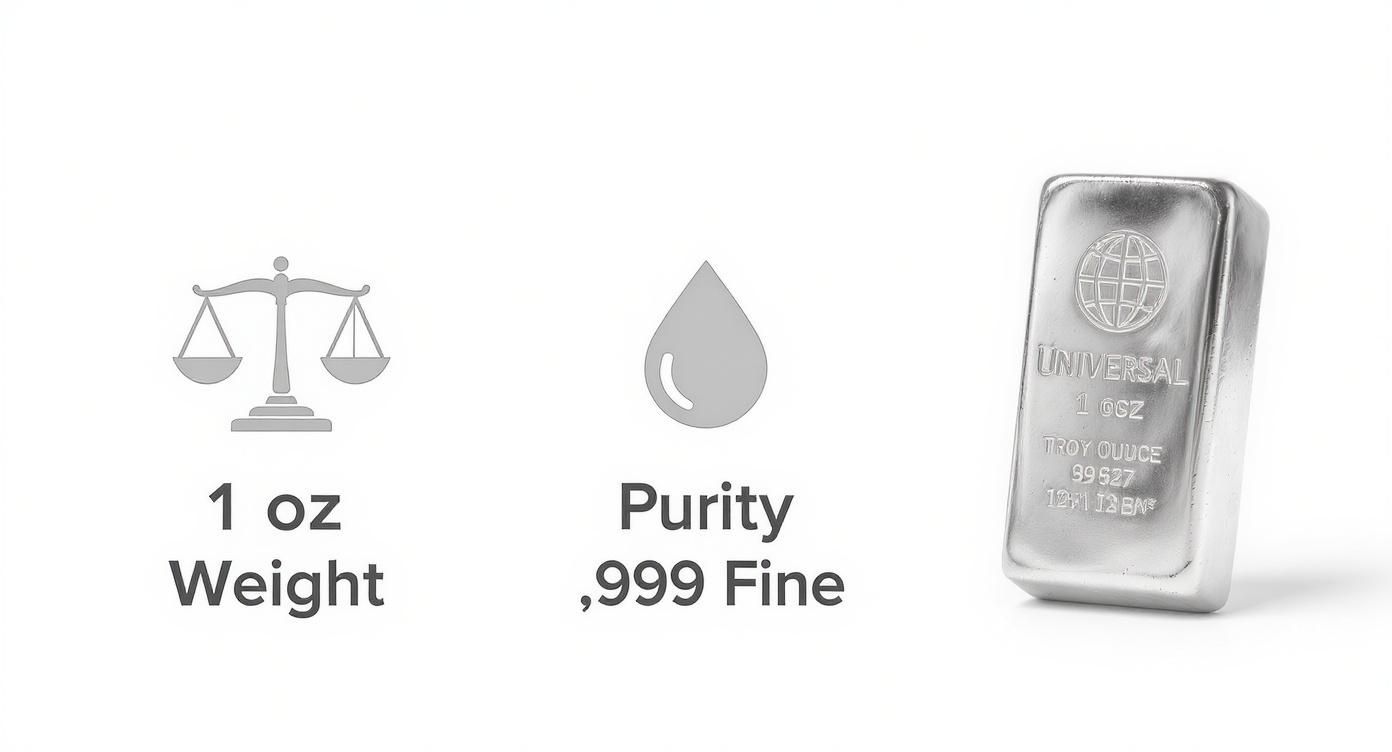
The weight, purity, and mint's mark are the bedrock of a bar's value, directly tying into its spot price component.
Putting It All Together: A Price Breakdown
So, how does this look in practice? Let's walk through a quick example to see how the numbers add up for a single 1 oz silver bar.
Example 1 Oz Silver Bar Price Breakdown
| Price Component | Description | Example Cost |
|---|---|---|
| Silver Spot Price | The current market value of 1 troy ounce of silver. | $28.50 |
| Minting Premium | Cost for the mint to fabricate the bar. | $2.25 |
| Dealer Premium | Markup to cover the dealer's business costs and profit. | $1.75 |
| Final Price | The total cost you pay for the bar. | $32.50 |
This simple breakdown shows that while the spot price is the foundation, the premiums from the mint and the dealer are what build the final retail price.
Spot Price in Action
The spot price is the real mover and shaker in this equation. Its history is a rollercoaster, which is what makes physical silver such a fascinating asset. Over the last century, silver has seen it all—from a low of just 29 cents during the Great Depression to a peak of over $48 in 2011.
These huge swings, driven by global markets, directly set the underlying value of every 1 oz silver bar in the world.
Key Takeaway: Your total cost for a 1 oz silver bar is a straightforward formula: Spot Price + Premium = Your Total Cost. The spot price is set by the market, but the premium can vary widely depending on the bar's brand, design, and where you buy it.
It's a lot like how a sterling silver concho belt's price is a mix of the silver's value and the artisan's skilled labor. A bullion bar is pure .999 fine silver, whereas the beautiful jewelry we love is typically sterling—92.5% silver alloyed with other metals to make it more durable for daily wear. If you're curious, you can learn all about the differences between sterling silver and other metals in our guide.
Once you get how the spot price and premium work together, you're in the driver's seat. You can compare bars with confidence, spot a good deal, and truly appreciate the value behind the price tag.
Authenticating Your Silver Bar and Buying Safely
In the world of precious metals, especially when you're looking to buy a 1 oz silver bar, trust is your most valuable asset. The great news is you don't have to rely on blind faith. With a little knowledge, you can confidently verify the authenticity of your silver and choose reputable dealers, ensuring your purchase is secure right from the start.
Just as a Southwestern artisan leaves a maker's mark on a piece of jewelry, legitimate mints stamp their bars with key identifiers. Learning to read these marks is your first line of defense against fakes.

What to Look for on the Bar Itself
Every genuine 1 oz silver bar tells a story through the details stamped onto its surface. These aren't just for decoration; they are your guarantee of quality and authenticity.
Before you buy, take a close look at the bar for these critical features:
- The Mint’s Stamp: Look for the official logo or name of a reputable mint. Brands like PAMP Suisse, Engelhard, or Sunshine Minting are globally recognized for their quality.
- Purity Marking: The bar must be stamped with its fineness. For investment-grade silver, that’s typically .999 or 99.9% pure silver.
- Weight Declaration: It should clearly state its weight, for instance, "1 TROY OUNCE" or "ONE OUNCE FINE SILVER."
- Unique Serial Number: Many premium bars include an individual serial number etched right into the surface, which you can often verify with the mint.
These markings should be sharp, crisp, and professional. Any smudged, uneven, or poorly defined text is a major red flag, like a poorly stitched seam on a leather saddle.
Choosing a Reputable Dealer
Where you buy your silver is just as important as what you buy. Whether you're purchasing online or from a local shop, a trustworthy dealer will operate with transparency and professionalism.
A reliable dealer should have:
- Industry Accreditation: Look for membership in respected organizations or an official "Authorized Dealer" status for major mints.
- Transparent Pricing: Their prices should be clearly listed and based on the current silver spot price. Hidden fees or confusing price structures are serious warning signs.
- Positive Customer Reviews: Check independent review platforms. A long history of satisfied customers is one of the best signs of a dealer's reliability.
- Clear Buy-Back Policy: A reputable dealer will always be willing to buy back the products they sell. Ask about their buy-back price and process before you commit.
A dealer's willingness to stand behind their product is a powerful indicator of their integrity. If they hesitate to explain their buy-back policy or can't provide clear terms, it's wise to look elsewhere.
Simple At-Home Verification Tests
While professional verification is the gold standard, there are a few simple tests you can do at home to gain some peace of mind. One of the easiest is the magnet test.
Silver is non-magnetic (actually, it's diamagnetic), so a strong magnet should not stick to your 1 oz silver bar. If you feel any pull at all, the bar is likely made from a ferrous metal and is a counterfeit. For a more telling result, slide the magnet down the face of the bar; on real silver, it should slide slowly due to a unique electromagnetic effect called eddy currents.
It's important to remember that some other non-magnetic metals are used in fakes, so this test isn't foolproof. For those who appreciate the material properties of metals in jewelry, understanding how pure silver differs from alloys is key. If you're curious about skin sensitivity to different metals, our guide on whether sterling silver is hypoallergenic offers valuable insights. These basic principles of metal purity apply to both bullion and wearable art.
Comparing Silver Bars, Coins, and Jewelry
When you're ready to hold real silver in your hands, you'll quickly find it comes in three main forms: bars, coins, and jewelry. Each has its own distinct personality and purpose. Think of it like choosing between raw turquoise, a polished cabochon, or a finished silver cuff—the right one for you really boils down to what you're trying to achieve.
A 1 oz silver bar is the workhorse of the silver world. Its job is simple: to give you the most silver for your dollar. Because they are relatively easy to produce, bars typically carry the lowest premium over the spot price, making them the go-to for anyone focused purely on stacking weight.
On the other hand, government-minted silver coins like the American Silver Eagle are a different animal. While they also contain one troy ounce of pure silver, they're also legal tender and feature iconic, often beautiful designs. This adds a layer of collectible appeal and makes them instantly recognizable, which is a huge advantage.
Liquidity: The Ease of Cashing In
One of the most critical factors for any asset is liquidity—how quickly and easily you can convert it back into cash. This is where the differences between bars and coins really come into focus.
Government-minted coins usually win on this front. Their official status and global recognition mean that almost any dealer, anywhere in the world, will buy them without a second thought. You might pay a little more upfront, but you often get some of that premium back when you sell because of this built-in demand.
A 1 oz silver bar from a well-known mint also has great liquidity, but it's a bit more dependent on the brand. A generic, unbranded bar might be a tougher sell than one from a world-renowned refiner. Brand recognition really matters here, ensuring a smooth transaction when you decide it's time to sell.
Collectible Value and Scarcity
While most silver bars are valued strictly for their metal content, some develop a collectible status that can push their value far beyond the spot price. Scarcity is the name of the game. Certain vintage bars, produced in limited runs, become highly sought-after by collectors who appreciate their history and rarity.
A perfect example is the iconic 1 oz Engelhard silver bar. Over two decades, Engelhard produced only around 4 million of these bars. That sounds like a lot until you compare it to the U.S. Mint's output of over 525 million Silver Eagle coins since 1986. Many of those original bars were melted down during price spikes, making the survivors even rarer. Today, these Engelhard bars are prized by collectors, often commanding impressive premiums.
This collector dynamic is where the worlds of raw materials and art start to overlap, which brings us to the third form of silver.
The Unique Role of Sterling Silver Jewelry
Sterling silver jewelry is in a category all its own. Unlike bullion, which is .999 fine silver, the beautiful Southwestern and estuarian pieces you know and love are sterling—92.5% pure silver blended with other metals for strength and durability. Its value isn't just in its weight but in the artistry, design, and cultural story it carries.
You don’t buy a handcrafted turquoise ring based on the day’s spot price of silver; you buy it for its beauty and the way it makes you feel. It's an investment in wearable art, not just a raw commodity.
While a 1 oz silver bar is a purely financial asset, sterling silver jewelry is a personal one. Its primary return is the joy and style it brings to your life, with its intrinsic metal value serving as a timeless foundation.
Because it's an alloy designed for daily wear, jewelry needs a different kind of care. Proper maintenance is key to keeping it looking its best. To keep your favorite pieces shining for years to come, take a look at our expert advice on how to care for sterling silver jewelry.
Understanding what makes each form—bar, coin, or jewelry—unique allows you to align your purchase with your passion and your purpose.
Silver Bars vs. Coins vs. Jewelry: A Quick Comparison
To help you visualize the differences, here’s a simple breakdown of how these three forms of silver stack up against each other. Each one serves a different goal, whether it’s pure investment, collecting, or personal expression.
| Feature | 1 Oz Silver Bar | 1 Oz Silver Coin | Sterling Silver Jewelry |
|---|---|---|---|
| Primary Goal | Asset Holding; acquiring the most silver for the lowest cost. | Collecting & Asset Holding; combines bullion value with numismatic appeal. | Personal Expression; valued for artistry, style, and beauty. |
| Purity | Typically .999 or .9999 fine silver. | Usually .999 fine silver (e.g., American Silver Eagle). | .925 sterling silver (92.5% silver, 7.5% other metals for durability). |
| Premium | Lowest premium over spot price. | Higher premium due to minting costs, design, and legal tender status. | Highest premium, reflecting craftsmanship, design, and brand value, not just metal content. |
| Liquidity | High, especially for well-known brands. | Very High; easily recognized and accepted by dealers worldwide. | Lower as an asset; resale value is based on brand, style, and condition, not just silver weight. |
| Best For | Anyone focused on accumulating silver's raw value efficiently. | Collectors who value recognizability, government backing, and potential upside. | Anyone who appreciates wearable art and wants a beautiful item with intrinsic value. |
Ultimately, there's no single "best" option—it all comes down to you. Whether you’re drawn to the straightforward efficiency of a bar, the classic appeal of a coin, or the artistic soul of a piece of jewelry, you're connecting with a timeless precious metal.
Smart Storage and Resale Strategies for Your Silver
Getting your hands on a beautiful 1 oz silver bar is an exciting first step, but it’s really just the beginning of the journey. To truly protect your asset, you need a plan for keeping it safe and, eventually, for selling it wisely. Think of it like a cherished piece of Southwestern jewelry—you wouldn't just toss it in a drawer; you'd find the perfect place to keep it secure.
Thinking about the entire lifecycle of your silver from day one means you're prepared not just to buy, but to manage it for the long haul.
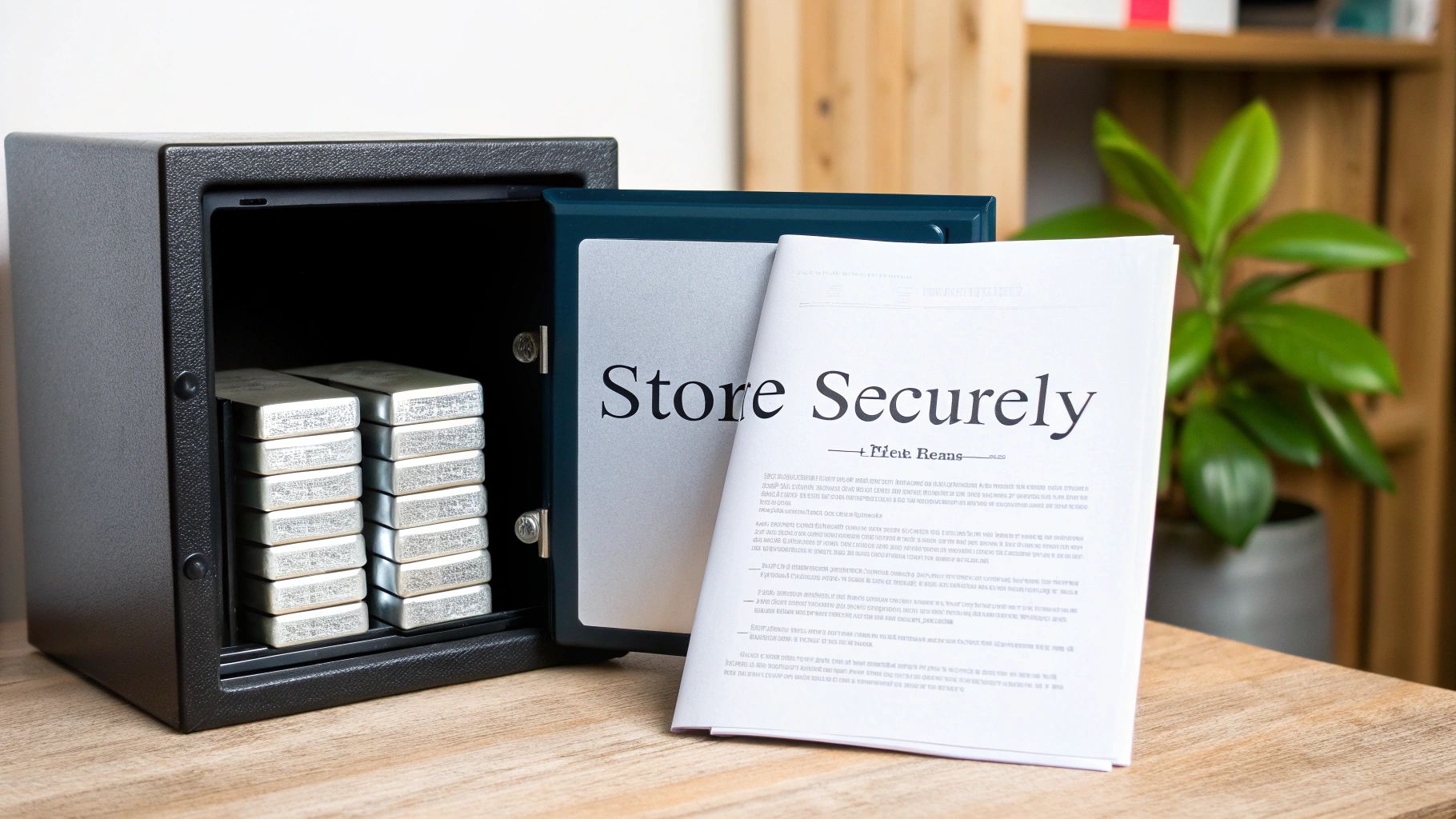
Secure Storage Solutions for Your Silver
Picking the right storage method comes down to a simple balance: security, accessibility, and cost. Your final choice will probably depend on how much silver you have and what helps you sleep best at night.
- Home Safe: Keeping your silver at home gives you immediate, 24/7 access. For smaller collections, a high-quality, fireproof safe that’s bolted to the floor is a fantastic defense against both theft and disaster.
- Bank Safe Deposit Box: This is a classic for a reason. You get the enhanced security of a bank's vault for a reasonable annual fee. The trade-off is that you can only access it during banking hours, and—this is important—the contents are not typically insured by the FDIC.
- Third-Party Depository: If you’re holding a significant amount, professional vaults offer the ultimate peace of mind. They provide institutional-grade security, full insurance coverage, and detailed audit trails.
No matter which route you go, make sure your silver is insured. A standard homeowner's policy often has strict limits on precious metals, so you’ll likely need a separate rider or a specialized policy to be fully covered.
Maximizing Your Return When You Sell
When it's time to sell your 1 oz silver bar, a little bit of strategy can make a huge difference in your final return. It’s not just about selling; it’s about selling smart.
First thing's first: understand the dealer's buy-back price. A reputable dealer will usually buy back a recognizable 1 oz silver bar at a price just below the current spot price. That small difference, called the "spread," is how they cover their business costs. Always ask about their buy-back policy before you even think about buying from them.
A dealer's buy-back price is a direct reflection of their confidence in the product they sell. A transparent and fair buy-back policy is one of the strongest indicators of a trustworthy precious metals dealer.
Trying to time the market is more of an art than a science, but keeping an eye on economic news can definitely help you pick a good moment to sell. The goal is simple: liquidate when demand is high and the spot price is strong.
Finally, the sheer availability of products like the 1 oz silver bar today is a testament to centuries of growing silver production. The rich history of silver mining in the American West is what fueled the creation of the iconic jewelry we love. Knowing this history adds another layer of appreciation for both the raw metal and the art it becomes.
Just like any valuable asset, keeping your silver in pristine condition is key. For tips on maintaining the finish of your metal goods, whether it’s bullion or wearable art, check out our guide on how to clean sterling silver jewelry at home.
Got Questions About 1 Oz Silver Bars?
Even after getting the basics down, you’ll probably find a few practical questions pop up when you're thinking about something like a 1 oz silver bar. This last section is all about tackling those real-world curiosities that hit both newcomers and seasoned collectors alike. My goal here is to give you direct, clear answers to help you handle the finer points of ownership with total confidence.
These are the questions that cover everything from gifting to customization, rounding out your understanding so you feel ready to make smart moves. Think of it as the kind of straightforward advice you’d get from a seasoned artisan, designed to help you on your way.
Are 1 Oz Silver Bars a Good Gift?
Absolutely. A 1 oz silver bar is a thoughtful, unique, and lasting gift, especially for big life moments like graduations, weddings, birthdays, or anniversaries. It’s way more than just another present; it’s a tangible piece of value and a fantastic way to introduce someone to the world of precious metals.
Lots of mints even produce bars with beautiful, artistic designs—like those featuring western or wildlife themes—that add a personal touch a generic gift just can’t match. You could pick a bar with a design that reflects the person's interests or commemorates a specific event, making it that much more special.
When you give a silver bar, it’s a nice touch to include a small card explaining its purity (.999 fine silver) and its meaning as a lasting asset. It turns a simple object into a memorable keepsake that has the potential to grow in value over time—truly the gift that keeps on giving.
Can I Turn a 1 Oz Silver Bar Into Jewelry?
Technically, a skilled jeweler could melt down a 1 oz silver bar to make a custom piece, but it's almost never a good idea. In fact, it's pretty impractical and definitely not cost-effective. The moment you melt it, you destroy the bar’s value as a precisely minted product, and you instantly lose any premium you paid for its brand, design, and authenticity.
Beyond that, the metal itself isn't right for things you wear every day. Pure .999 fine silver is incredibly soft, which means it will scratch, dent, and bend easily with regular use. This is exactly why artisans craft jewelry from sterling silver, which is an alloy of 92.5% silver mixed with stronger metals like copper to give it durability.
A jeweler would have to mix your pure silver with another metal just to create a usable alloy, completely changing its purity. It makes far more sense to sell the bar for its value and use that money to buy professionally crafted sterling silver jewelry that’s actually designed to last a lifetime.
Key Takeaway: A 1 oz silver bar is an asset, prized for its purity and minted form. Trying to turn it into jewelry wipes out that value and results in a piece that's less durable than standard sterling silver. It's always best to keep your silver assets and your wearable art separate.
What Is the Difference Between a Cast and Minted Bar?
The main difference between cast and minted bars comes down to how they're made, which gives each type a completely distinct look and feel. The choice between them is usually just about personal taste, since both contain the exact same amount of pure silver.
A cast bar is made using a more traditional, almost rustic method. Molten silver is poured right into a mold (called an ingot) and left to cool. This process creates bars that have a rougher, more organic look with softer, slightly rounded edges. Their markings are usually stamped into the surface after the bar has cooled, giving them a handcrafted feel reminiscent of old Southwestern silverwork.
On the other hand, a minted bar is produced with a more modern, refined technique. These bars are cut to exact dimensions from a larger, flat sheet of silver. They're then fed into a stamping press that strikes them with a design, much like how coins are made. The result is sharp, clean edges, a smooth, often shiny finish, and highly detailed designs.
- Cast Bars: Poured into molds, have a rustic appearance with softer edges, and often carry a lower premium.
- Minted Bars: Stamped from silver blanks, have a polished finish with sharp edges, and often carry a higher premium.
Because the manufacturing process is more complex and precise, minted bars usually come with a slightly higher premium over the silver spot price than their cast counterparts.
Why Are Some 1 Oz Silver Bars More Expensive Than Others?
The price differences you see among 1 oz silver bars can be confusing at first, but it all boils down to the "premium" charged over the base spot price of silver. A few key things determine how high that premium goes.
The biggest factor is the reputation of the mint. Bars from globally recognized and trusted mints—think PAMP Suisse, Engelhard, or the Royal Canadian Mint—will always command higher premiums. You're paying for their solid guarantee of weight, purity, and quality, which also makes them much easier to sell later on.
Another major element is the complexity of the design. A simple, "generic" bar with just the mint's name, weight, and purity is cheaper to make than a bar featuring intricate artwork, special finishes, or anti-counterfeiting features. Limited edition or collectible bars with Western or natural themes also carry higher premiums simply because they're harder to find.
Basically, a plain bar from a lesser-known refiner will have the lowest premium. But a beautifully crafted bar from a top-tier mint will cost more because you’re not just buying silver—you’re getting a piece of recognized craftsmanship and security. For more details on common inquiries, our extensive frequently asked questions page provides even more in-depth answers.
At Silver Elegant, we celebrate the spirit of silver in all its forms—from the pure bullion bar to the handcrafted sterling silver jewelry that tells a story. Explore our collections and find the perfect piece to express your unique southwestern, estuarian cowgirl style.