
For those drawn to the wild, free-spirited aesthetic of Southwestern and estuarian cowgirl jewelry, style is a form of storytelling. Yet, for so many with sensitive skin, the dream of wearing a bold silver cuff or intricate turquoise earrings can quickly turn into a nightmare of red, itchy irritation. The fear of that dreaded reaction often means compromising on an authentic look, but true style should never come at the cost of comfort.
Embrace Bold Style Without Irritation

The belief that you have to avoid striking silver pieces is a myth we’re here to bust. The solution is actually much simpler than you think: embracing hypoallergenic silver jewelry. This guide is all about empowering you with the knowledge to choose pieces that align perfectly with your estuarian cowgirl aesthetic, without any of the painful skin reactions.
Think of it like this: your jewelry should feel as natural and comfortable as a well-worn pair of leather boots. You wouldn't wear boots that pinch your feet, so why wear jewelry that irritates your skin? The issue usually isn't the silver itself, but the hidden, cheaper metals mixed into the alloys. These unwelcome additives—especially nickel—are the real culprits behind most skin sensitivities. In fact, studies show that nickel allergies affect up to 17% of women.
Finding Your Perfect Fit
This isn't about giving up the jewelry you love; it’s about making smarter, more informed choices. By understanding the materials that go into your favorite pieces, you can confidently build a collection that is both stunning and safe. We’ll explore everything you need to know, from spotting common allergens to caring for your silver so it stays beautiful and reaction-free.
This journey starts with knowing what to look for, and a great place to begin is by understanding the basics. For instance, finding the best jewelry for sensitive ears is a common challenge that really highlights the importance of choosing the right materials from the very start.
The core idea is simple: You can adorn yourself with authentic, eye-catching Southwestern designs without sacrificing comfort. The key is to choose quality materials that honor both your style and your well-being.
Our goal is to arm you with practical advice, making your next jewelry purchase an exciting, worry-free experience that truly enhances your unique look.
Decoding Hypoallergenic Jewelry
The word "hypoallergenic" gets thrown around a lot, showing up on everything from makeup to metal. But what does it really mean when we're talking about hypoallergenic silver jewelry? Think of it like a moisturizer made for sensitive skin—it's not a magical guarantee against every possible irritation, but it's specifically designed to dramatically lower the chances of a bad reaction by leaving out the common troublemakers.
The truth is, silver itself rarely causes an issue. The real culprits are the other metals it's mixed with. When certain metals—especially the notorious nickel—sit against your skin, they can kickstart an immune response. It happens when your sweat and skin's natural oils cause tiny metal particles to break down and get absorbed, leading to that all-too-familiar itching, redness, and discomfort.
Why Some Metals Cause Reactions
Picture your skin as a very picky bouncer at an exclusive club. Most materials get a pass, no problem. But for those of us with metal sensitivities, the immune system mistakes particles from certain alloys as threats and goes on the attack. This defensive reaction has a name: allergic contact dermatitis.
This isn't a rare problem; a huge portion of the population deals with it. That’s why getting a handle on the term "hypoallergenic" is your first move toward building a gorgeous, comfortable jewelry collection that fits your Southwestern cowgirl style. It's all about picking materials that are far less likely to stir up trouble with your skin's bouncer. To get the full story, you can check out our complete guide on what is hypoallergenic jewelry.
The term 'hypoallergenic' simply means 'below average' or 'slightly' allergenic. It indicates that the manufacturer has taken steps to avoid including common allergy-causing ingredients or materials in their product, making it a safer bet for sensitive individuals.
At the end of the day, opting for hypoallergenic pieces is a conscious choice to wear purer, less reactive metals. This simple decision empowers you to rock those bold, expressive pieces—from delicate earrings to a show-stopping cuff—with total confidence and comfort. Once you know what triggers a reaction, you have the power to sidestep it entirely. The next step is learning to spot the specific metals that are most often behind these skin issues. That knowledge is your best defense.
Identifying Common Jewelry Allergens
To really get why hypoallergenic silver is so special, it helps to think like a metal detective. The first step toward building a beautiful, irritation-free collection of Southwestern or estuarian cowgirl pieces is learning which materials are likely to cause a reaction. Most of the time, the culprit isn’t the jewelry itself but specific metals hiding in the alloy.
The biggest offender by far is nickel. It’s often used as a hardening agent and a way to cut costs in cheaper jewelry, but it’s famous for triggering allergic contact dermatitis. When nickel touches your skin, your own sweat and oils can cause it to release tiny particles. Your immune system might see these as a threat, and that’s when the dreaded itch begins.
This sensitivity is more common than you might think. Up to 17% of women and 3% of men in the US have a nickel allergy, which is why silver has been a trusted choice for so long. Pure silver and sterling silver are naturally inert, meaning they rarely cause skin reactions on their own.
Other Potential Irritants To Watch For
While nickel gets most of the attention, it’s not the only metal that can cause trouble, especially for those with very sensitive skin. Being a smart shopper means keeping an eye out for a few other potential irritants that sometimes show up in mixed-metal or plated pieces.
Two other metals to be aware of are:
- Cobalt: Often found right alongside nickel in certain alloys, cobalt can also trigger allergic reactions. It’s sometimes used to give metals a bright, whitish finish that mimics platinum.
- Chromium: Though less common in jewelry, chromium is another known skin sensitizer. You're more likely to find it in things like watchbands, but it can occasionally find its way into low-quality plated jewelry.
To make things clearer, let's break down the good, the bad, and the beautiful in a simple table.
Common Allergenic Metals vs Hypoallergenic Alternatives
| Allergenic Metal | Common Issues | Safe Alternative | Why It's Safer |
|---|---|---|---|
| Nickel | Itchiness, redness, rashes (contact dermatitis) | Sterling Silver (925) | Contains 92.5% pure silver, which is naturally inert. The remaining alloy is usually copper. |
| Brass/Bronze | Can contain lead or nickel; may tarnish and turn skin green. | Rhodium-Plated Silver | A hard, inert platinum-group metal that creates a protective, hypoallergenic barrier. |
| Cobalt | Can cause skin reactions similar to nickel. | Surgical-Grade Stainless Steel | A specific alloy with very low nickel release, making it safe for most people. |
| Chromium | A known allergen that can cause severe skin irritation. | Titanium | Completely biocompatible and used in medical implants; it's 100% nickel-free. |
Knowing the difference between these materials is your best defense against irritation.
By learning to spot these red flags, you empower yourself to confidently choose pieces that align with your Southwestern style without the risk. The goal is to invest in jewelry that feels as good as it looks.
For those eager to dive deeper, our nickel-free jewelry style guide offers even more detailed information on making safe and stylish choices. Understanding these common allergens ensures that every turquoise ring or silver cuff you wear brings you nothing but joy.
Why Sterling Silver Defines Southwestern Style
Picture classic Southwestern or estuarian cowgirl jewelry in your mind. What do you see? Almost certainly, it's the cool, bright gleam of silver. That’s no accident. Sterling silver is the very heart of this aesthetic, handpicked for its beauty, strength, and deep-rooted connection to a heritage of quality craftsmanship.
But its importance goes way beyond just looking good. For anyone with sensitive skin, sterling silver is the gold standard for hypoallergenic jewelry. The secret is in its composition. Genuine sterling silver is made of 92.5% pure silver, a metal that is naturally unreactive and incredibly gentle on the skin.
So what's in the other 7.5%? That's typically copper, an alloy added to give the otherwise soft silver the durability it needs to become a statement cuff or a sturdy concho belt buckle. This specific blend strikes the perfect balance—creating a strong, beautiful metal that is overwhelmingly safe for even the most sensitive wearers.
The Sterling Standard for Purity and Safety
This trusted purity is exactly what separates authentic hypoallergenic silver jewelry from less reliable pieces. With nickel sensitivity affecting a staggering 10-15% of the global population, the move toward safer metals has been huge. Sterling silver has emerged as a clear leader, capturing the largest share in the hypoallergenic jewelry world thanks to its unique mix of durability, workability, and skin-safe properties.
Its relative affordability makes it the most practical and popular choice for everyday wear. You can learn more about this trend in the global silver jewelry market report.
This infographic breaks down the main culprits to avoid when you're on the hunt for new jewelry.
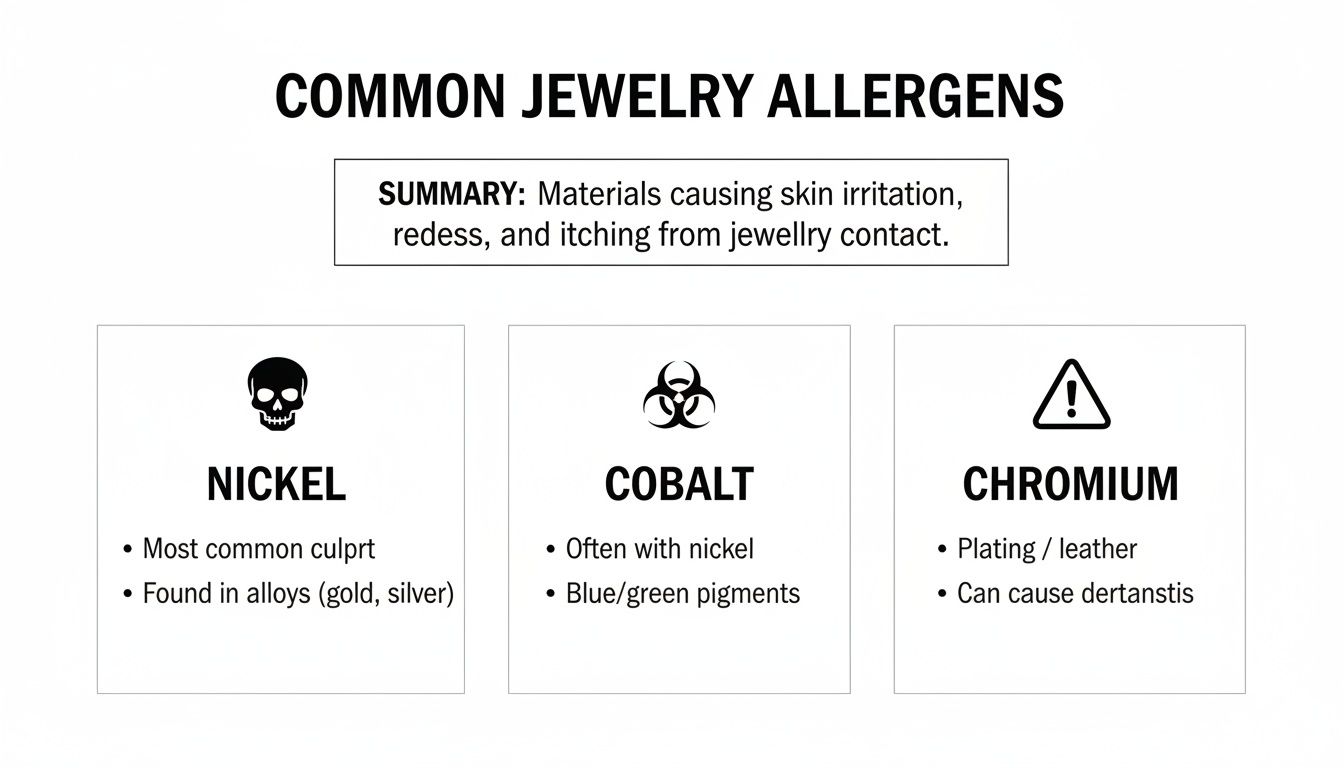
As you can see, common industrial metals like nickel, cobalt, and chromium are the most frequent causes of skin irritation, which makes sterling silver’s purity all the more valuable.
Beware the Dangers of Plated Pieces
It’s incredibly important to know the difference between genuine sterling silver and "silver-plated" jewelry. Plated pieces might look the part at first glance, but they hide a major risk. They consist of a very thin layer of silver coating a base metal, which is often a mystery alloy loaded with high levels of nickel or brass.
When that thin silver coating eventually wears away—which it inevitably does—your skin is exposed directly to the allergenic metals underneath. This is why a piece of jewelry might suddenly start causing irritation after you've worn it for a while.
Authentic Southwestern style is built on quality and longevity, values that silver-plated items just can't deliver. Real estuarian cowgirl jewelry is meant to be worn and loved for years, becoming a part of your story. Sterling silver’s natural shine and inherent antibacterial properties fit perfectly with this spirit of authenticity.
To make sure you're getting the real thing, always look for a quality stamp, or hallmark. Genuine sterling silver is typically marked with "925," "STERLING," "STER," or "SS." This little mark is your guarantee of purity and your best defense against the discomfort of an allergic reaction. It ensures your jewelry is as genuine as your style.
How To Care For Your Silver Jewelry
Your beautiful Southwestern and estuarian cowgirl pieces are more than just accessories; they're an investment in your personal style. To keep that hypoallergenic silver jewelry looking just as stunning and feeling just as comfortable as the day you first wore it, a little bit of care is key. The good news? Keeping your sterling silver at its best is simpler than you might think.
One of the biggest concerns with silver is tarnish—that dark film that can creep up over time. But it's important to know that tarnish is a natural chemical reaction, not an allergic one. It’s just what happens when silver meets sulfur compounds in the air. This process doesn’t affect the hypoallergenic quality of your jewelry at all; it’s purely a surface issue.
Luckily, you don't need a cabinet full of harsh chemicals to bring back that brilliant shine. Simple, non-toxic methods often work best, perfectly reflecting the self-reliant spirit of the cowgirl ethos.
Simple and Safe Cleaning Methods
Bringing back your silver's original luster can often be done with things you already have around the house. These gentle approaches protect the metal without causing damage or introducing new irritants.
- Soap and Water: A few drops of a mild, phosphate-free dish soap in some warm water is the perfect go-to for regular cleaning. Just use a soft cloth to gently wash the piece, rinse it well, and dry it completely with something lint-free.
- Baking Soda Paste: When you’re dealing with more stubborn tarnish, a simple paste of baking soda and water does wonders. Apply it with a soft cloth, give the piece a gentle rub, then rinse and dry. It’s effective yet gentle enough for most sterling silver.
For a more detailed walkthrough, our guide on how to clean sterling silver breaks down the steps for several different methods, so you can pick the perfect one for your cherished pieces.
The key to long-lasting beauty is consistent, gentle care. Think of it as routine maintenance for your favorite boots—a little effort goes a long way in preserving their quality and appearance for years of wear.
Proper Storage to Prevent Tarnish
Believe it or not, how you store your jewelry is just as important as how you clean it. The main goal is to limit its exposure to air and moisture, the two things that speed up tarnishing.
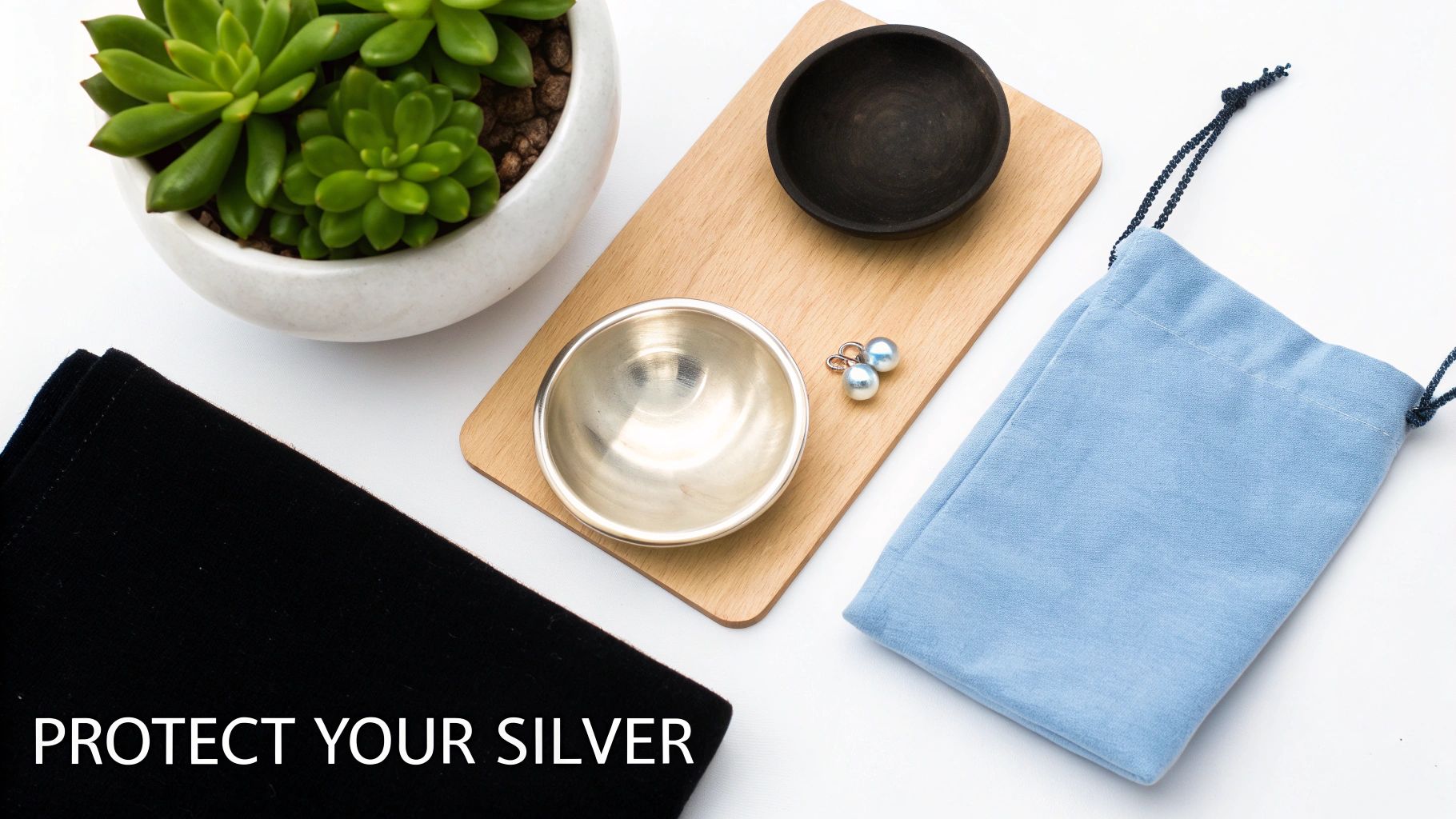
Try to store each piece of sterling silver separately in an anti-tarnish pouch or even just a soft cloth bag. Keeping your jewelry from bumping and scratching against each other is half the battle. Storing them in a cool, dry place away from direct sunlight is the final touch to protect your investment and ensure your hypoallergenic silver jewelry is always ready to wear at a moment's notice.
Your Smart Shopper Checklist For Sensitive Skin
Trying to find beautiful jewelry when you have sensitive skin can feel like walking through a minefield. But it doesn't have to be that complicated. Once you know what to look for, you can easily pick out stunning Southwestern and estuarian cowgirl pieces that won't leave you with an itchy, red rash.
Think of this checklist as your personal field guide to spotting authentic, skin-friendly treasures. Each step is designed to help you side-step the common traps and ensure every piece you bring home is a true joy to wear.
The Ultimate Hypoallergenic Silver Checklist
Before you fall in love with that perfect turquoise cuff or silver ring, take a moment to run through these simple checks. It’s the best way to invest in pieces that truly match your free-spirited style and your skin’s needs.
-
Hunt for the '925' Stamp: This little mark is your first and best clue. A ‘925’ stamp, sometimes shown as ‘STER’ or ‘SS’, is the hallmark of genuine sterling silver. It guarantees the piece is made from 92.5% pure silver, which dramatically lowers the chances of it containing pesky nickel.
-
Ask What's Underneath: When you're looking at plated jewelry, always ask the seller about the base metal. Be wary of vague descriptions like ‘silver-tone’ or ‘German silver’—these are often red flags for mystery alloys that are packed with nickel. A trustworthy seller will have no problem telling you exactly what their jewelry is made of.
Your jewelry should be as authentic as your style. Asking direct questions is the most powerful tool you have to avoid the disappointment of a skin reaction later on.
-
Choose Sterling Over Plated Every Time: Plated pieces might look good and come with a tempting price tag, but for sensitive skin, solid sterling silver is always the smarter, safer bet. A solid piece of hypoallergenic silver jewelry will never wear down over time to expose an irritating metal underneath.
-
Go Beyond 'Nickel-Free' Claims: A "nickel-free" label is a good start, but it isn't a guarantee. Real peace of mind comes from choosing materials that are inherently safe from the start, like sterling silver, surgical-grade steel, or titanium.
Following these simple rules will give you the confidence to build a collection of Southwestern jewelry that’s not only gorgeous but completely comfortable to wear, day in and day out.
A Few Final Questions
Even after you've got the basics down, a few questions might pop up as you start your search for the perfect hypoallergenic silver jewelry. Getting these last few details sorted out will help you shop with complete confidence, making sure every piece you add to your Southwestern or estuarian cowgirl collection feels as good as it looks.
Can Sterling Silver Ever Cause A Reaction?
It's incredibly rare, but not entirely impossible. For over 99% of people with sensitive skin, sterling silver is a total game-changer. Genuine sterling silver is 92.5% pure silver mixed with 7.5% of another metal, which is almost always copper.
Now, a severe copper allergy is far less common than a nickel allergy, but for those who have one, they might notice a slight reaction. If you suspect this might be you, it’s worth digging a little deeper into the specifics of a sterling silver allergy and its symptoms. For nearly everyone else, though, it remains one of the safest and most trusted choices out there.
How Can I Be Sure A Piece Is Nickel-Free?
Your first line of defense is looking for that "925" stamp, which is the hallmark of genuine sterling silver. But if you want to be absolutely certain, your best bet is to buy from a reputable seller who is upfront and transparent about their materials and alloys.
For an extra layer of security, you can find at-home nickel testing kits online. These simple kits are easy to use and can detect even the tiniest trace amounts of nickel, giving you total peace of mind that your new treasure is completely safe to wear.
A protective layer can make all the difference for highly sensitive skin. It acts as a shield between the metal and your skin, offering an additional barrier against potential irritants.
Does Rhodium Plating Help With Allergies?
It absolutely does. Rhodium is a member of the platinum family, which means it’s an inert metal and naturally hypoallergenic.
When sterling silver is plated with a layer of rhodium, it creates a fantastic protective barrier that practically eliminates any risk of a reaction. This plating not only ramps up its hypoallergenic qualities but also gives the jewelry a brilliant, tarnish-resistant shine. It's an outstanding feature to look for in high-quality, skin-friendly silver pieces.
Find your perfect piece of authentic, skin-friendly Southwestern jewelry at Silver Elegant. Explore our collections today at https://silverelegant.com.