
For anyone who loves the bold, earthy feel of Southwestern jewelry, finding that perfect pair of earrings can come with a frustrating catch: itchy, red, or swollen earlobes. The best jewelry for sensitive ears steers clear of common irritants like nickel, relying instead on beautiful hypoallergenic metals such as sterling silver, titanium, and surgical steel. These materials let you rock the estuarian cowgirl aesthetic without giving up on comfort.
Finding Comfort in Southwestern Earring Styles
That signature Southwestern look—think striking turquoise set in gleaming silver or earthy, hand-hammered designs—should feel as good as it looks. But for many of us, a gorgeous pair of earrings can quickly become a source of serious discomfort.
If you've ever dealt with redness, itching, or swelling after a few hours of wear, you're definitely not alone. This reaction, known as contact dermatitis, is just your body's way of telling you it's not a fan of certain metals.
The usual suspect is nickel, a common alloy mixed into less expensive jewelry to add durability and shine. When it touches your skin, your immune system can mistake it for a threat and launch an allergic reaction. But this doesn't mean you have to abandon your love for accessorizing with stunning Southwestern pieces. The fix lies in choosing jewelry made from high-quality, hypoallergenic materials designed to be kind to your skin.
Understanding Your Hypoallergenic Options
Making a smart choice starts with knowing which metals are your friends. When you opt for materials known for their purity and biocompatibility, you can confidently wear incredible designs all day long.
Here are a few key things to keep in mind:
- Purity is Paramount: Metals like sterling silver (look for the "925" stamp) are fantastic because they contain 92.5% pure silver. The other 7.5% is usually copper, which is far less likely to cause a reaction than nickel.
- Medical-Grade Materials: Metals like surgical steel and titanium were literally engineered to be non-reactive, which is why they’re trusted for things like medical implants.
- Beyond the Metal: True comfort is about more than just the material. Taking a moment to learn about the craftsmanship behind your Southwestern jewelry helps ensure it’s made with care and quality. You can explore authentic Southwestern earrings craftsmanship to see what sets truly great pieces apart.
Choosing hypoallergenic jewelry is like building a wardrobe with natural, breathable fabrics. Just as you'd pick cotton or linen for comfort on a hot day, selecting sterling silver or titanium ensures your ears stay comfortable and irritation-free, no matter how long you wear your favorite estuarian cowgirl designs.
This isn't just a niche issue; recent studies show it's a widespread concern. Market analysis reveals that around 36% of consumers actively worry about allergic reactions from their jewelry. This growing awareness has fueled the demand for safe, high-quality alternatives, proving you don't have to choose between your estuarian cowgirl style and your skin's health.

Understanding Why Your Ears Get Irritated
Ever put on a stunning pair of turquoise earrings, only to feel that all-too-familiar itch creeping in a few hours later? It’s a common frustration, but getting to the “why” behind the irritation is the first step toward finding gorgeous Southwestern jewelry you can actually wear all day long. The problem usually isn’t your ears—it’s the metal in your jewelry.
What you're experiencing is a form of allergic contact dermatitis. Picture your immune system as a super-vigilant security guard for your body. When tiny particles from certain metals—especially nickel—leach into your skin from an earring post, this security system can mistakenly red-flag them as dangerous invaders.
It then launches a full-blown defensive attack, which is what causes the redness, itching, swelling, and sometimes even blistering that signals a metal allergy. It’s not a problem with your piercing itself, but rather your body’s unique sensitivity to specific materials.
The Science of Skin Sensitivity
This immune response doesn't happen to everyone, and it can even pop up later in life after repeated exposure to irritating metals. The number one culprit for sensitive skin is nickel, an alloy frequently mixed into cheaper jewelry to make it more durable and give it a bright, silvery shine. In fact, up to 17% of women and 3% of men have a nickel allergy, making it one of the most widespread causes of contact dermatitis.
Even jewelry advertised as "nickel-free" can sometimes contain trace amounts—just enough to trigger a reaction in highly sensitive people. The real secret to avoiding this mess is to choose jewelry made from metals that your body's "security guard" recognizes as friendly and safe. For a closer look at what a reaction might entail, you can learn more about sterling silver allergy symptoms and how to spot them.
This is exactly why choosing the best jewelry for sensitive ears always comes back to high-quality, purer materials.
Your skin is its own ecosystem. Introducing a reactive metal is like adding a pollutant. Hypoallergenic metals, on the other hand, exist in harmony with your body, letting you rock your favorite Southwestern styles without disrupting that delicate balance.
Recognizing the Signs of an Allergic Reaction
Knowing the warning signs helps you pinpoint a problem quickly and save your ears from further grief. A reaction can start within a few hours or might take a day or two to show up after you've worn a new pair of earrings.
Keep an eye out for these classic symptoms right around your piercing:
- Itching and Redness: This is usually the very first sign that your skin is not happy.
- Swelling or Tenderness: The area might feel puffy, warm, or just plain sore to the touch.
- Dry Patches or Bumps: You might notice flaky skin or small, rash-like bumps forming.
- Clear Fluid or Crusting: In more intense reactions, the piercing might weep a clear fluid that can dry and form a crust.
If you spot any of these symptoms, it’s a clear signal to take the earrings out and let your ears recover. By understanding these triggers and signs, you can start making smarter choices that put both your Southwestern style and your skin's health first.
Choosing the Best Hypoallergenic Metals for Your Style
Trying to find beautiful jewelry when you have sensitive skin can feel like walking through a minefield. One wrong choice, and you're left with itchy, irritated ears, which completely ruins the fun of accessorizing. But here's the secret: the key to finding the best jewelry for sensitive ears is all about choosing the right metal. You just need one that works with your skin and your Southwestern style.
The good news? The high-quality, hypoallergenic metals you need are often the very same ones that define that authentic Southwestern look. Once you understand what makes each one unique, you can build a collection of pieces that are safe, comfortable, and a perfect reflection of who you are.
This isn't just a niche concern, either. The earring market was valued at a whopping USD 25 billion in 2023 and is expected to climb to nearly USD 38 billion by 2032. A huge driver behind that growth is people just like you demanding earrings made from hypoallergenic materials as awareness of skin sensitivities grows.
Sterling Silver: The Southwestern Staple
Close your eyes and picture classic Southwestern jewelry. Chances are, you’re imagining sterling silver. Stamped with "925," this metal is 92.5% pure silver blended with 7.5% other alloys—usually copper. That high purity is exactly why it's a trusted go-to for sensitive ears, as it contains no nickel, the number one culprit behind most skin reactions.
Sterling silver’s bright, cool shine is the perfect canvas for vibrant gemstones. It creates a stunning contrast that makes the deep blues and greens of turquoise pop, capturing that classic desert vibe. It's also versatile enough for the intricate stamp work and bold, sculptural designs that are so central to the estuarian cowgirl aesthetic.
If you're not sure where your irritation is coming from, this simple decision tree can help you pinpoint the likely cause.
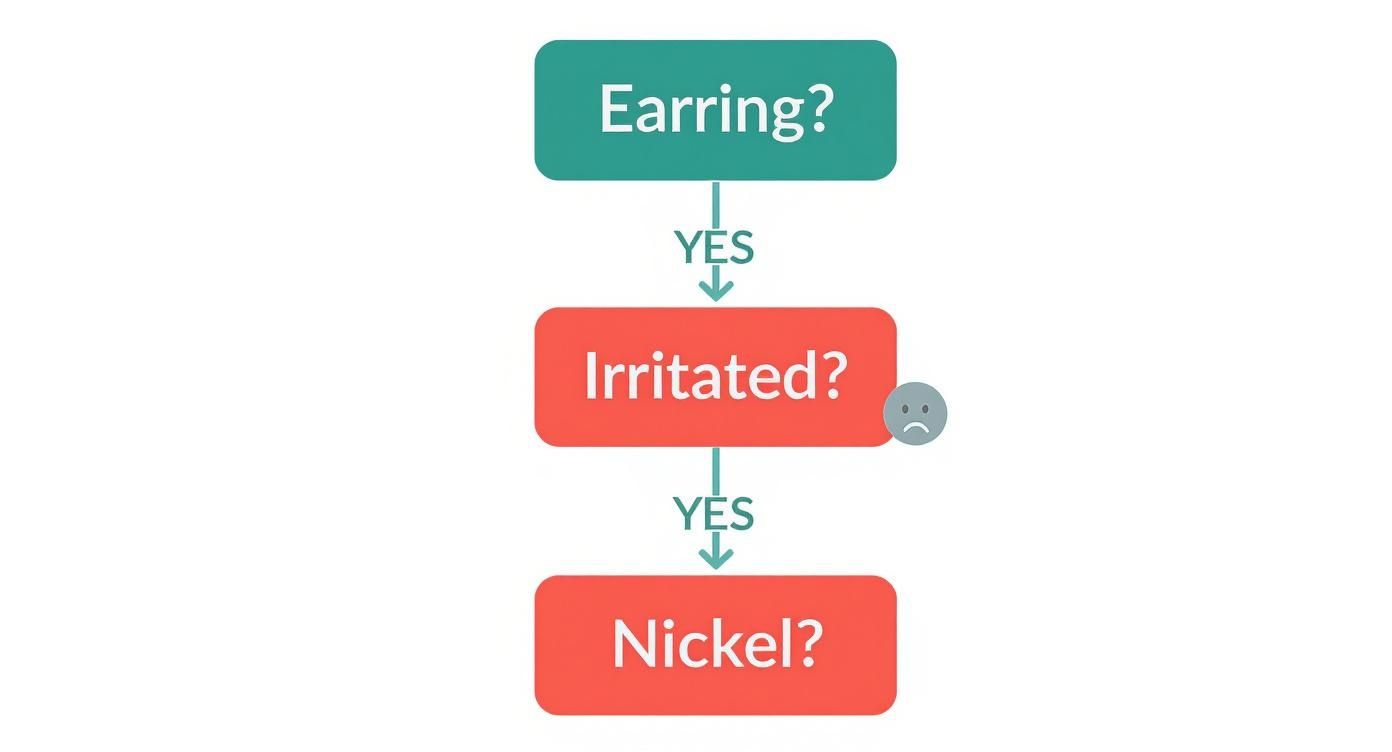
As the chart shows, the first question to ask when irritation strikes is whether nickel is present. This really drives home the importance of picking pure, biocompatible metals from the start.
Beyond Silver: Exploring Other Safe Metals
While sterling silver reigns supreme in Southwestern style, several other hypoallergenic metals bring their own unique perks to the table, fitting in beautifully with both boho and western looks.
Here’s a deeper look at some of the best skin-friendly options out there.
Detailed Comparison of Hypoallergenic Jewelry Materials
This table breaks down the pros, cons, and unique characteristics of each metal, helping you make the best choice for your ears and your personal style.
| Material | Composition & Purity | Pros for Sensitive Ears | Cons & Considerations | Southwestern Style Match |
|---|---|---|---|---|
| Sterling Silver | 92.5% pure silver, 7.5% alloy (usually copper). Nickel-free. | The classic choice. Naturally beautiful, cool-toned luster that enhances gemstones like turquoise. | Can tarnish over time, so it requires regular polishing to maintain its shine. | The quintessential metal for Southwestern jewelry. Perfect for stamped, oxidized, and stone-set pieces. |
| Surgical Steel | A steel alloy with chromium. Look for 316L or 316LVM grades for biocompatibility. | Extremely durable, scratch-resistant, and affordable. Won't tarnish or corrode. | Can be heavier than other metals. The color is slightly darker and more industrial than silver. | Its modern, rugged feel works well for contemporary concho designs or minimalist estuarian cowgirl pieces. |
| Titanium | A pure elemental metal. Look for implant-grade (ASTM F136) for maximum safety. | 100% nickel-free and incredibly lightweight, making it ideal for large, bold statement earrings. | Can be more expensive. Its darker gray color might not appeal to everyone. | Excellent for oversized, sculptural earrings that capture a modern desert aesthetic without weighing you down. |
| Niobium | A pure elemental metal, highly unreactive and biocompatible. | Completely nickel-free and hypoallergenic. Can be anodized to create vibrant, iridescent colors. | A softer metal, so it may be more prone to scratching than steel or titanium. | The ability to create sunset oranges, sky blues, and dusty purples makes it perfect for colorful, artistic boho styles. |
Each of these metals offers a safe and stylish path to wearing the jewelry you love.
Think of these metals as your trusted partners in style. Just as a cowgirl relies on a sturdy saddle, you can rely on sterling silver, titanium, or niobium to support your look comfortably and reliably, day in and day out.
Choosing the right material is the single most important step you can take toward building a jewelry collection you can wear without a second thought. For an even deeper dive into what makes certain metals superior, check out our guide on metals that make hypoallergenic earrings truly comfortable. By sticking to these skin-friendly options, you can finally express your Southwestern spirit without compromise.
How to Shop for Skin-Friendly Southwestern Jewelry
Navigating the world of jewelry to find the best jewelry for sensitive ears can feel a bit daunting, but arming yourself with a few key details will turn you into a confident shopper in no time. When you know exactly what to look for, you can be sure you’re getting authentic, skin-safe pieces that truly honor the Southwestern tradition. It’s all about looking beyond a beautiful design and becoming a savvy investigator of quality.
Your first move? Check for quality stamps. For sterling silver, the mark you're looking for is "925" or sometimes "STERLING." This little stamp is your guarantee that the piece is made of 92.5% pure silver—the industry standard for hypoallergenic quality. If you see a piece that's unmarked, it's smart to be cautious. It could be made from a mystery metal alloy that likely contains nickel.
Reading Between the Lines: Plating vs. Solid Metal
Understanding the difference between solid metal and plated jewelry is absolutely crucial for avoiding irritation. Plated earrings might look great initially, but they only have a super-thin layer of a safe metal (like gold or silver) over a base metal, which is very often a nickel alloy.
That thin, pretty coating can wear away over time, especially on earring posts that see a lot of friction. Once that plating erodes, the irritating base metal underneath is exposed directly to your skin, which is what triggers an allergic reaction. For long-term comfort and value, solid sterling silver or titanium is always the safer investment.
"When shopping, think of solid metal as a long-term relationship and plating as a temporary acquaintance. Solid metal offers lasting comfort and reliability, whereas plating might reveal an irritating personality once the surface wears thin."
Asking the Right Questions
Never be shy about asking sellers specific questions about their materials. A reputable artisan or retailer who really understands their craft will be more than happy to share details about where their metals come from and what’s in them.
Here are a few essential questions to ask to make sure you're getting genuine, skin-friendly pieces:
- "Is this piece solid sterling silver or plated?" This is the most direct way to get to the bottom of what you're buying.
- "Do you know what alloy is used with the silver?" While most jewelers use copper, confirming they avoid nickel is key for sensitive skin.
- "What material are the earring posts and backs made from?" Sometimes, the decorative part of an earring is silver, but the post—the part that goes through your ear—is a cheaper, irritating metal.
Being an informed buyer is the best way to build a collection of Southwestern jewelry you can treasure and wear without a second thought. For more guidance on finding trustworthy sellers, you can discover some of the best places to buy turquoise jewelry and apply these same quality checks.
Caring for Your Jewelry to Prevent Skin Irritation
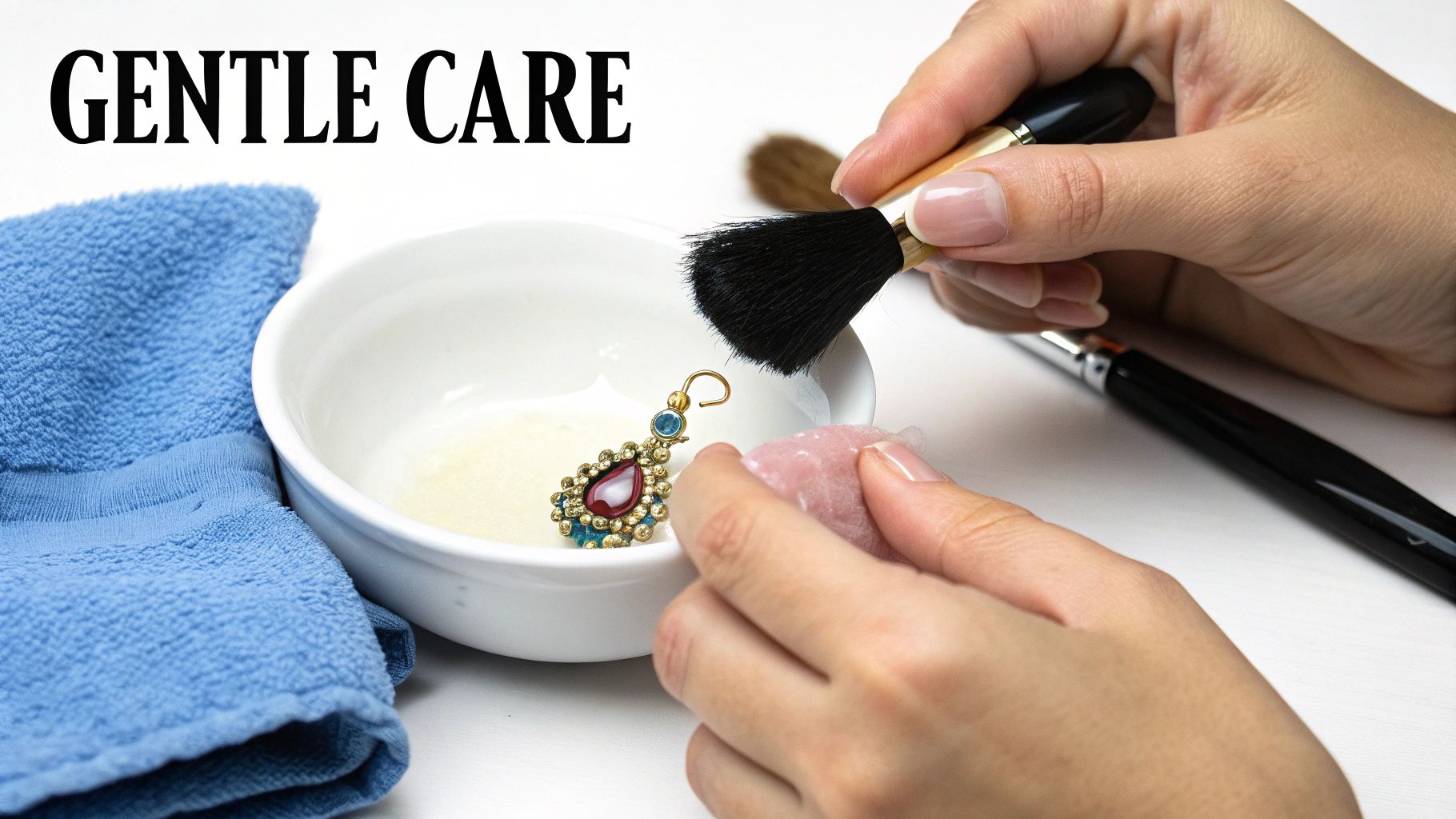
Choosing the right hypoallergenic metal is a huge first step, but keeping your Southwestern jewelry clean is just as important for happy ears. Think of your beautiful sterling silver earrings like any other surface that touches your skin. Over time, they collect a buildup of natural skin oils, lotions, and tiny particles from the environment.
This gunk can trap bacteria or cause irritation all on its own, even if you’re wearing the safest metals. A simple, consistent cleaning routine is your best defense. By taking just a few moments for care, you’re not just preserving the beauty of your pieces—you’re protecting your skin.
This focus on proper care is part of why so many people are turning to high-quality, body-safe accessories. In fact, the global body jewelry market was valued at around USD 7.5 billion in 2024 and is expected to grow to over USD 10.3 billion by 2030, all driven by consumer demand for better, biocompatible materials.
Simple Steps for At-Home Jewelry Care
You don't need harsh chemicals to keep your Southwestern pieces in pristine condition. A gentle touch is always best, especially for sterling silver and delicate stones like turquoise.
Here’s an easy cleaning method you can do right at home:
- Prepare a Gentle Solution: Mix a few drops of mild, phosphate-free dish soap into a small bowl of warm water.
- Soak Briefly: Let your earrings sit in the solution for about five to ten minutes. This will help loosen any grime or buildup.
- Gently Scrub: Use a very soft-bristled brush—a baby toothbrush is perfect for this—to carefully clean around any settings and crevices.
- Rinse Thoroughly: Hold the jewelry under cool running water until every last bit of soap is gone.
- Pat Dry Completely: Use a soft, lint-free cloth to gently pat your pieces dry. Don't let them air-dry, as lingering moisture can lead to tarnishing.
Proper jewelry care is like skincare for your accessories. Just as you cleanse your face to prevent breakouts, regularly cleaning your earrings removes irritants, ensuring they always feel fresh and comfortable against your skin.
This simple routine is often all you need to keep your earrings looking and feeling great. For more specific advice on tackling tarnish and maintaining that brilliant shine, check out our guide on how to clean sterling silver jewelry at home.
What to Avoid During Cleaning
To protect both your skin and your jewelry, you’ll want to steer clear of harsh chemicals and abrasive materials. Always avoid:
- Chlorine bleach and ammonia: These are way too harsh and can damage sterling silver and many gemstones.
- Abrasive cleaners or toothpaste: These will leave tiny scratches all over the metal’s surface.
- Ultrasonic cleaners for soft stones: While great for diamonds, the vibrations from these cleaners can actually damage porous stones like turquoise.
Common Questions About Hypoallergenic Jewelry
Diving into the world of hypoallergenic jewelry can feel a little tricky. Even when you think you have a handle on the best materials, a few common questions always seem to pop up. Let's clear the air and tackle those lingering uncertainties so you can shop for your next piece of Southwestern jewelry with total confidence.
Think of this as your go-to guide for busting myths and getting straight answers. Once you know what to look for, you can easily sidestep the common pitfalls and build a collection that's as comfortable as it is stylish.
Is All Sterling Silver Hypoallergenic?
This is a big one. While sterling silver is a fantastic choice for most people with sensitive ears, the "hypoallergenic" label isn't always a guarantee. Here’s the deal: true sterling silver, the kind stamped with "925," is made of 92.5% pure silver. The other 7.5% is a mix of other metals, called alloys, added for strength.
In high-quality pieces, that alloy is usually copper—which is great, because copper allergies are pretty rare. The trouble starts when some manufacturers cut corners and use nickel instead. Nickel is the number one culprit behind most metal allergies. So, while properly made 925 sterling silver is an excellent hypoallergenic choice, the key is to buy from sellers who can promise their silver is completely nickel-free.
Is Gold Plating a Safe Option?
Gold-plated jewelry looks beautiful and is often budget-friendly, but for sensitive skin, it’s usually a gamble. Plating is just a super-thin layer of gold applied over a base metal, which is very often a nickel-heavy alloy. At first, it's fine. But over time, that thin gold layer inevitably wears away from friction and daily wear.
Once the plating is gone, your skin is exposed to whatever irritating metal is hiding underneath, and that's when the reaction kicks in. For a truly comfortable, long-lasting piece that fits that estuarian cowgirl vibe, investing in solid gold (14k or higher) or solid sterling silver is always the smarter, safer bet for the best jewelry for sensitive ears.
Think of gold plating like a temporary paint job on a car. It looks great initially, but with wear and tear, the underlying material starts showing through. Solid metal, in contrast, is like a car made of stainless steel—its quality and integrity run all the way through, ensuring it never reveals an irritating surprise underneath.
How Can I Tell if I Have a Nickel Allergy?
A nickel allergy is usually pretty straightforward—it shows up right where the metal touches your skin. If you’ve just put in a new pair of earrings and notice these symptoms, nickel is almost certainly to blame:
- Intense Itching: This is often the first sign and the most annoying one.
- Redness and Rash: Your earlobe might look angry, inflamed, or develop a bumpy texture.
- Swelling and Tenderness: The piercing area can get puffy and feel sore to the touch.
- Blistering or Weeping: In more serious reactions, you might see tiny blisters or a bit of clear fluid.
These symptoms typically pop up within 12 to 48 hours of wearing the offending jewelry. The easiest way to confirm your suspicion? Take the earrings out. If the irritation clears up, you've found your culprit.
Why Did I Suddenly Develop a Sensitivity?
It's so frustrating when a favorite pair of earrings you've worn for years suddenly starts causing a reaction. It's not in your head, and it happens for a couple of reasons. First, metal allergies aren't always something you're born with. You can actually develop them over time from repeated exposure to an allergen like nickel.
Think of it like your immune system finally reaching a tipping point where it decides it’s had enough and flags the metal as a threat. Another common cause is that the jewelry itself has changed. If it was plated, that protective top layer might have finally worn through, exposing the irritating base metal that was there all along. It’s another great reason why sticking with high-quality, solid metals is the best strategy for lifelong comfort.
At Silver Elegant, we believe that true style should never come at the expense of comfort. That's why our entire collection of Southwestern and boho-inspired jewelry is crafted from hypoallergenic sterling silver and other skin-friendly materials, ensuring you can express your unique estuarian cowgirl aesthetic without worry. Explore our stunning, handcrafted designs today. https://silverelegant.com