
At its heart, a concho belt is pure wearable art. It's a leather strap brought to life with ornate silver discs or ovals known as conchos. But calling it a simple accessory doesn't do it justice. It’s a cornerstone of Southwestern, estuarian cowgirl, and modern boho fashion—a piece that tells a story of cultural heritage and timeless style.
The Anatomy Of A Classic Concho Belt
A true Southwestern concho belt is far more than the sum of its parts. Think of it like a beautiful piece of architecture—every single element is handcrafted, distinct, and essential to the final structure. This careful construction is what separates an authentic piece from a mass-produced fashion accessory and gives it a soul.
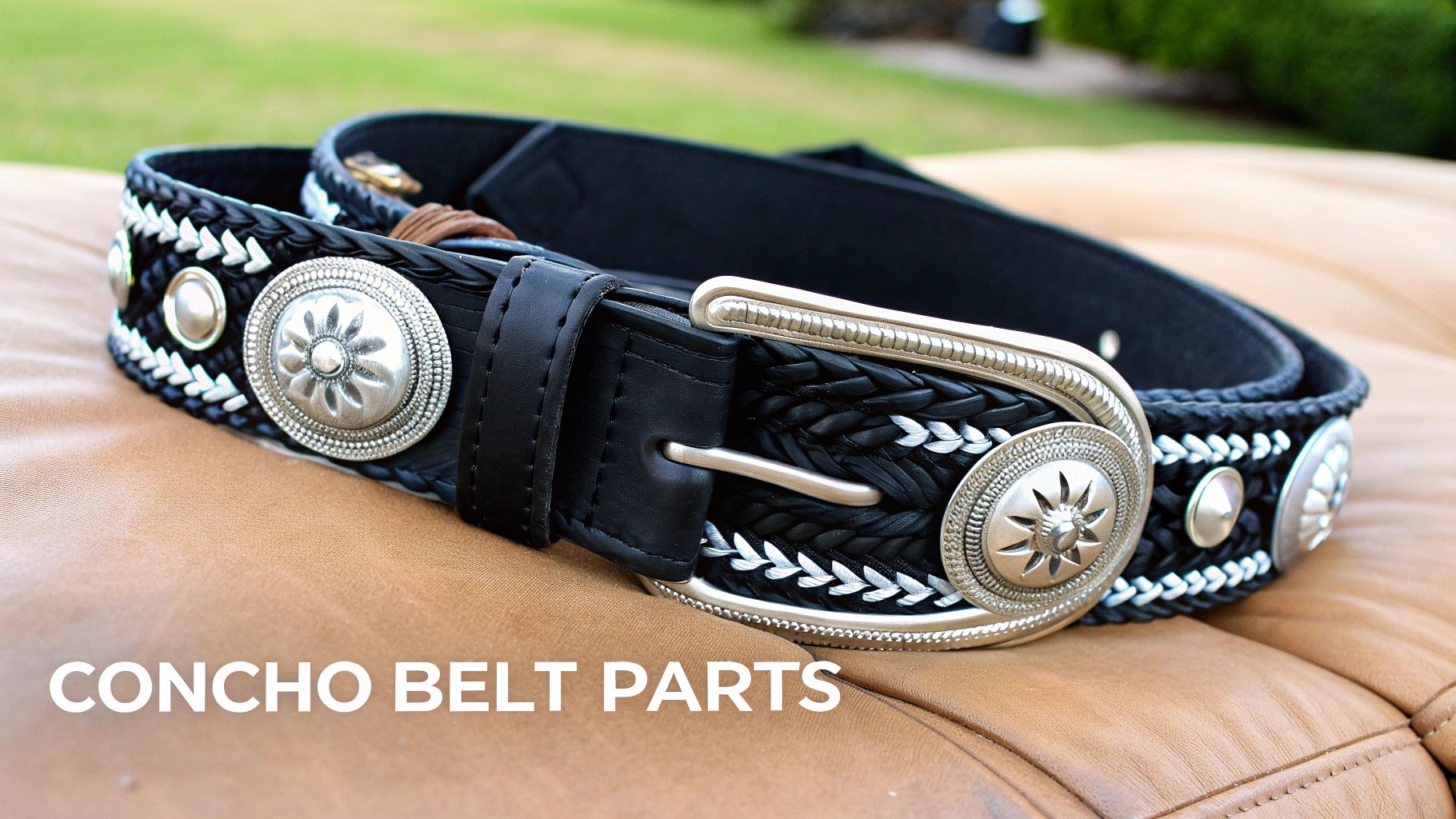
To really get what a concho belt is all about, you have to look at its individual components. The artistry isn't just in the overall impression but in how each piece comes together to create something meaningful and whole.
Core Components You Will Find
From the buckle that fastens it to the leather that holds it all together, every detail counts. The way these elements are crafted and combined defines the belt's style, value, and history. Here are the four key parts that make up a traditional concho belt:
- The Conchos: These are the stars of the show. Conchos are the decorative metal discs—typically round, oval, or even rectangular—that are the heart and soul of the belt. They're often crafted from sterling silver and feature intricate, hand-stamped designs, sometimes set with a brilliant piece of turquoise.
- The Buckle: While some belts feature a simple, understated buckle, many authentic pieces showcase a larger, more ornate buckle. This isn't just a fastener; it's a powerful focal point designed to match the style of the conchos.
- The Leather Strap: This is the foundation. Traditionally made from high-quality, durable leather, the strap is what holds the conchos and gives the entire piece its structure. Its width, color, and finish are all key design choices.
- Butterfly Spacers: Look closely between the main conchos on many classic belts, and you'll find these smaller, butterfly-shaped metal pieces. They aren't just filler; they add a beautiful rhythm and visual balance to the design, contributing to the belt’s intricate aesthetic.
Let's break down these essential parts in a bit more detail.
Anatomy of a Classic Concho Belt
This table gives you a quick look at the building blocks of a traditional Southwestern concho belt. Each component plays a crucial role in the final piece.
| Component | Description | Common Materials |
|---|---|---|
| Conchos | The decorative metal discs that define the belt's style. They can be stamped, engraved, or set with stones. | Sterling Silver, Nickel Silver, Copper, Brass |
| Buckle | The fastener, often a larger, decorative piece that complements the conchos. | Sterling Silver, Nickel Silver, Steel |
| Leather Strap | The belt's foundation, providing structure and support for the metalwork. | Cowhide, Saddle Leather, Suede |
| Butterfly Spacers | Smaller metal pieces placed between conchos to create visual balance and add detail. | Sterling Silver, Nickel Silver, Copper |
As you can see, the materials and craftsmanship behind each part are what elevate a concho belt from a simple accessory to a cherished work of art.
The name 'concho' comes from the Spanish word concha, which means "seashell." This little detail hints at the shape of the earliest designs and speaks to the rich cross-cultural influences that shaped this iconic piece of Southwestern jewelry. Every element tells a part of its story.
The Story Behind the Silver Concho Belt
Every concho belt holds a story whispered in silver and leather, a narrative that journeys back to the sweeping landscapes of the mid-19th century American Southwest. This iconic piece didn’t just appear out of nowhere; it was born from a powerful confluence of cultures and a blossoming of incredible artistic skill. It stands as a testament to the ingenuity and aesthetic vision of Native American artisans.
The story really begins with the Navajo (Diné) people. After learning the art of metalworking from Hispanic and Plains craftspeople, they began to forge their own unique path in silversmithing. This incredible exchange of knowledge was the spark that ignited a whole new form of wearable art.
As their skills grew, these artisans started creating the first conchos, transforming simple metal discs into powerful symbols of identity and pride. The entire history of Native American jewelry is rich with these kinds of stories of adaptation and artistic brilliance.
The First Phase of Creation
The earliest concho belts, which collectors now call “First Phase” belts, emerged sometime between the 1860s and 1880s. These pieces were wonderfully rustic and direct in their construction, showcasing raw artistry and genuine resourcefulness.
Silversmiths would hammer out their designs from melted coins or ingots, often without using any solder to attach the loops on the back. A key feature you'll see in these early belts is a distinctive diamond-shaped slot cut right into the center of each concho. The leather strap was threaded directly through it.
These early belts were so much more than just adornment; they were a statement. In many Native American communities, a concho belt was a clear symbol of wealth, status, and social standing—a tangible representation of a person's prosperity and influence.
Evolving Artistry and Design
Following this initial period, the craft entered what is known as the “Second Phase” in the 1890s. This era marked a significant evolution in both technique and design, as artisans started to incorporate more sophisticated methods into their work.
The most noticeable change was the use of soldering. Instead of cutting a slot into the concho itself, silversmiths began soldering a copper loop to the back of each silver disc. This small change had a huge impact, as it allowed for more intricate and uninterrupted designs on the face of the concho.
This innovation really opened the door for more elaborate stamping and detailed repoussé work, where the silver is pushed out from behind to create a raised, three-dimensional effect. The concho belt was transforming from a rugged, functional item into an increasingly refined piece of art, solidifying its place as a timeless accessory with a profound history.
From Silver Coins to Turquoise Treasures
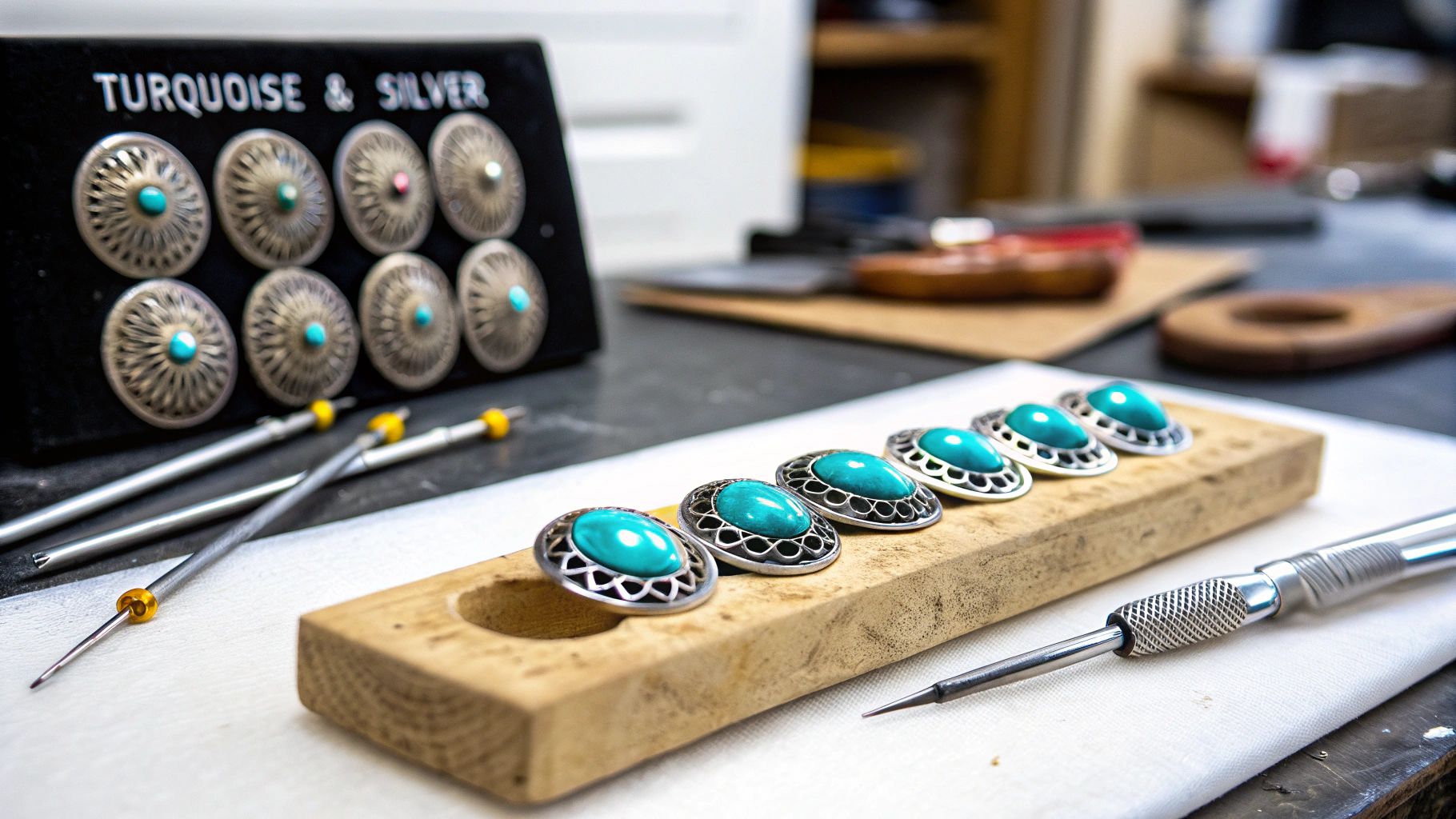
To truly understand what a concho belt is, you have to appreciate the soul poured into its creation. It’s a beautiful dance between raw materials and meticulous skill, turning humble metals and stones into a piece of wearable art that lasts for generations.
It all starts with the silver. Historically, silversmiths had a very practical source for their metal—they melted down silver coins, like Mexican pesos or U.S. dollars. This molten silver was poured into hand-carved molds made from tufa, a volcanic stone tough enough to handle the heat. This process gave the conchos their basic shape and a unique, slightly textured finish that speaks to their handmade origins. In fact, from the 1860s to the 1880s, these beautifully simple silver discs were the norm, long before turquoise became a staple.
From these raw cast discs, the true artistry would begin to shine through.
Handcrafted Metalworking Techniques
An authentic concho belt is all about the hands that shaped it. Artisans relied on a small but powerful set of tools—steel punches, hammers, and files—to bring their stunning designs to life. These aren't machine-stamped patterns; they're born from incredible patience, precision, and a deep connection to the metal itself.
Three core techniques are the heart and soul of concho artistry:
- Hand-Stamping: This is where an artist uses handmade steel dies to strike intricate patterns onto the silver. Every single crescent, sunburst, or line is hammered individually, building a rich tapestry of texture and meaning one mark at a time.
- Repoussé: A masterful technique where the silversmith works from the back of the metal, carefully pushing and hammering it out. This creates a raised, three-dimensional design on the front, giving the concho a dramatic, sculptural depth that catches the light beautifully.
- Hand-Hammering: Beyond decoration, this method is used to shape the concho itself, giving it that perfect curve. The subtle hammer marks often left behind are a tell-tale sign of true handcrafted work, adding to its unique character.
Think of a silversmith's stamp set as their personal signature. The combination of designs and the way they are arranged is often unique to a specific artist or family, embedding their story directly into the silver.
The Arrival of Turquoise
While the earliest conchos celebrated the stark beauty of pure, stamped silver, a new element began to transform the craft in the late 19th and early 20th centuries. That element was turquoise, a stone held sacred by many Native American cultures.
The addition of turquoise wasn't just a decorative whim; it infused the concho belt with new layers of color, symbolism, and spiritual weight. Set in hand-cut bezels, these brilliant blue and green stones created a breathtaking contrast against the gleaming silver. Learning how to identify real turquoise is a vital skill for any enthusiast, as its authenticity and quality dramatically influence a belt's value.
This iconic marriage of silver and turquoise is what cemented the concho belt's legacy as a signature treasure of Southwestern jewelry.
Styling Your Concho Belt Today
Now for the fun part—making this timeless piece your own. A concho belt is so much more than a Western accessory; it's a versatile statement piece that can completely redefine an outfit. Its real power is in the way it adds instant character, structure, and a touch of artisanal history to even the most modern looks.
Whether you're dressing up for a night out or just giving your daily denim a bit of a kick, the concho belt bridges that gap between casual and chic beautifully. The trick is to stop thinking of it as something to just hold up your jeans and start seeing it as the main piece of jewelry for your entire outfit.
From Casual Denim to Boho Dresses
One of the most classic and foolproof ways to wear a concho belt is with high-waisted denim. Just cinch it over your favorite pair of jeans with a simple tucked-in tee or a delicate blouse. This move instantly elevates a basic outfit, creating a focal point that adds a dose of Southwestern spirit. The contrast of silver and leather against blue denim is just effortlessly cool.
But its magic doesn't stop with jeans. A concho belt is the perfect partner for a flowing boho or prairie dress. Wearing it at your natural waist over a loose-fitting dress gives the garment a gorgeous shape and definition. This simple styling trick transforms a flowy silhouette into a thoughtfully put-together ensemble with a distinct bohemian cowgirl vibe.
Think of your concho belt as the final brushstroke on your style canvas. It can be a bold centerpiece or a subtle, sophisticated accent—it all depends on how you place it and what you pair it with.
Layering and Unexpected Pairings
Ready to get a little more adventurous? The true versatility of a concho belt really comes out to play when you start thinking outside the box. Layering is a fantastic way to bring its unique texture and shine into more polished or unexpected outfits.
For a really modern take on Western chic, try wearing your concho belt over a tailored blazer. Cinch it at the waist to create a powerful, structured silhouette that merges that professional polish with a bit of rustic charm. It's a fantastic look for making a statement at the office or a stylish event.
- Over a Chunky Knit: During cooler months, loop your belt over a cozy, oversized sweater for a look that’s both incredibly comfortable and impossibly chic.
- With a Skirt: Pair it with a denim, suede, or even a sleek satin slip skirt to add an element of texture and surprise.
- As a Hip Belt: Wear a longer concho belt slung low on your hips over a simple knit dress for a relaxed, festival-ready aesthetic.
Learning how to style Western boho jewelry for everyday layers can open up a whole new world of possibilities. When you master these little tricks, you start to see your concho belt not just as an accessory, but as a key investment piece that helps tell your unique style story every time you wear it.
How to Spot an Authentic Concho Belt
When you decide to invest in a concho belt, you’re not just buying an accessory—you’re bringing home a piece of wearable art. But telling a genuine, handcrafted treasure from a mass-produced imitation is the key to a purchase you'll love for years. It really just takes a keen eye and a bit of know-how.
The first clue is almost always in the materials themselves. Think about the weight of the silver, the feel of the leather, and the quality of the stones.
An authentic concho belt just feels substantial in your hands. Handcrafted pieces are typically made from sterling silver, which has a noticeable heft and a soft, warm luster that plated metals simply can’t fake. In contrast, mass-produced belts often use cheaper alloys like nickel silver or zinc, which feel lighter and can look either overly shiny or just dull.
If you want to get really good at spotting quality silver, our detailed guide on how to tell if jewelry is sterling silver is a great place to start. That knowledge is invaluable when you're looking at a potential investment piece.
Examining the Craftsmanship
Beyond the metal, the real story of a concho belt is told through its craftsmanship. Authentic pieces will always show the touch of the artist’s hand, with slight, beautiful imperfections that are a sure sign of a handmade origin.
Take a close look at the stamp work. On a genuine belt, the patterns will have subtle variations in depth and spacing, a quiet testament to each mark being individually hammered into the silver.
Mass-produced belts, on the other hand, usually have perfectly uniform, machine-pressed designs that just lack that human touch and character.
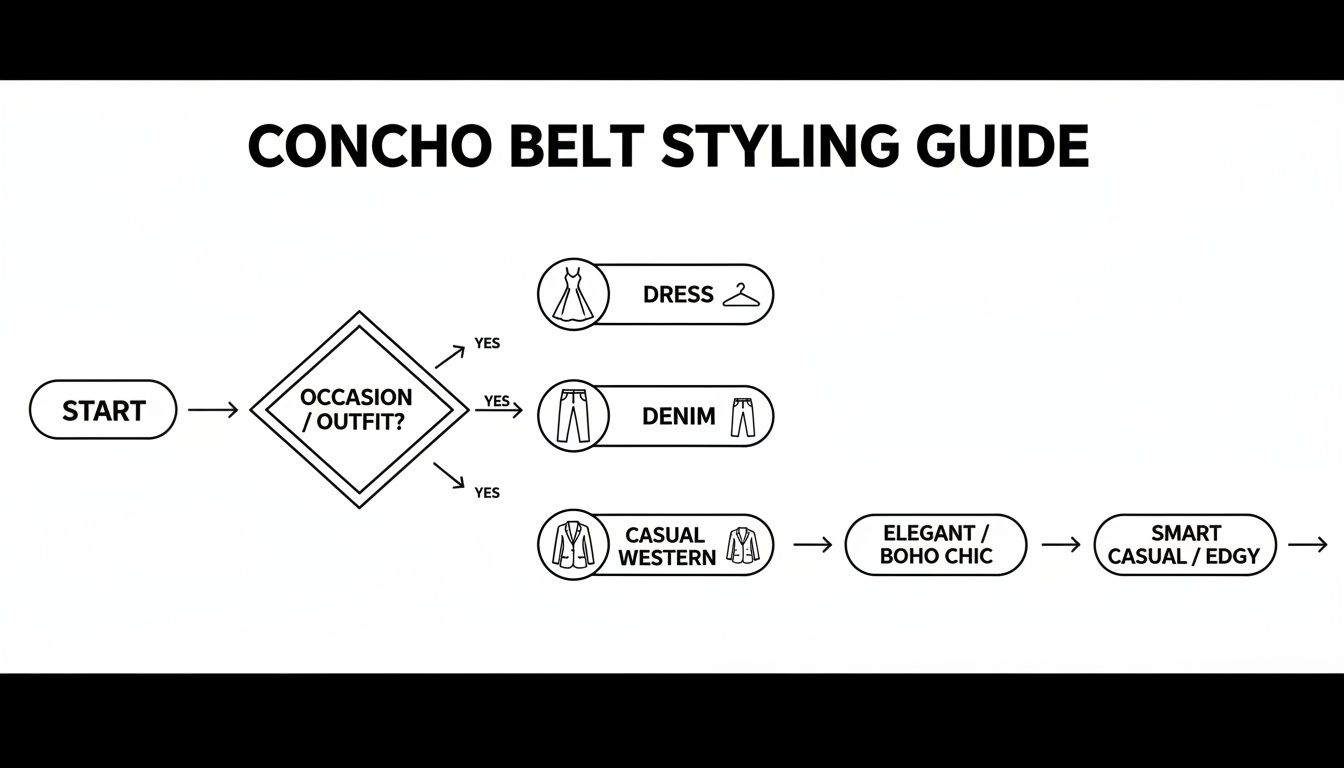
This little guide is a great way to visualize how a quality concho belt can be the perfect finishing touch, whether you're styling a dress, your favorite jeans, or even a blazer.
Another critical detail to look for is the maker’s hallmark. Many Native American silversmiths and artisans sign their work with a unique stamp—often their initials or a personal symbol. Finding this mark is a strong indicator of authenticity and connects you directly to the piece's creator. While not all older, historic belts will have a hallmark, it's a very important feature on most contemporary artisan pieces.
When you hold an authentic concho belt, you’re not just holding an accessory; you’re holding a story. The weight of the silver, the texture of the hand-stamped designs, and the artist's signature all speak to a legacy of skill and cultural heritage.
To help you on your search, this table breaks down the key differences between a true artisan piece and a factory-made fashion belt.
Authentic Artisan Belt vs. Fashion Concho Belt
| Feature | Authentic Artisan Belt | Mass-Produced Fashion Belt |
|---|---|---|
| Metal | Usually sterling silver, has significant weight and a warm luster. | Cheaper alloys (nickel, zinc), feels lightweight, can look overly shiny. |
| Stamp Work | Hand-stamped designs with slight, unique variations in depth and spacing. | Machine-pressed patterns that are perfectly uniform and lack character. |
| Maker’s Mark | Often includes a hallmark or signature from the artist. | No hallmark or a generic brand stamp. |
| Leather | High-quality, thick, and supple leather designed to last. | Thin, stiff, or synthetic-feeling leather. |
| Stone Settings | Stones are set in hand-formed bezels that fit each stone’s unique shape. | Stones are often glued in or set by machine in uniform settings. |
Remembering these key points will make it much easier to identify a belt that's truly special.
Finally, don't forget to assess the small details. The leather on a handcrafted belt is typically high-quality, thick, and supple, made to last a lifetime. On a lesser-quality belt, the leather might feel thin, stiff, or even synthetic. If the belt has turquoise, look at how the stones are set. Genuine pieces will have stones secured in carefully hand-formed bezels that fit each unique shape perfectly, not just glued-in or machine-set cabochons.
These are the subtle but crucial differences that really define true artistry.
From Southwestern Staple to Global Icon
The story of how the concho belt traveled from the heart of the Southwest to closets around the world is a fascinating tale of cultural crossroads and enduring style. Even its name tells part of the story. "Concho" comes from the Spanish word concha, meaning seashell—a perfect nod to the elegant, curved shapes that defined the earliest designs. This connection to the Spanish language isn't just a coincidence; it reflects the deep Hispanic influence on the belt's form, cementing it as a true Southwestern icon from the very beginning.
While the soul of the concho belt lies in Native American artistry, its leap into mainstream American fashion was helped along by some very influential tastemakers. Think of mid-20th-century style icons like Millicent Rogers, who famously moved to Taos in 1947. She fell in love with Navajo and Pueblo silverwork and played a huge part in getting the rest of America to see it not just as a regional craft, but as high-fashion. You can read more about this journey in various historical records and fashion archives.
Enduring Appeal in Modern Style
Fast forward to today, and the concho belt’s authentic charm is as powerful as ever. It’s a permanent fixture in boho, Western, and festival fashion, instantly adding a layer of artisanal history to any modern outfit. The belt’s real magic is its versatility—it looks just as at home with a pair of casual jeans as it does cinching a flowy dress.
This lasting popularity really speaks to a growing appreciation for handcrafted pieces that have a story to tell. In a world of fast fashion, the intricate silverwork and symbolic designs of a concho belt offer something real and meaningful. To see how these timeless patterns continue to inspire designers, you can explore the influence of Native American motifs in modern jewelry. It's this beautiful mix of history and modern-day relevance that has made the concho belt a beloved and truly iconic staple.
Your Concho Belt Questions, Answered
Jumping into the world of concho belts can bring up a few questions, especially when you're searching for that one perfect piece. We get it. To help you on your journey, we’ve put together answers to some of the most common things people wonder about.
How Do I Choose the Right Size?
This is easier than you might think. Just measure where you actually plan to wear the belt—whether that’s at your natural waist or slung lower on your hips—and compare that number to the belt's total length. Many authentic leather concho belts give you great flexibility, too, since you can slide the conchos closer together or spread them out for a custom fit.
Are Concho Belts Heavy?
A genuine concho belt made from sterling silver definitely has some satisfying weight to it, which is really a sign of its quality. But don't worry, they are crafted for comfort and aren't uncomfortably heavy for wearing all day. The weight is usually spread out evenly across the leather strap, making the belt feel secure and perfectly balanced.
Think of it this way: the substantial feel of a real concho belt is a mark of its handcrafted quality and the use of genuine silver, not a design flaw. It’s a huge part of its charm.
What’s the Difference Between Silver and Gold Concho Belts?
While sterling silver is the traditional and most beloved material, you can find conchos made from other metals. A solid gold concho belt is incredibly rare and is truly the pinnacle of the craft, often created as a one-of-a-kind piece by a master silversmith. These are serious collector's items, both because of the material cost and the difficulty of working with gold.
For most of us, sterling silver remains the classic and cherished standard that defines the concho belt look.
How Should I Clean My Concho Belt?
Taking good care of your belt means it will last a lifetime, maybe even longer. For the silver conchos, just give them a gentle polish with a soft, dry silver-polishing cloth to buff away any tarnish and bring back their shine. It’s best to avoid liquid cleaners, as they can damage the silver's beautiful patina and harm the leather.
As for the leather strap itself:
- Try to keep it dry and out of direct sunlight for long periods.
- Wipe it down with a clean, dry cloth to get rid of any dust.
- Every now and then, you can use a high-quality leather conditioner to keep it from getting dry and brittle.
Following these simple steps will preserve the beauty and soul of your treasured concho belt for years to come.
Ready to find a piece that tells your unique style story? Explore the handcrafted Southwestern and boho-inspired collections at Silver Elegant and discover the perfect addition to your wardrobe. Find your timeless concho-style jewelry today at SilverElegant.com.