
At its heart, the difference between surgical steel and sterling silver comes down to this: surgical steel is an industrial-grade alloy prized for its incredible strength and affordability, while sterling silver is a precious metal loved for its brilliant luster and traditional value. Deciding between them really depends on whether you lean toward modern durability or the authentic, handcrafted feel of Southwestern and estuarian cowgirl style.
Choosing Your Metal: Surgical Steel vs. Sterling Silver
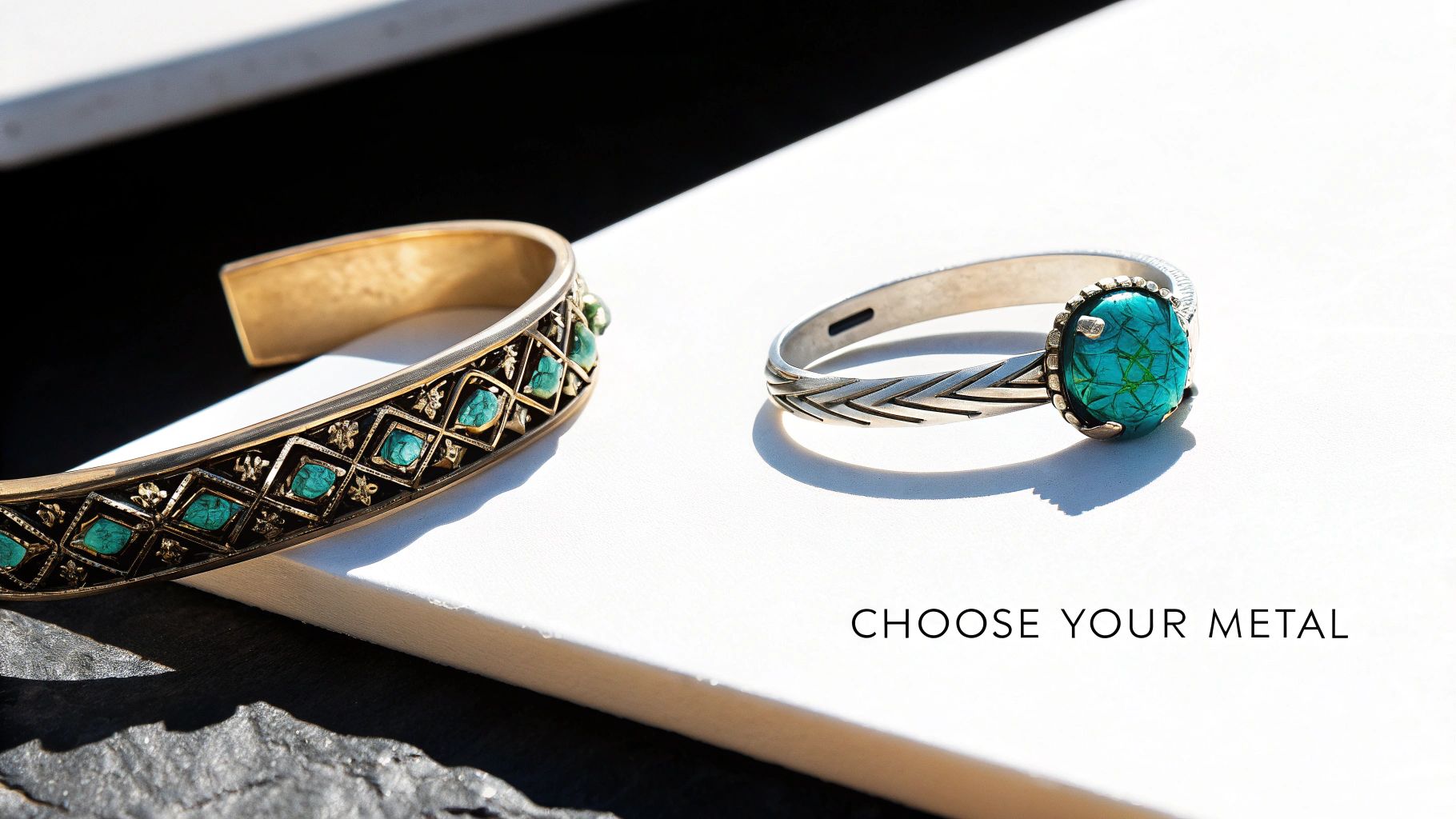
When you’re curating your estuarian cowgirl jewelry collection, the metal you choose is just as important as the design itself. Sterling silver has long been the traditional choice for authentic Southwestern pieces, cherished for the warm glow it casts to perfectly complement stones like turquoise or sun-bleached shells found along the coastline.
Surgical steel, on the other hand, has emerged as a durable, modern alternative that brings its own set of benefits to the stable. This guide will walk you through the key differences to help you decide which metal is the right fit for your personal style, from the ranch to the river delta.
| Feature | Surgical Steel | Sterling Silver |
|---|---|---|
| Aesthetic | Modern, industrial shine | Bright, classic luster |
| Durability | High resistance to scratches | Softer, develops a patina |
| Allergy Risk | Low (hypoallergenic grades) | Very low (if nickel-free) |
| Value | Affordable | Precious metal investment |
Both materials are fantastic options, but knowing their unique personalities is the key to making a choice you’ll love for years to come. To get a deeper understanding of skin-safe options, feel free to explore our guide on hypoallergenic jewelry materials.
What's Really in These Metals? A Look at Their Makeup
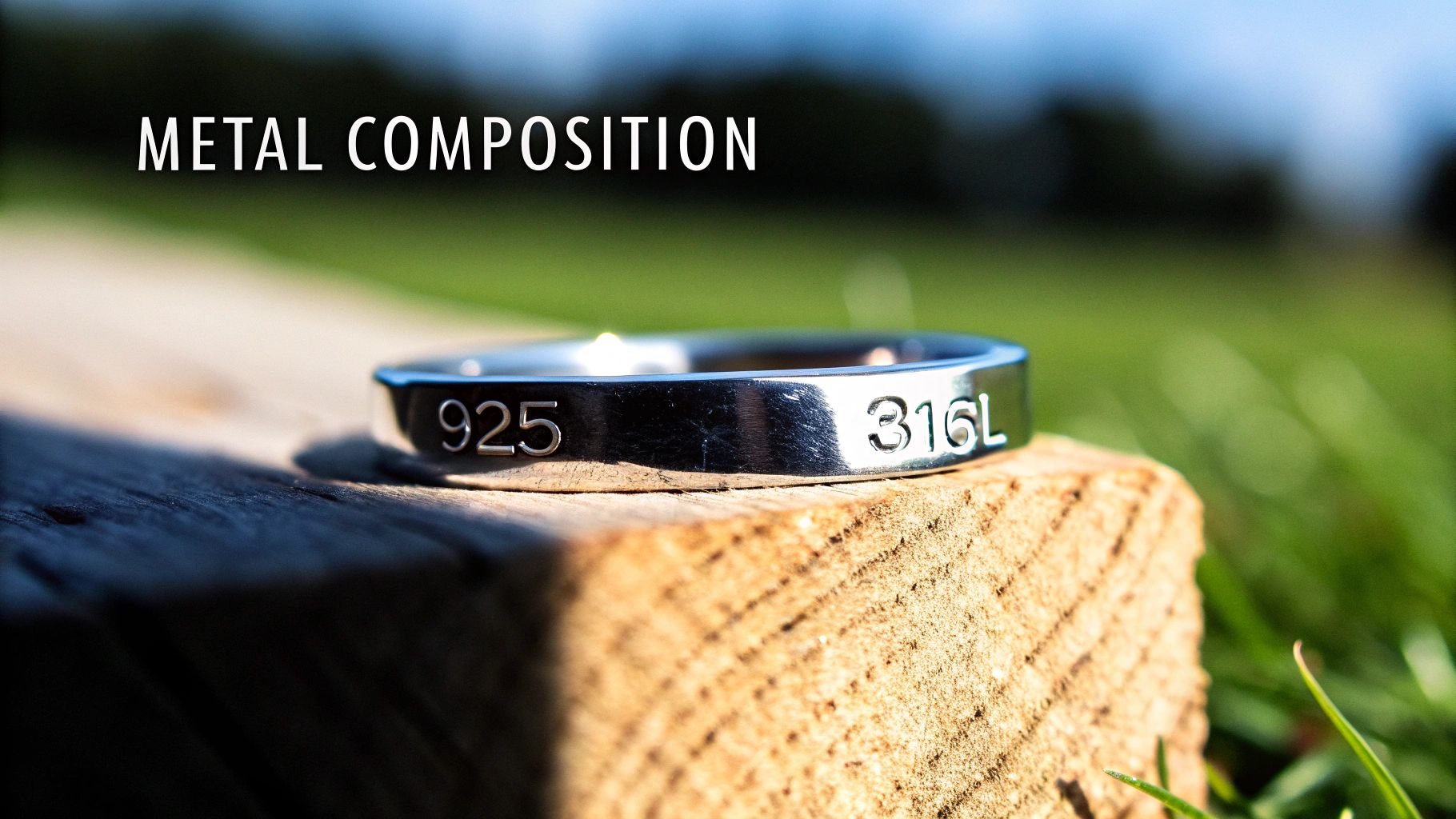
To really get why surgical steel and sterling silver are so different, we need to peek under the hood at what they’re made of. It all comes down to the blend.
Sterling silver is a precious metal, composed of 92.5% pure silver mixed with 7.5% other alloys—usually copper. This isn’t done to cut corners; it’s actually what gives the metal its strength and workability, allowing artisans to create the intricate stamp work so iconic in Southwestern jewelry. We dive deeper into this in our guide on the difference between sterling silver and pure silver.
Surgical steel, on the other hand, comes from a completely different world. It’s an iron-based alloy that gets its toughness and anti-rust properties from chromium. This industrial background is what gives it that cooler, more modern look.
Sterling silver’s market value recently hit a massive USD 13.21 billion, a testament to its enduring role as a treasured metal for heirloom-quality pieces fit for any cowgirl's collection.
Durability and Everyday Wearability
When you’re living an active, estuarian cowgirl life, from riding fences to casting lines at sunset, you need jewelry that can keep up. So, how do these two metals handle the hustle? On one hand, you have surgical steel, the undisputed champion of toughness. It’s incredibly resistant to scratches and dings, making it a fantastic choice for simple, no-fuss pieces you can wear day in and day out without a second thought.
But then there's sterling silver. It tells a different story—one that vintage and Southwestern style lovers know by heart. Over time, it develops a soft, beautiful patina that adds so much character and depth, especially to intricately detailed cuffs and classic concho belts.
While sterling silver does tarnish, that’s not a flaw; it's part of its authentic charm and something that’s easily managed. Surgical steel won’t tarnish, but it also won’t gain that soulful, lived-in look that makes silver so special.
So, while surgical steel definitely has the edge in pure, rugged durability, silver’s iconic look and feel are why it reigns supreme in jewelry markets across the globe. Its softness is what allows artisans to create the stunning, intricate Navajo-inspired designs we all love—heirlooms that, with just a little care, can be passed down for generations. You can get a better sense of the scale of the global jewelry market and see just how big a role these materials play.
Hypoallergenic Properties and Skin Sensitivity
Let's talk about one of the biggest factors when choosing your jewelry: skin sensitivity. It's a real concern for many, and it often steers people toward surgical steel. And for good reason—316L grade surgical steel is well-known for releasing very little nickel, which gives people with extreme sensitivities incredible peace of mind for everyday wear.
But it’s a common myth that sterling silver is always the culprit behind skin reactions. The truth is, high-quality, nickel-free sterling silver is a fantastic hypoallergenic choice and the traditional metal for authentic Southwestern designs. In many cases, people who think they have a silver sensitivity are actually reacting to the low-grade, nickel-heavy alloys found in cheaper jewelry. For a deeper dive, check out our guide on whether sterling silver is hypoallergenic.
While both metals are great options for those with sensitive skin, sterling silver's deep cultural roots and timeless appeal make it the undisputed favorite for estuarian cowgirl jewelry. Its popularity isn't just anecdotal; demand continues to grow by 3-4% annually, proving its staying power in the fashion world.
Aesthetic Value for the Southwestern Look
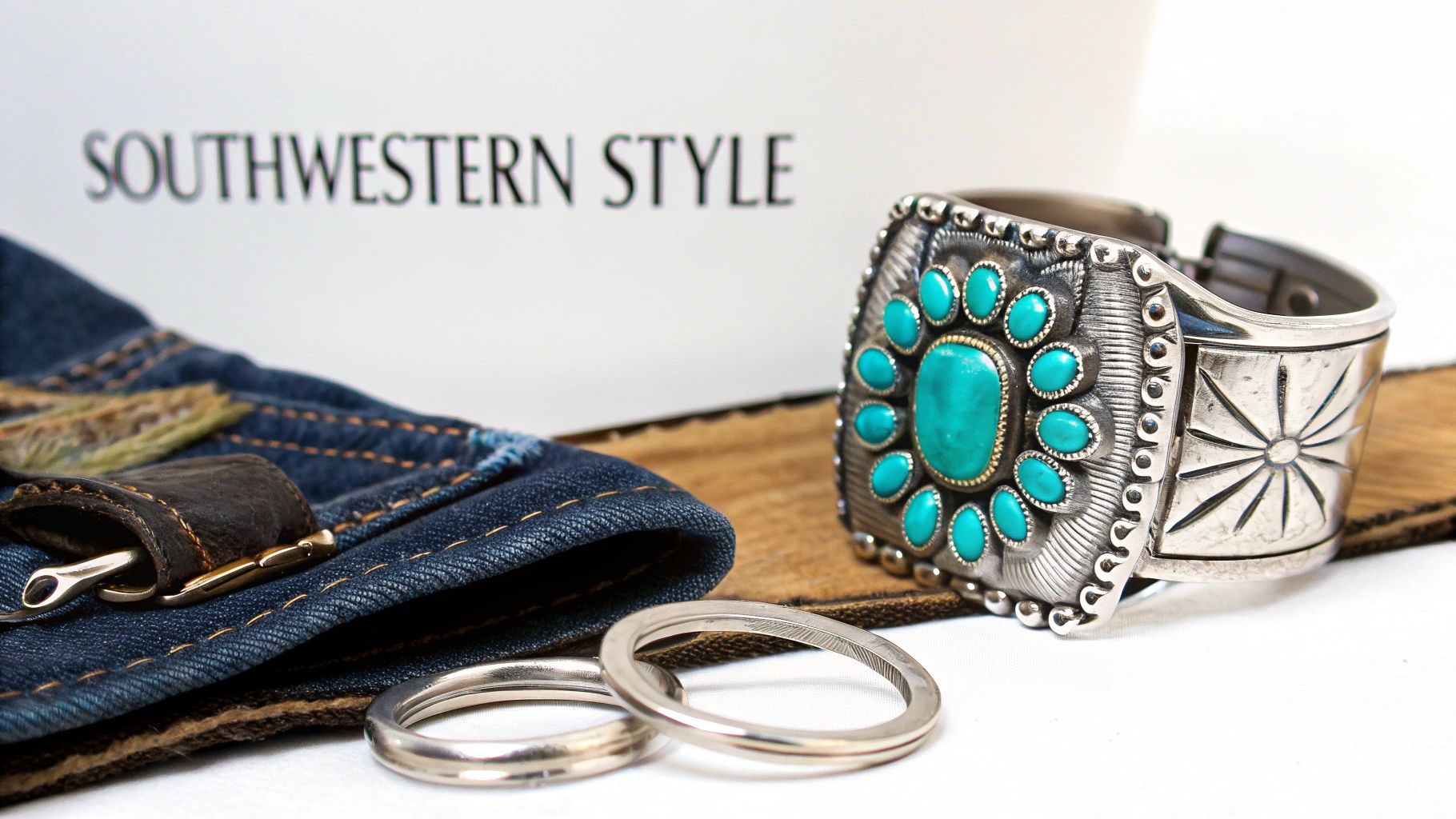
When it comes to the genuine Southwestern look, the visual difference between surgical steel and sterling silver tells two completely different stories. Sterling silver is, without a doubt, the authentic soul of this aesthetic. It has a bright, warm luster that feels alive, making stones like turquoise and coral absolutely pop with color.
It’s the unique softness of sterling silver that allows artisans to create the intricate stamp work, delicate floral motifs, and classic bezel settings that define traditional Western and Native American jewelry. Surgical steel, on the other hand, gives off a cooler, almost industrial gray shine. While this works well for modern, minimalist styles, it often feels out of place and a bit cold in jewelry that’s meant to feel handcrafted and rustic.
For the true estuarian cowgirl look, sterling silver is essential. Its ability to develop a rich patina over time adds depth and character that steel's forever-new finish cannot match.
The way these elements come together is key to creating an authentic look. You can learn how to perfectly decode Southwestern style color, metal, and motif choices in our detailed guide.
Aesthetic and Style Comparison
To break it down even further, here’s a side-by-side look at how each metal contributes to the overall style.
| Attribute | Sterling Silver | Surgical Steel |
|---|---|---|
| Color & Luster | Bright, warm, and radiant white. | Cool, grayish, and slightly darker with a mirror-like shine. |
| Authenticity | The traditional and authentic metal for Southwestern jewelry. | A modern alternative, not historically used in this style. |
| Patina | Develops a beautiful, dark patina over time that adds character. | Resists tarnishing, maintaining its original polished look. |
| Detailing | Soft enough for intricate stamp work, engraving, and detailed settings. | Harder to work with, limiting the potential for fine, handcrafted details. |
| Best For | Authentic, rustic, boho, and traditional Western looks. | Modern, minimalist, or industrial-inspired pieces. |
Ultimately, the choice comes down to the story you want your jewelry to tell. Sterling silver speaks of tradition, artistry, and a connection to the earth and sea, while surgical steel offers a clean, contemporary, and maintenance-free alternative.
Care Cost and Long-Term Value
When you're weighing surgical steel against sterling silver, it’s about more than just what looks good right now—it’s about the life you’ll live with your jewelry. Surgical steel is the definition of low-maintenance. A quick wipe-down is all it ever really needs to keep that cool, modern shine, and its lower price tag makes it an easy, accessible choice.
Sterling silver, on the other hand, asks for a little more of a relationship. It's a precious metal, and it does require a bit of polishing now and then to keep tarnish at bay. But many of us find that taking care of our silver is a satisfying little ritual, a way to connect with a piece that holds real meaning.
Here’s the real difference: while surgical steel is budget-friendly upfront, it doesn't hold any intrinsic value. Sterling silver is a precious metal. It retains its worth, becoming an heirloom you can pass down through generations—perfectly capturing that timeless, free-spirited estuarian cowgirl legacy.
The Final Verdict: Which Metal is Right for You?
So, after all that, where do we land in the surgical steel vs. sterling silver showdown?
For the true estuarian cowgirl—the one with a wild, bohemian heart and a love for authentic style—there’s really only one answer. It has to be sterling silver. It’s the metal of tradition, the one that carries the stories and artistry of generations. Nothing else quite captures that free-spirited, saltwater-and-sagebrush vibe.
Sterling silver is the soulmate to a bold turquoise cuff or a hand-stamped concho belt. It has a warmth and a history that steel just can’t replicate.
Now, that doesn't mean surgical steel doesn't have its place. We see it as a fantastic, practical choice for secondary piercings or for pieces you know will take a beating. Think everyday studs or a simple chain for ranch work. But when it comes to the core pieces that truly define your look and tell your story? Sterling silver is, and will always be, the champion.
If you’re thinking about your jewelry as a collection that grows with you, this little decision tree might help clarify things, especially when it comes to long-term value.

At the end of the day, if you're building a collection with genuine, lasting worth—both in sentiment and in value—silver is the clear winner for any estuarian cowgirl.
Ready to find a piece that speaks to you? Come explore the handcrafted collections at Silver Elegant and discover the timeless beauty of genuine sterling silver today. https://silverelegant.com