
For any woman who's fallen for the rugged, windswept charm of Southwestern or estuarian cowgirl jewelry, finding earrings that are both stunning and comfortable can feel like a real quest. The good news? Sterling silver hypoallergenic earrings are almost always the perfect answer, letting you rock those beautiful turquoise and concho designs without the dreaded itch or irritation. It’s the key to all-day comfort, from the salt marshes to the high desert, without sacrificing an ounce of authentic style.
The Secret to All-Day Comfort in Southwestern Style
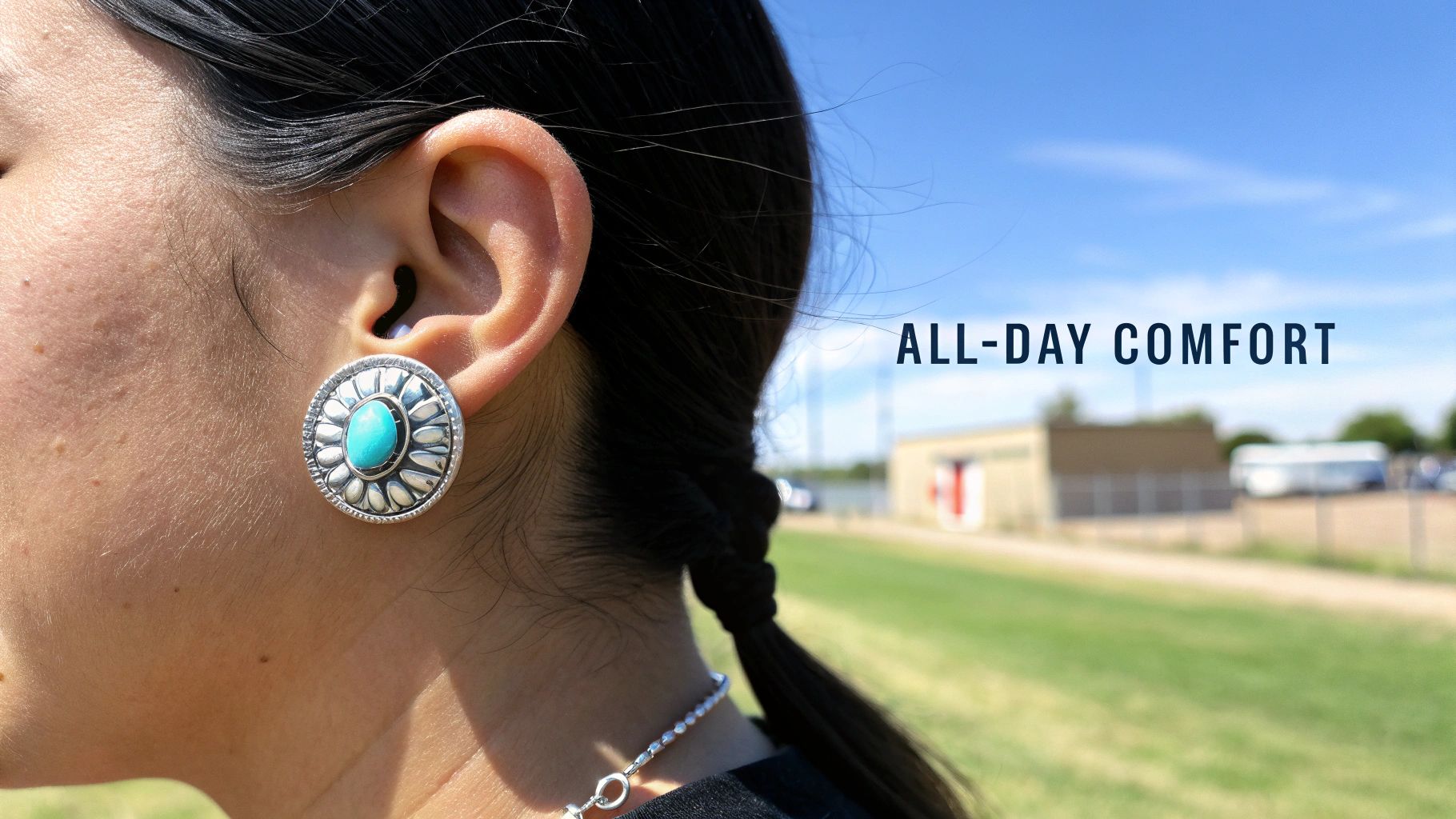
There's a deep-seated love for the estuarian cowgirl aesthetic—from its intricate silverwork to its vibrant turquoise stones—that’s rooted in authenticity and untamed beauty. But for many of us, that passion runs headfirst into a very practical problem: skin sensitivity.
It’s a frustratingly common story. You put on your favorite dangles, and just a few hours later, your earlobes are red, itchy, and irritated. This is where your love for authentic aesthetics meets the very real need for high-quality, gentle materials. We'll dive into why 925 sterling silver has been the metal of choice for generations of Western artisans—not just for its looks, but for its skin-friendly properties.
Why Quality Metal Matters
So, what's really behind most jewelry allergies? The main offender is usually nickel, a metal commonly mixed into cheaper fashion jewelry to add durability and shine. This is a huge deal for the 10-20% of people who have a nickel allergy.
Genuine 925 sterling silver changes the game. By definition, it’s made of 92.5% pure silver and 7.5% other metals—alloys that are typically copper or zinc, not nickel. This composition dramatically slashes the risk of irritation. In fact, silver's biocompatibility and antimicrobial properties are so trusted, they've been used in medical applications for ages. If you want to learn more, Kandel Story offers great insights on hypoallergenic jewelry.
By understanding what "hypoallergenic" really means, you can confidently choose pieces that let you express your unique style without compromise. It’s about more than just a label; it's about the quality and composition of the metal itself.
This guide will show you how to:
- Spot genuine sterling silver and avoid the fakes.
- Understand the key differences between various hypoallergenic materials.
- Care for your jewelry to keep it beautiful and comfortable for years.
Get ready to embrace the bold, beautiful earrings that define your style—from sunrise over the marsh to sunset in the desert—with complete peace of mind.
So, What Does Hypoallergenic Really Mean?
That word "hypoallergenic" gets thrown around a lot in the jewelry world, doesn't it? It often feels like a vague promise of comfort, but what does it actually guarantee for your ears when you're eyeing a new pair of Southwestern dangles? It’s less about being completely "allergy-proof" and more about being significantly less likely to cause a reaction.
Think of it this way: it’s like choosing between a recipe from a trusted ranch cook and a mystery box mix. You know the cook’s ingredients are high-quality and safe, while that mystery mix could contain just about anything. In jewelry, the most common troublemaker is nickel—the primary culprit behind the redness, itching, and irritation that plagues up to 20% of people.
The Science Behind Sensitive Skin
When your skin reacts to an earring, it’s not an infection. It’s an allergic reaction called contact dermatitis. Your immune system mistakenly identifies the metal—usually nickel—as a threat and goes into full-on defense mode. This is why a beautiful pair of earrings can suddenly become unwearable in just a few hours.
The term hypoallergenic simply signals that a product contains fewer common allergens. For earrings, this almost always means the piece is formulated to be free of nickel, giving you a much safer, more comfortable wearing experience.
Understanding this difference empowers you to move beyond just trusting a label and start recognizing the material qualities that provide true peace of mind. To dive deeper, you can explore our detailed guide on what hypoallergenic jewelry really is and why it matters so much.
Why Sterling Silver Is a Safer Recipe
This is where the unique composition of 925 sterling silver becomes so important. By definition, sterling silver is an alloy made of 92.5% pure silver mixed with 7.5% other metals. High-quality sterling silver uses metals like copper to add strength and durability without introducing irritants.
Here’s a simple breakdown of why this matters for sensitive skin:
- Pure Silver: By itself, pure silver is too soft for most jewelry, but it's naturally non-reactive and incredibly gentle on the skin.
- The Alloying Metal: In authentic 925 sterling silver, the added metal is almost always copper, which is not a common allergen.
- What's Missing: Critically, genuine sterling silver does not contain nickel.
This intentional, nickel-free recipe makes sterling silver hypoallergenic earrings one of the safest and most reliable choices out there. It's the reason why artisans creating authentic Southwestern and estuarian cowgirl jewelry have trusted it for generations—it delivers both beauty and comfort without compromise. You’re not just buying a style; you're investing in a thoughtfully crafted material designed for all-day wear.
Why Sterling Silver Defines Southwestern Jewelry
In the world of Southwestern and estuarian cowgirl jewelry, sterling silver is more than just a shiny metal—it’s the very soul of the art form. Its bright, cool luster echoes moonlight on coastal waters, but it’s also a tradition handed down through generations of Native American and Western artisans. They chose silver not just for its kind-to-the-skin qualities but for its unique personality; it can be shaped, stamped, and molded into the intricate, timeless designs we know and love.
Sterling silver is the perfect canvas for the vibrant, earthy stones that define the style. When you set the deep blues of turquoise or the rich reds of coral against it, the silver acts like a frame, making the gemstone's colors truly pop. It's this dynamic contrast that creates the iconic, rustic elegance of an authentic Southwestern look.
A Legacy of Luster and Durability
The choice was a practical one for artisans, too. Sterling silver is strong enough to hold its form in bold, statement-making concho hoops or detailed dangle earrings, yet it’s soft enough to be hand-stamped with delicate, meaningful patterns. This perfect balance of strength and workability made it the go-to medium for creating pieces designed to last a lifetime.
Choosing 925 sterling silver connects you to this rich heritage. You’re not just wearing a piece of jewelry; you're wearing a piece of history, crafted from a metal that has defined a cultural art form for centuries.
This deep-rooted connection between material and style is where practicality meets passion. When you wear sterling silver hypoallergenic earrings, you’re embracing the bold, authentic spirit of the estuarian cowgirl with total confidence and comfort.
This chart helps visualize where different metals fall on the skin-friendly spectrum, placing sterling silver right near the top.
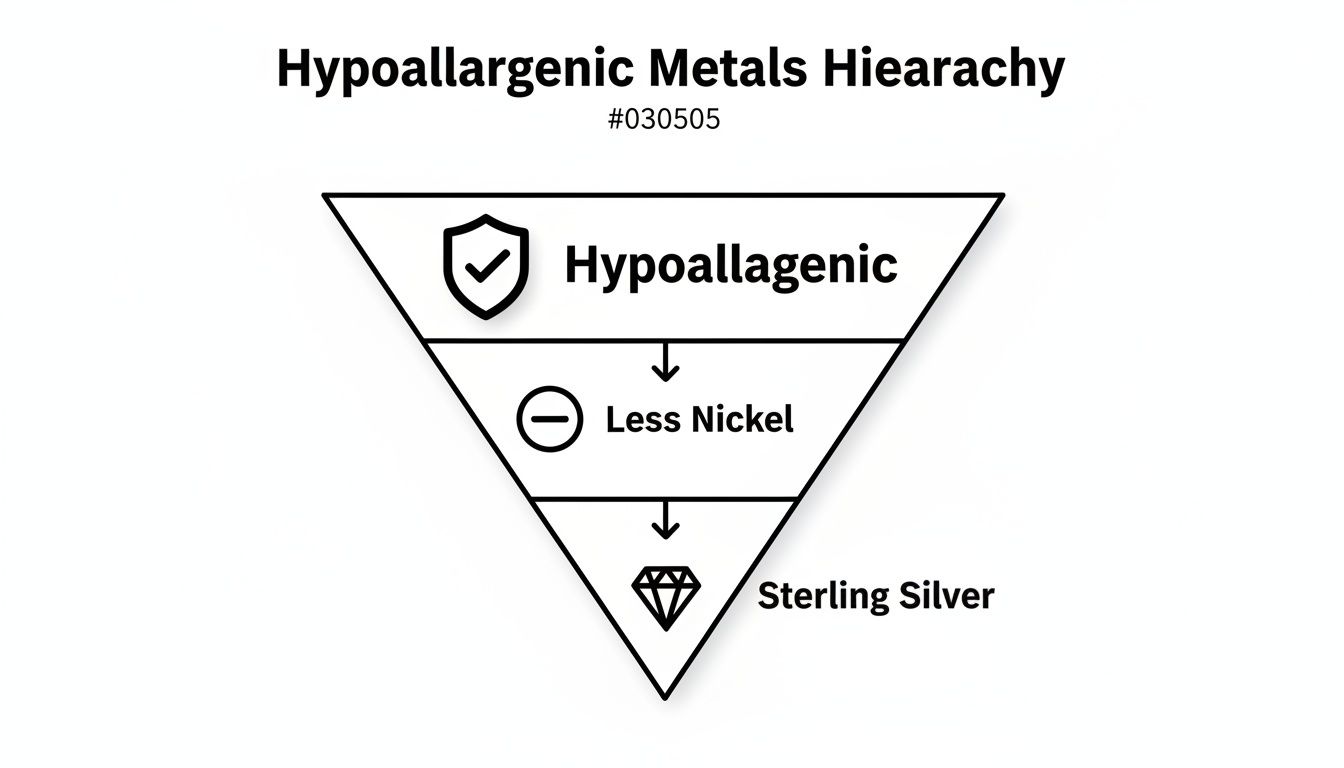
As you can see, while lots of metals are marketed as hypoallergenic, sterling silver stands out because its very composition is designed to avoid common irritants like nickel.
A Growing Demand for Authentic Quality
This long-standing tradition of quality is meeting modern demand in a huge way. The market for sterling silver jewelry hit a value of USD 13.21 billion in 2024 and is expected to climb to an impressive USD 19.55 billion by 2032. What's driving this? Shoppers just like you, who are actively seeking out skin-friendly and eco-conscious materials.
In the U.S. alone, recent retailer surveys revealed that silver jewelry sales jumped 20% year-over-year, with everything from minimalist studs to bold turquoise drops flying off the shelves. These trends just confirm what artisans have known all along: authentic, high-quality materials never really go out of style.
If you're curious about how sterling silver stacks up against another popular option, our guide on sterling silver versus stainless steel jewelry breaks it all down. You can also dig deeper into these market trends in this detailed report from Verified Market Research.
How to Spot Authentic Sterling Silver Earrings
When you're buying jewelry that you want to last and, more importantly, feel good against your skin, knowing what's real is everything. Shopping for sterling silver hypoallergenic earrings shouldn’t be a guessing game. Thankfully, genuine silver leaves a few tell-tale clues that are easy to spot once you know what to look for.
This way, you can confidently pick out pieces that are not only beautiful but also kind to your skin.
The most straightforward sign of real sterling silver is the quality stamp, also known as a hallmark. This tiny inscription is usually tucked away on a less obvious part of the earring, like the post or the backing. Think of it as the maker’s guarantee of quality.
Check for the Hallmark
A hallmark is basically a seal of approval. It’s a certification that the piece you're holding meets the legal standard for sterling silver.
Here’s what you should be looking for:
- "925": This is the mark you'll see most often. It means the metal is 92.5% pure silver.
- "STER": Just a shorthand for "Sterling," this stamp also confirms it's the real deal.
- "SS": Another common abbreviation you might find for "Sterling Silver."
Spotting one of these marks is a great sign you’re holding a genuine piece. Now, the absence of a stamp doesn't always mean it’s fake—especially on delicate, handcrafted Southwestern pieces where there's little room to stamp—but it's the first and most important thing to check. If you want to dive deeper, our guide on how to tell if jewelry is sterling silver has even more tips.
Be wary of terms like "silver-plated." Plating is just a thin layer of silver over a base metal, which could be anything—including nickel. Over time, that coating can wear off, exposing your skin to whatever irritant is hiding underneath.
Simple At-Home Tests
Besides looking for a hallmark, a couple of simple, non-destructive tests can help you confirm if your earrings are authentic. These are easy to do right at home and don't require any special equipment.
One of the quickest and most reliable methods is the magnet test. Here's the secret: real silver isn't magnetic. Just grab a simple refrigerator magnet and hold it near your earrings.
If the earring snaps right to the magnet, it's not sterling silver. That magnetic pull means there are other metals like iron or steel in the mix, which is common in plated jewelry. Authentic sterling silver will have no reaction at all. It’s a simple trick that helps you weed out the fakes and make sure you're getting the quality you paid for—and protecting your ears from mystery metals.
Keep Your Silver Sparkling and Irritation-Free
Proper care is the secret weapon for keeping your sterling silver hypoallergenic earrings looking incredible and feeling comfortable for the long haul. It’s about more than just maintaining that brilliant shine; it’s about making sure they stay skin-friendly.
Think about it—lotions, soaps, and even the natural oils from your skin can create a film on your jewelry over time. This buildup can act like a magnet for dust and other tiny irritants, which kind of defeats the purpose of wearing hypoallergenic silver in the first place. A simple, regular cleaning routine is your best friend here.
Gentle Cleaning for Lasting Comfort
You don't need a box of harsh chemicals to get the job done. In fact, a gentle approach is always the way to go, especially for intricate Southwestern designs that might feature beautiful stones like turquoise.
Here’s a super simple process to keep them pristine:
- Mix a Mild Solution: Just add a few drops of a mild, phosphate-free dish soap to some warm water.
- Clean the Silver Gently: Dip a soft cloth or a toothbrush with very soft bristles into the soapy water. Carefully clean the silver parts of your earrings, taking care to avoid scrubbing any gemstones—especially porous ones like turquoise.
- Rinse and Dry Right Away: Rinse the earrings under cool water and immediately pat them completely dry with a soft, lint-free cloth. Letting them air-dry is a recipe for water spots.
For a quick touch-up between deeper cleanings, nothing beats a professional silver polishing cloth. They're specially treated to whisk away tarnish without scratching the metal. For even more pro tips, check out our complete guide on how to care for sterling silver.
Storing your earrings correctly is just as important as cleaning them. Tarnish is a natural reaction to sulfur in the air, but you can slow it down significantly.
When you’re not wearing them, tuck your favorite concho hoops or turquoise studs into an airtight container or a small plastic bag. This little step shields them from humidity and air exposure, keeping them sparkling and ready for your next festival weekend or ride out. A little proactive care goes a long way in making sure your Southwestern earrings stay both stunning and comfortable.
Styling Your Perfect Southwestern Look
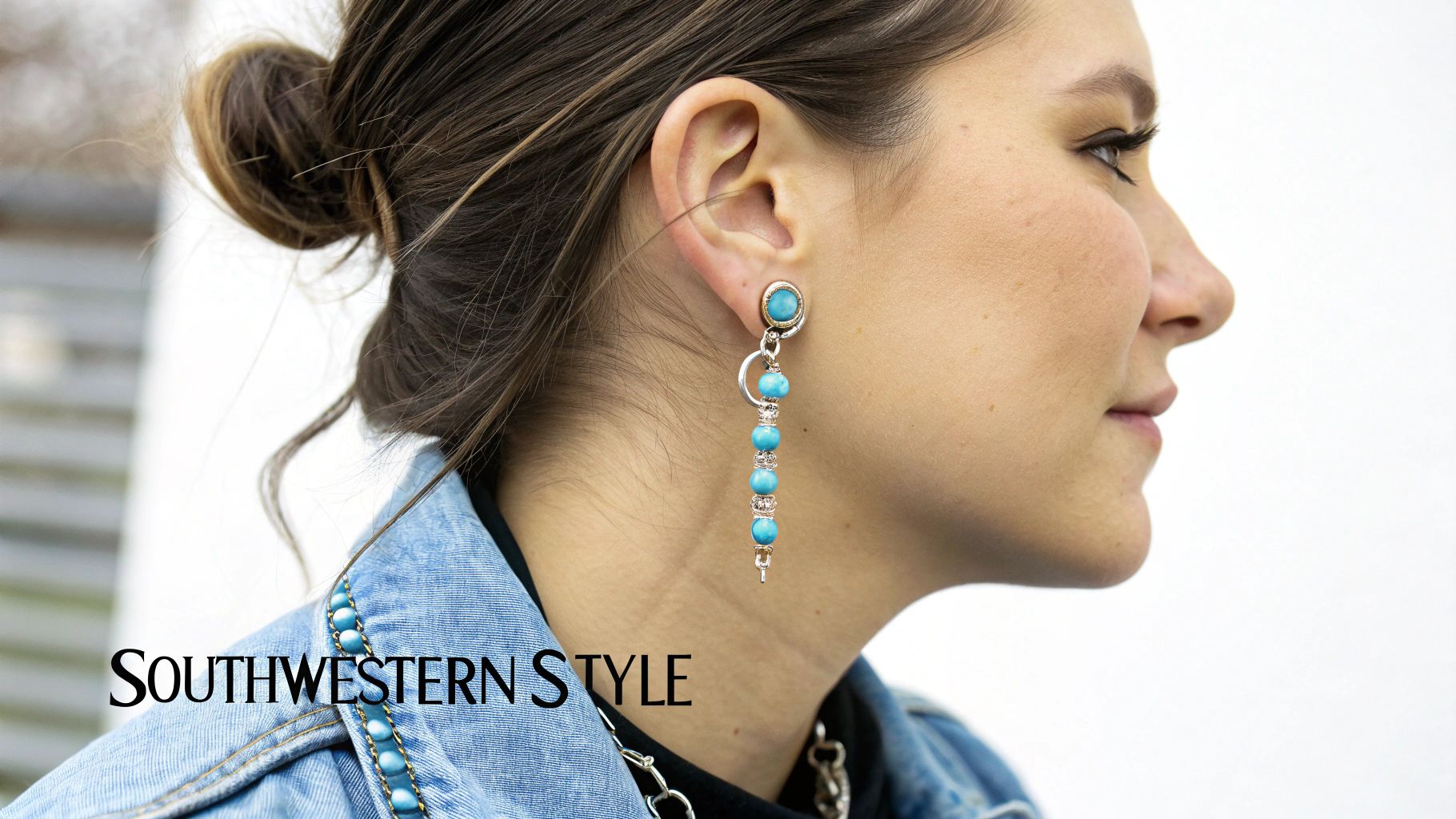
Now for the best part—picking out sterling silver hypoallergenic earrings that nail your personal style without a hint of irritation. The magic of Southwestern and estuarian cowgirl jewelry lies in its versatility. You can build a collection that feels totally authentic and uniquely you.
After all, comfort and style should always go hand-in-hand. When you've got a foundation of skin-friendly silver, you're free to explore all the designs that speak to your inner spirit, from understated minimalist pieces to bold, eye-catching showstoppers.
Curating Your Personal Collection
Building a jewelry wardrobe that works for you is all about choosing pieces for different moods and moments. A great way to start is by gathering the essentials that form the backbone of any true Southwestern collection.
Think about starting with these must-have styles:
- Minimalist Turquoise Studs: These are the workhorses of your jewelry box. They’re perfect for daily wear, adding a subtle pop of that iconic blue-green that elevates a simple denim jacket or a casual tee.
- Classic Concho Hoops: A fresh take on a traditional design, concho hoops bring an instant touch of estuarian cowgirl chic. They frame the face beautifully and are just as fitting for a coastal ride as they are for a night out.
- Bold Dangle Earrings: When you really want to make an entrance, nothing beats a pair of intricate, dangling silver and turquoise earrings. They're the ultimate accessory for festivals, special events, or any time you want to channel your free spirit.
Did you know? The global silver jewelry market is expected to hit $57.2 billion by 2032, largely thanks to a growing appreciation for sustainable, artisan-crafted pieces. The big trends for 2025 are leaning toward sculptural and oxidized finishes—a perfect match for the handcrafted, authentic vibe of Southwestern style.
Mastering the Art of Pairing
Styling your hypoallergenic earrings is all about balance. A few simple guidelines can help your favorite pieces truly shine. For instance, statement dangles look incredible with off-the-shoulder tops or V-necklines, creating an elegant, uncluttered space that lets the earrings be the star.
If you have multiple piercings, creating a curated "ear stack" is a fantastic way to show off your personality. Try starting with a small concho hoop in your first piercing, adding a tiny turquoise stud in the second, and maybe finishing with a simple silver cuff on your upper ear. This layered approach adds depth and character.
For more inspiration, check out our guide on sterling silver and turquoise earring pairing ideas for some timeless suggestions. With a little thoughtful selection, you can create a look that feels both effortless and intentionally styled.
Have More Questions? We've Got Answers
Stepping into the world of hypoallergenic jewelry can feel a little confusing at first, but it doesn't have to be. Getting clear, simple answers is the best way to shop with confidence and find the perfect pair of sterling silver earrings that won't just match your Southwestern style, but will feel great, too.
Here are a few of the most common questions we hear.
Can Sterling Silver Still Cause a Reaction?
It’s possible, but it's incredibly rare. True 925 sterling silver is famous for being nickel-free, and nickel is the culprit behind nearly all jewelry-related skin reactions. The other 7.5% of the alloy is usually copper, which is added to make the silver strong enough for daily wear.
A very, very small percentage of people have a specific sensitivity to copper. For almost everyone else, though, sterling silver is one of the safest, most comfortable metals you can put in your ears.
The bottom line is this: If you don't have a known copper sensitivity, sterling silver is an exceptionally safe bet. Its reputation as a top-tier hypoallergenic metal is well-earned, making it a reliable choice for daily wear.
Are Silver-Plated Earrings Hypoallergenic?
Not in the long run, and it's best to be cautious. Think of silver plating as a beautiful, but very thin, costume worn over a mystery base metal. More often than not, that core is a cheap alloy loaded with nickel.
Over time, that thin silver layer inevitably rubs off, chips, or wears away. Once it does, your skin is left in direct contact with the irritating nickel underneath, which is a fast track to a painful allergic reaction. For comfort that lasts, always choose solid 925 sterling silver over plated pieces.
How Do I Know If My Earrings Are Real Sterling Silver?
Authentic sterling silver almost always leaves clues. The most trustworthy sign is a quality stamp, also known as a hallmark. You can usually find it in a discreet spot, like the earring post or the backing.
Keep an eye out for one of these marks:
- 925
- STER
- .925
There's also a quick test you can do at home: the magnet test. Real silver isn't magnetic. If your earring snaps to a magnet, that’s a dead giveaway it’s made from another metal and isn't genuine sterling silver.
Ready to find your perfect pair of irritation-free earrings? Explore the handcrafted Southwestern and estuarian cowgirl collections at Silver Elegant and wear your style with comfort and confidence. Shop our full collection of hypoallergenic earrings today.