
At its heart, 14k white gold is a beautiful and durable precious metal made by blending pure yellow gold with strong white alloy metals. Think of it as a carefully crafted recipe designed for both brilliance and resilience, making it a perfect choice for the estuarian cowgirl's jewelry, meant to be worn and loved every day from the salt marshes to the open range.
What Is 14k White Gold
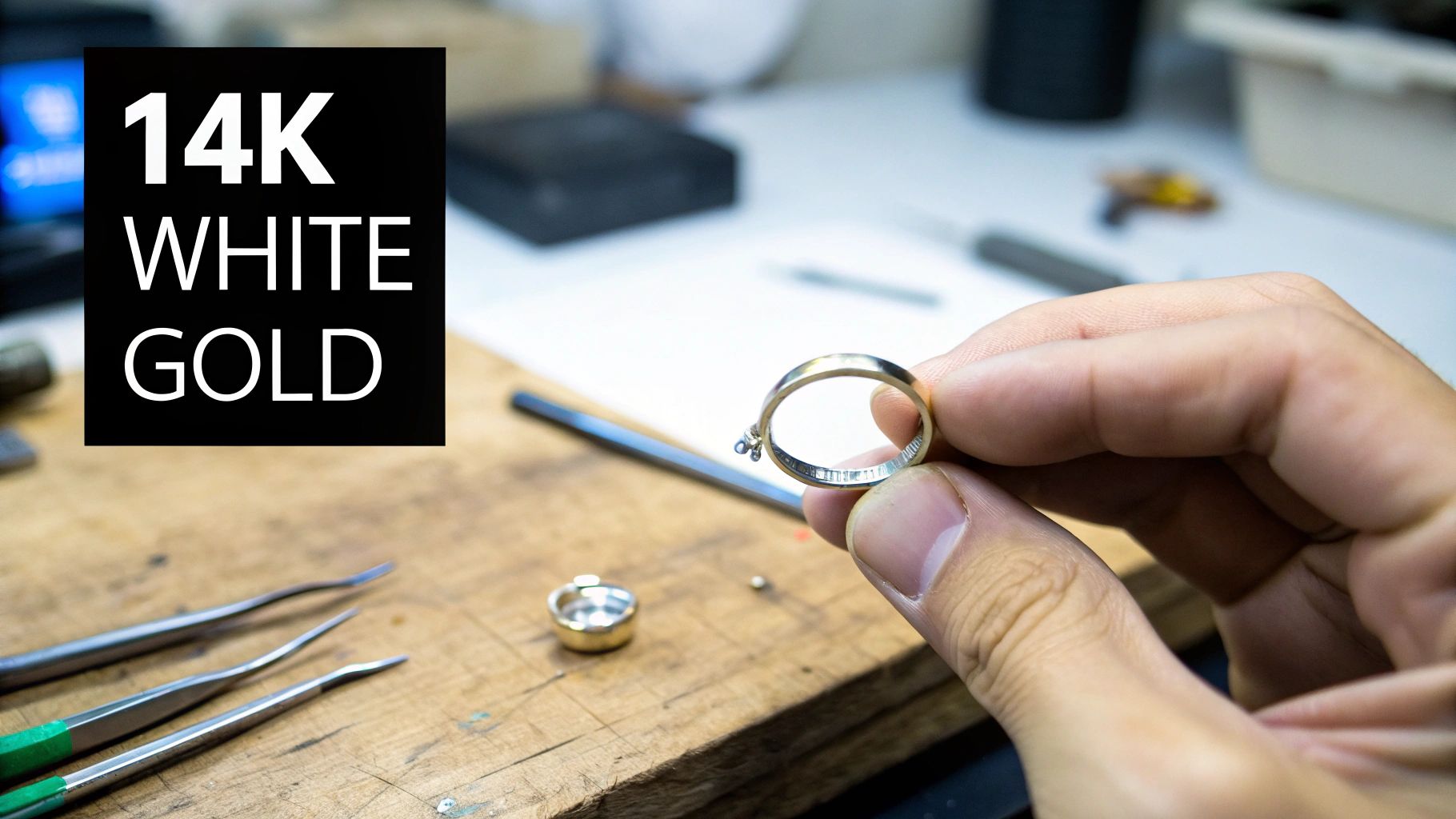
Here's something that surprises a lot of people: all white gold starts its life as pure, vibrant yellow gold. On its own, pure gold (known as 24k) is gorgeous but far too soft for crafting jewelry that can withstand a life of adventure. To get the strong and stunning metal we all know, artisans skillfully mix it with other metals.
This blending process is where the "14k" part of the name comes from. It's really just a simple way to describe the gold's purity.
The term '14k' tells you that 14 out of 24 parts of the metal, or 58.3%, are pure gold. The remaining 41.7% is made up of alloy metals that give the gold its white color and add some serious strength.
The Perfect Mix for a Southwestern Aesthetic
This unique blend is what makes 14k white gold such an ideal canvas for the Southwestern and estuarian cowgirl aesthetic. By adding robust metals like palladium, silver, or sometimes nickel, that soft yellow gold transforms into a much tougher material. This gives it a few key advantages:
- Exceptional Durability: The alloy mix creates a metal that's highly resistant to the scratches and dents that come with an active, salt-air-and-sunshine lifestyle.
- Cool, Silvery Tone: Those white metals give it a contemporary, silvery hue that beautifully complements the vibrant blues of turquoise and the iridescent shimmer of coastal mother-of-pearl.
- Balanced Value: It offers the prestige of gold while being more affordable and resilient than higher-karat alternatives.
This balance of precious beauty and rugged strength is exactly why it's a favorite for artisans creating Southwestern-inspired pieces. It holds intricate details securely and keeps precious stones locked in place—a must-have feature for handcrafted jewelry. The cool luster of 14k white gold puts a modern spin on traditional designs, allowing the natural character of gemstones to really take center stage. To see how different metals are used in this style, you can explore our guide to Western jewelry from turquoise to stamped silver.
The Secret Behind Its Bright White Shine
Ever wonder how 14k white gold gets that brilliant, mirror-like finish? Since all white gold begins its life as pure yellow gold, its natural, unplated state is actually a subtle, warm off-white. To get that stunning, crisp white you see in Southwestern jewelry, artisans add a special finishing touch: rhodium plating.
Think of it like the clear topcoat on a beautiful painting. Rhodium is a precious metal from the platinum family, and it’s applied in a micro-thin layer over the white gold. This process, called electroplating, doesn’t just create a dazzling shine—it also adds a tough layer of protection.
The Magic of Rhodium Plating
The electroplating process is a fascinating blend of science and artistry. The jewelry is submerged in a rhodium solution, and a small electrical current is passed through it. This current makes the rhodium particles bond directly to the surface of the white gold, creating a perfect, even coating that is unbelievably bright and reflective.
This thin but mighty layer does more than just make the metal look good. It also serves a couple of crucial functions, especially for jewelry meant for an active, outdoor-loving lifestyle:
- Adds Scratch Resistance: Rhodium is extremely hard and durable. It offers an extra shield against the minor scuffs and scratches that come with daily wear.
- Creates a Hypoallergenic Barrier: For anyone with sensitive skin, the rhodium plating acts as a protective layer between your skin and the alloy metals (like nickel) within the white gold.
Rhodium plating is the secret ingredient that transforms the naturally warm-toned white gold alloy into the cool, brilliant, and silvery metal that makes Southwestern gemstones pop with color.
Maintaining That Brilliant Luster
Over time and with frequent wear, this rhodium plating can gradually wear away, revealing the slightly warmer tone of the 14k white gold underneath. This is completely normal and isn't a sign of tarnish. How quickly it happens really depends on how often you wear the piece and what it’s exposed to. A ring worn daily on a ranch will show wear a lot faster than a pair of earrings saved for special occasions by the coast.
When you start to notice the shine dulling or a yellowish tint peeking through, a quick trip to the jeweler is all it takes to have it replated. This simple maintenance restores its original bright white finish, making your piece look brand new again. Learning a few more maintenance tips is key, and you can find many essential jewelry care habits that keep pieces shining to ensure your entire collection stays beautiful for years to come. Restoring that rhodium finish is an easy way to protect your investment and keep your favorite Southwestern treasures looking their absolute best.
Built for the Modern Estuarian Cowgirl
The modern estuarian cowgirl lifestyle is all about blending that rugged, free-spirited elegance with down-to-earth practicality. It calls for jewelry that’s tough enough for daily adventures but chic enough for a night out. This is where 14k white gold truly shines, making it the perfect metal for this kind of life.
Its smart alloy composition gives it a real strength advantage over softer metals. That means your favorite turquoise ring or mother-of-pearl pendant can handle the bumps and scrapes of an active day. You can live in your jewelry without constantly worrying about dents or damage. It’s a metal made for movement.
A Fresh Canvas for Southwestern Gems
One of the best things about choosing 14k white gold for Southwestern jewelry is its cool, silvery-white sheen. This neutral backdrop is like the perfect gallery wall, letting the natural, earthy beauty of the gemstones take center stage. The vibrant blues and intricate webbing of turquoise, for instance, just pop against the crisp white of the metal.
This contemporary feel offers a fresh, modern spin on timeless Western designs. It perfectly bridges the gap between traditional motifs and a clean, minimalist style. For some ideas, check out our guide on how to style Western boho jewelry for everyday layers.
For the modern estuarian cowgirl, 14k white gold isn't just a style choice—it's a practical one. It provides the durability needed for an active life and a chic, neutral canvas that enhances the raw beauty of Southwestern stones.
The journey from natural gold to that brilliant white finish is a fascinating one.
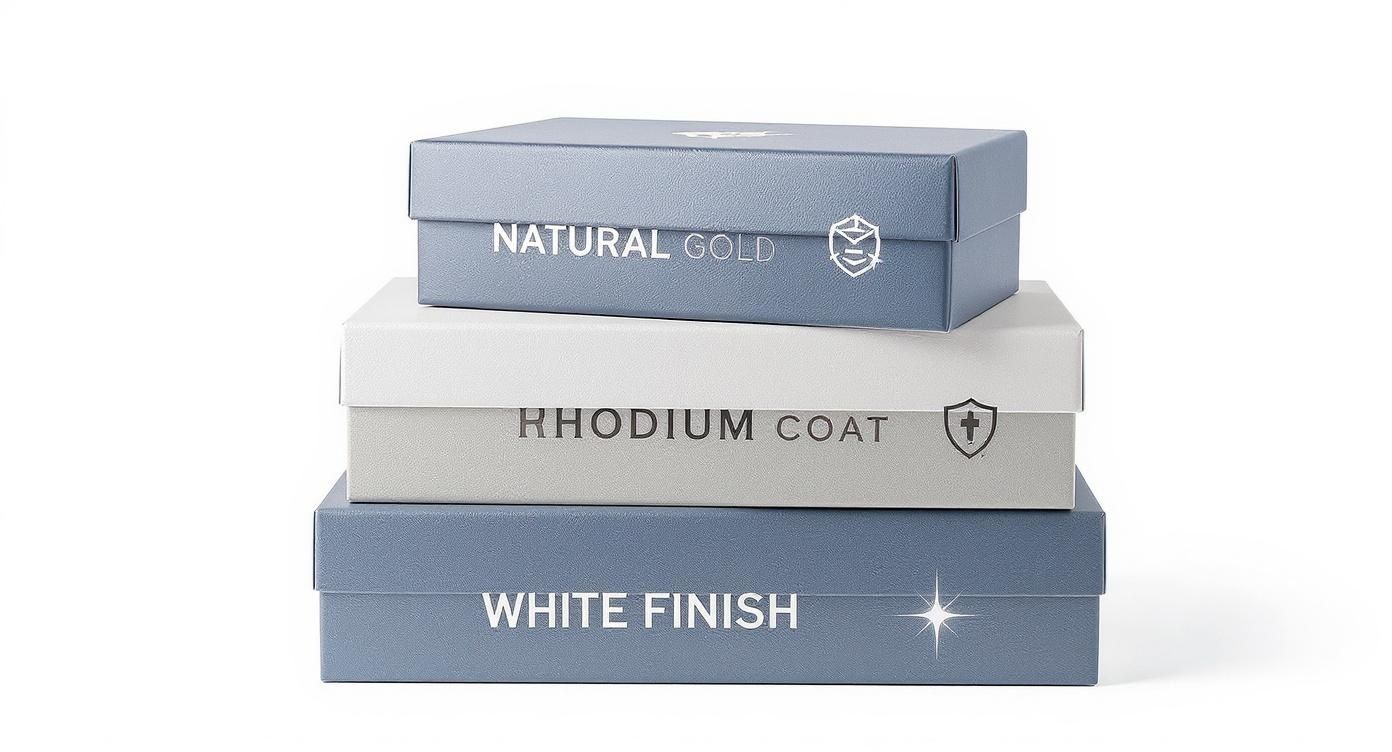
As you can see, that final rhodium coating is what gives the piece its signature protective sparkle and bright white color.
Understanding the Value and Investment
Beyond its good looks, it helps to know what goes into the price of 14k white gold. Its value is tied directly to the ever-changing costs of both gold and the alloy metals used to create it. Gold prices are always on the move—for example, the average price per troy ounce bounced between $1,200 and $2,000 between 2015 and 2022.
These market shifts have a direct impact on the cost of 14k white gold jewelry, since pure gold makes up most of its value. When you understand this, you can see your jewelry not just as a beautiful accessory, but as a lasting investment in quality Southwestern craftsmanship designed to be treasured for a lifetime.
Is White Gold Safe for Sensitive Skin?
For a lot of us, how a piece of jewelry feels is just as important as how it looks. When it comes to 14k white gold, the question of whether it's safe for sensitive skin doesn't have a simple yes or no answer. The truth is, it all comes down to the specific recipe of metals used in the alloy.
The main troublemaker behind most metal allergies is nickel. For a long time, nickel was the go-to metal for making white gold because it does a great job of bleaching the natural yellow of pure gold and it’s pretty affordable. The catch? A huge number of people have a sensitivity to it, which can lead to that dreaded redness, itching, and irritation.
The Nickel vs. Palladium Difference
Thankfully, jewelers listened. To make sure every cowgirl can enjoy white gold, many now offer nickel-free alternatives. This is where you, as a shopper, need to know what your 14k white gold is made of.
- Nickel-Based White Gold: This is the more traditional blend. It’s strong and gets the job done, but it's the one that can cause a reaction if you have a known nickel allergy.
- Palladium-Based White Gold: Palladium is part of the platinum family of metals. It’s naturally bright white and, most importantly, hypoallergenic. Using palladium creates a premium, skin-friendly white gold that’s perfect for sensitive wearers.
The good news is that the rhodium plating on most white gold jewelry creates a protective, hypoallergenic barrier between your skin and the alloys underneath. As long as that shiny layer is intact, even nickel-based white gold is usually perfectly fine to wear.
But here’s the key: that rhodium layer can wear down over time, exposing your skin to the metal beneath. This is exactly why knowing the base alloy matters so much. If you have sensitive skin, one of the smartest things you can do is simply ask your jeweler whether a piece is made with a nickel or palladium alloy.
For a deeper dive, you can find a helpful guide explaining what is hypoallergenic jewelry right here on our blog.
Choosing a palladium-based 14k white gold piece, or just making sure the rhodium plating is kept fresh, gives you the freedom to wear your favorite Southwestern pieces without a second thought. It guarantees the only thing you’ll feel is the beautiful, solid presence of your jewelry—not an annoying skin reaction. That kind of peace of mind is priceless when you're investing in a ring or necklace you plan to love for years.
Caring for Your Southwestern Treasures
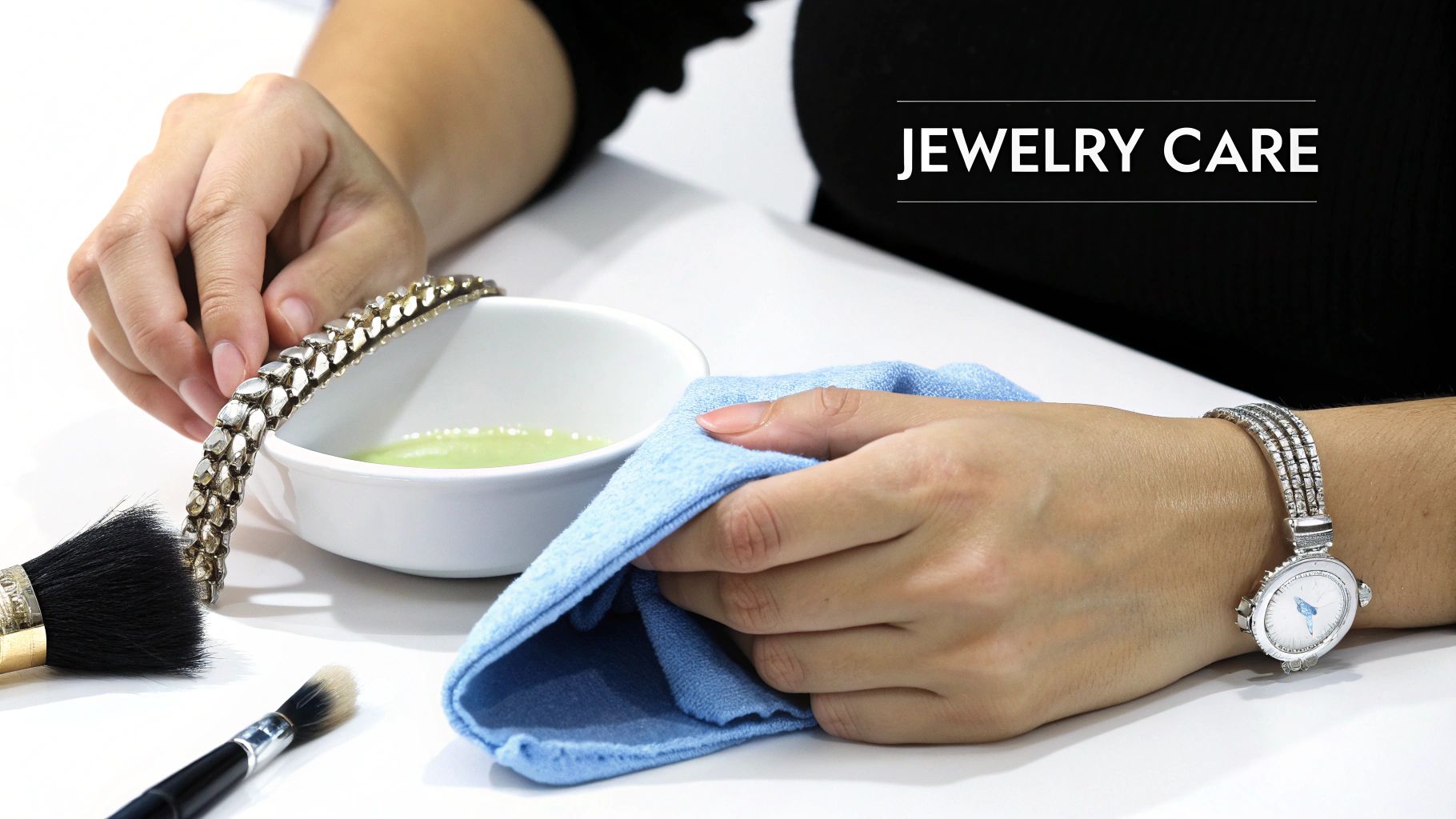
One of the best things about 14k white gold is how easy it is to care for. It’s tough enough for an active, Western-inspired lifestyle, but a little TLC now and then will keep that silvery luster shining bright for years to come.
Most of the time, all it needs is a gentle cleaning at home to get rid of the daily buildup of lotions, oils, and dust that can make it look a bit dull.
Gentle At-Home Cleaning
For a quick and easy refresh, just mix a few drops of mild dish soap into a bowl of warm water. Let your 14k white gold jewelry soak for about 15-20 minutes to loosen any grime.
Next, take a new, super-soft toothbrush and give it a gentle scrub, paying a little extra attention to the nooks and crannies around any stone settings. Rinse it well under some clean running water, then pat it completely dry with a soft, lint-free cloth. That’s it!
A special note for Southwestern pieces: Porous gemstones like turquoise need a different approach. Never submerge turquoise in water for long, as it can absorb the liquid and get discolored. For jewelry with these stones, it's smarter to just wipe the metal clean with a damp cloth, being careful to avoid soaking the gem itself.
Knowing how to care for your jewelry also means knowing what not to do. The biggest threat? Harsh chemicals.
What to Avoid at All Costs
There are a few everyday things that can really damage the finish and alloys in your beautiful pieces. Always take your jewelry off before you start:
- Cleaning with harsh chemicals: Bleach, ammonia, and other strong household cleaners are a big no-no. They can eat away at the alloys in the gold and ruin the rhodium plating.
- Swimming in chlorinated water: Chlorine is especially corrosive to gold jewelry, so always remove it before hopping in a pool or hot tub. The same goes for saltwater, which can be harsh over time.
- Using abrasive materials: Stay away from things like toothpaste or baking soda for cleaning. Their gritty texture will leave tiny scratches all over the surface of your 14k white gold.
While this simple home cleaning works wonders for everyday upkeep, some maintenance is best left to a professional. If you start to notice your ring or bracelet is losing its bright white shine and taking on a faint yellowish hue, don't panic! That’s just a sign that the rhodium plating is wearing thin, and it's time for a quick trip to the jeweler. Replating is a straightforward process that will bring back that brand-new, brilliant finish.
And if you have sterling silver pieces in your collection, we've got you covered there, too. Check out our guide on how to clean sterling silver jewelry at home for more great tips.
How to Buy 14k White Gold with Confidence
When you’re ready to invest in a piece of authentic Southwestern art, buying with confidence is everything. Knowing what to look for elevates you from a casual browser to a savvy collector. It all starts with learning to read the secret language of jewelry: the hallmark.
These tiny stamps, often tucked away on the inside of a ring or near the clasp of a necklace, are your guarantee of authenticity. They're a direct line of communication from the artisan, telling you the exact metal content of your piece.
Decoding Jewelry Hallmarks
Think of a hallmark as a seal of quality—a promise from the creator about the materials they've used. For 14k white gold, you’ll want to look for one of two common stamps:
- "14k" or "14kt": This is the mark you'll see most often in the United States. It’s a straightforward indicator of the gold's purity, meaning 14 parts pure gold out of 24.
- "585": This is the European equivalent. It represents the percentage of pure gold in the alloy (58.3%), which is rounded up to 585 parts per thousand for the stamp.
Spotting one of these marks is a fantastic sign that you're holding a genuine piece. If a piece isn't stamped, it’s a good reason to pause and ask the jeweler why.
Choosing a reputable jeweler is just as important as reading the hallmark. A trustworthy artisan or seller will be completely transparent about the alloys they use, especially whether their white gold is blended with nickel or hypoallergenic palladium.
A Checklist for Quality Craftsmanship
Beyond the metal itself, the level of craftsmanship is what turns a piece of jewelry into a family heirloom. This is especially true in detailed Southwestern and estuarian cowgirl designs, where the little things make all the difference.
Before you make a purchase, take a moment to really look at the piece with a critical eye.
Look for a flawless, even finish without any visible scratches or rough spots. Check that any stone settings are secure; the prongs should feel smooth and hold the gemstone tightly with zero wiggling. A secure setting ensures your beautiful turquoise or mother-of-pearl is safe for the long haul.
Investing in well-crafted 14k white gold means your Southwestern treasure will be loved and worn for years to come.
Common Questions About 14k White Gold
Jumping into the world of precious metals can feel a little overwhelming, and it's natural to have questions. To help you feel completely confident when choosing your next Southwestern piece, we've put together answers to a few things people often ask about 14k white gold.
Does 14k White Gold Tarnish?
Good news—no, 14k white gold does not tarnish. Gold is what's known as a noble metal, which means it doesn't react to oxygen the way other metals, like sterling silver, do.
What you might notice over time, though, is the rhodium plating wearing a bit thin. When this happens, it’s not tarnish, but simply the natural, slightly warmer off-white color of the gold alloy peeking through from underneath.
How Often Should I Replate My Jewelry?
This really comes down to your lifestyle and how often you wear the piece. Think of it like the soles on your favorite pair of cowgirl boots—the more you wear them, the sooner they'll need a little attention.
For a ring you wear every single day, you might think about having it replated every 12 to 24 months to keep that brilliant, mirror-like shine. For jewelry you only wear on special occasions, like a necklace or earrings, it could be years before they need a refresh. A good rule of thumb is to take it to your jeweler when you notice the finish looks a bit dull or a yellowish tint starts to appear.
Your jewelry will tell you when it’s ready for a touch-up. The moment its bright white luster begins to fade is the perfect time to consider replating to restore its original beauty.
Is It a Good Choice for Turquoise Jewelry?
Absolutely! In fact, 14k white gold is a fantastic partner for turquoise, especially within that Southwestern, estuarian cowgirl aesthetic.
Its cool, silvery-white hue creates a stunning contrast that makes the vibrant blues and greens of a turquoise stone really pop. But it’s not just about looks; the strength and durability of 14k white gold also provide a strong, secure home for this sometimes-delicate gemstone. This combo makes it a practical and breathtaking choice for rings, pendants, and cuffs built for a life full of adventure.
Ready to find your next treasure? Explore the handcrafted Southwestern and estuarian cowgirl collections at Silver Elegant and discover the perfect piece to tell your story. Shop now at https://silverelegant.com.