
Southwestern jewelry is so much more than just a beautiful accessory. It’s a language, spoken through stone and silver, rich with history and meaning. Every single piece tells a story—of heritage, spirituality, and a deep, abiding connection to the natural world. This isn't just jewelry; it's a powerful art form that transforms raw materials into profound cultural statements, perfect for the estuarian cowgirl aesthetic.
More Than Adornment: The Language of Southwestern Jewelry
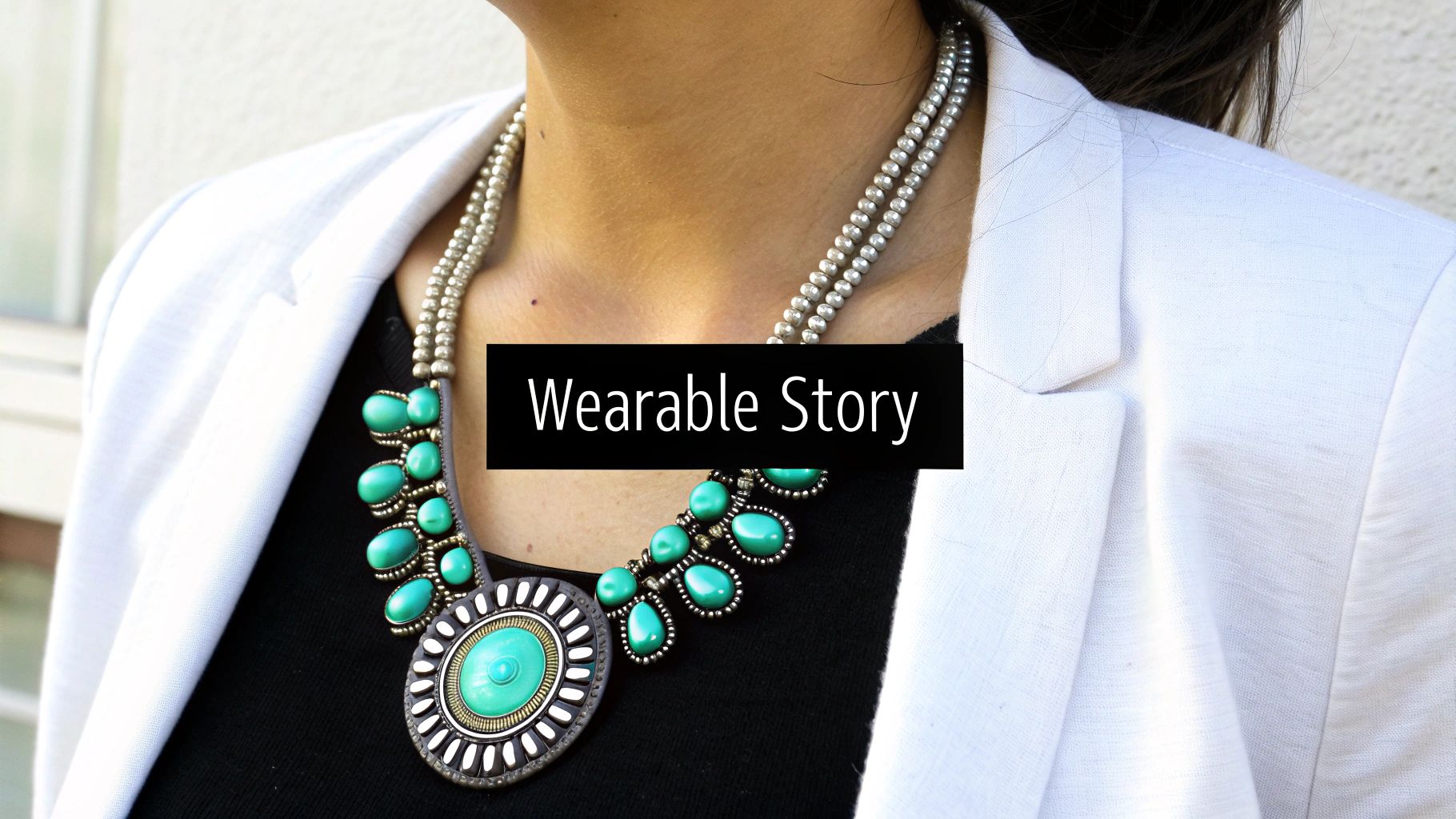
When you hold a piece of authentic Southwestern jewelry, you’re not just holding a pretty object. You're holding generations of tradition right in your hands. It's an art where every curve of polished silver and every carefully set stone is part of a much larger story. The artisans behind these creations are more than just jewelers; they are storytellers, historians, and guardians of ancestral wisdom.
Seeing it this way completely changes how you look at a bracelet, a ring, or a necklace. It stops being just a fashion choice and becomes a piece of art with a soul. The meanings woven into each design are deeply tied to the land, to spirit, and to the everyday lives of the people who first brought these symbols to life.
A Legacy Woven in Silver and Stone
The tradition of crafting these meaningful adornments is one of the oldest continuous art forms in North America. Think about that for a moment. Archaeologists have found evidence that for roughly 10,000 years, Indigenous peoples have created pieces with profound cultural weight. These weren't just for decoration. They were vital parts of community life—acting as portable wealth, showing social standing, and serving as visual records that passed traditions from one generation to the next.
This incredible, deep-rooted history is what gives Southwestern jewelry its unmistakable presence. The pieces we love today are the evolution of ancient practices, adapted and refined over thousands of years. They carry the echoes of ceremonies, the spirit of sacred landscapes, and the resilience of the communities that create them.
The real magic of this jewelry is its ability to communicate without a single word. One piece can convey protection, fertility, strength, or a connection to the sky—all through the deliberate combination of materials and symbols.
The Foundation of Meaningful Design
Understanding this background is the key to truly appreciating the art. Nothing is accidental here. The cool blue of turquoise might be chosen to represent the sky, while the deep red of coral could symbolize lifeblood. These aren't random choices; they are part of an intentional language of color and texture. When you learn how jewelry connects heritage with modern elegance, you start to see the layers of thought that go into every single design.
This gives us the context we need to explore the specific symbols and materials. As we go on, we'll start to decode the meanings behind the most common elements, helping you to "read" the stories told in these beautiful pieces. This journey will give you the tools to:
- Recognize the spiritual importance of different gemstones.
- Understand the stories behind iconic motifs like the thunderbird and squash blossom.
- Appreciate the unique artistic styles of different tribal nations.
By starting here, you're getting ready to see Southwestern jewelry not just for how it looks, but for its powerful voice and enduring cultural legacy.
Understanding the Stones and Materials
Every piece of Southwestern jewelry tells a story, and the stones are its vocabulary. More than just pretty accents, the vibrant gems and gleaming shells are chosen with incredible intention. Each one carries a specific energy and meaning, rooted in a deep connection to the natural world.
Learning to "read" these materials is the first step to truly appreciating the artistry. An artisan doesn't just pick a stone for its color; they choose it for what it represents—the sky, the earth, life, and spirit. This transforms a simple bracelet or ring into something much more: a narrative of heritage and belief.
Turquoise: The Sacred Sky Stone
Turquoise is, without a doubt, the soul of Southwestern cowgirl jewelry. For centuries, it's been revered as the "sky stone" or "stone of life"—a belief that it’s a piece of the sky that fell to earth. Its brilliant blue-green hues are thought to hold immense spiritual power.
This sacred stone is seen as a powerful protector. Many cultures believe it brings good fortune, strength, and shields the wearer from harm. Its color, which can range from a pale robin’s egg blue to a deep, earthy green, is also tied to life-giving water, healing, and harmony.
Turquoise is more than a gem; it's a spiritual conduit. It represents the profound connection between the heavens and the earth, offering a tangible piece of the sky to keep close.
Because this stone is so central to the craft, getting to know its nuances can really deepen your appreciation. If you want to dive deeper into its different origins and qualities, our guide can help you know your turquoise, from origin to quality markers and care. Understanding its variations helps you see the unique personality in every stone.
Coral: The Lifeblood of the Earth
Where you find the celestial blue of turquoise, you’ll often see the passionate red of coral right alongside it. Sourced from the sea, coral is considered a sacred material representing the very lifeblood of the earth. Its vibrant color is a potent symbol of vitality, energy, and endurance.
The pairing of turquoise and coral isn't just for looks; it's deeply symbolic. It creates a visual balance between sky (turquoise) and water or earth (coral), representing the beautiful interconnectedness of all elements in the natural world. This blend of desert and coastal elements is perfect for an estuarian cowgirl style.
It's important to remember that these meanings reflect complex spiritual beliefs that vary across hundreds of tribes. Prized materials, like shells brought from distant coasts, often signaled wealth and status. When European colonizers introduced glass beads, artisans skillfully integrated them into traditional designs, all while preserving their cultural significance. You can discover more insights about the history of these materials.
A Deeper Look at Gemstone Meanings
While turquoise and coral are the headliners, a whole host of other materials play vital roles in telling the full story. To make it easier to understand, here's a quick reference guide to some of the most common materials you'll find in Southwestern jewelry and what they often represent.
Table: Common Gemstones and Their Southwestern Meanings
| Material | Symbolic Meaning | Cultural Association |
|---|---|---|
| Turquoise | Protection, healing, good fortune, sky, water | Widely revered across many Southwestern tribes |
| Coral | Lifeblood, vitality, energy, endurance, earth | Represents life force and connection to the sea |
| Mother-of-Pearl | Calming energy, intuition, imagination, soothing | Associated with the protective, gentle power of the ocean |
| Jet | Grounding, stability, protection from negativity | Represents the earth and the night sky |
| Onyx | Strength, stamina, absorbing negative energy | A powerful stone for inner strength and perseverance |
| Abalone | Peace, compassion, love, emotional balance | Its rainbow colors are said to calm the spirit |
These materials are rarely used alone. An artist might pair the protective qualities of turquoise with the grounding force of jet, or blend the life-giving energy of coral with the soothing iridescence of mother-of-pearl. Together, they create a balanced, meaningful composition—a wearable piece of art that speaks a language of deep cultural and spiritual significance.
Decoding Sacred Symbols and Motifs
If the stones in Southwestern jewelry give a piece its voice, the symbols and motifs are the words that tell its stories. These aren’t just pretty patterns; they're a visual language, a shorthand for deep ideas about life, nature, and spirit. Every line, curve, and shape is deliberate, carrying meanings that have been passed down through generations of artisans.
Learning to recognize these symbols is like learning to read the jewelry itself. It lets you go beyond just admiring a piece and helps you understand the deeper story woven into the silver and stone. An arrowhead isn't just a sharp shape—it's a prayer for protection. A squash blossom isn't just a floral design; it’s a symbol of life itself. Let's walk through some of the most iconic motifs and the powerful tales they tell.
To get a feel for how these visual elements work together with gemstones, this infographic is a great quick reference for the core meanings of key materials.
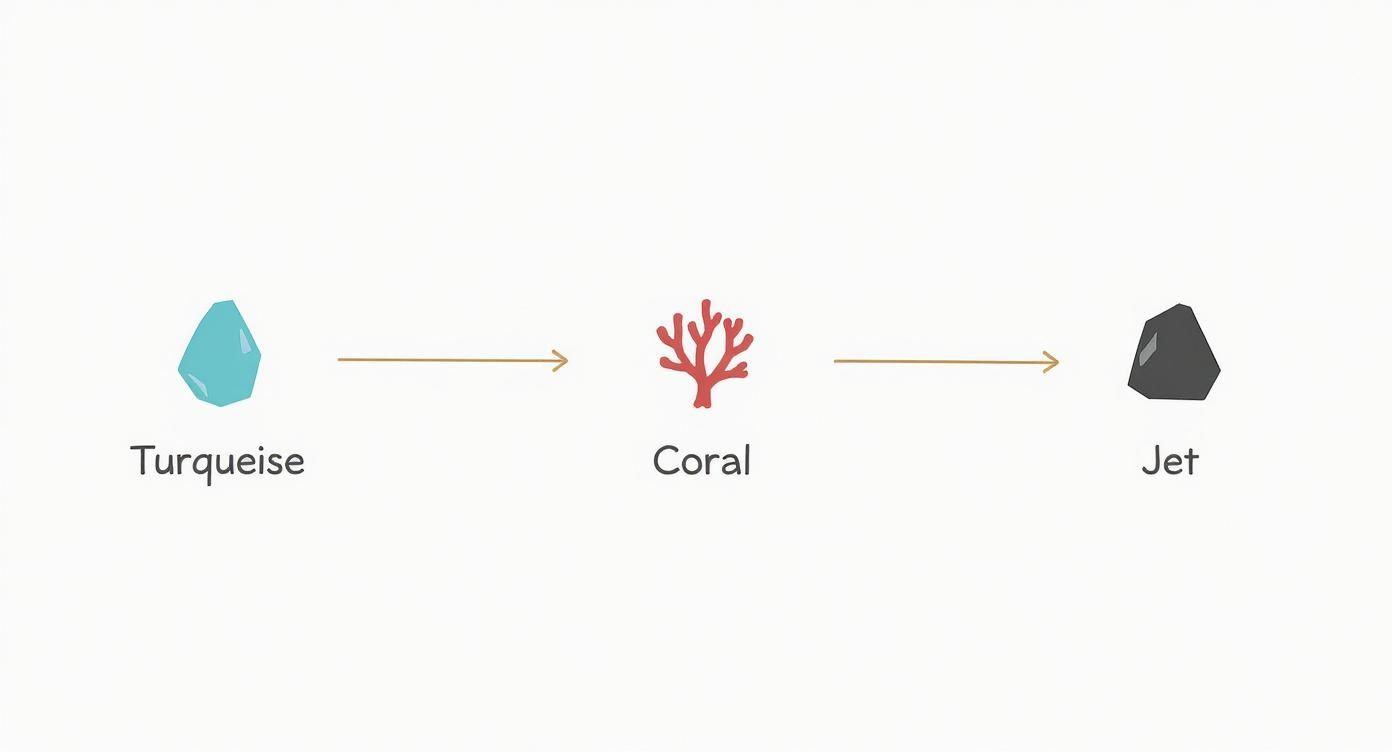
As you can see, materials like turquoise, coral, and jet are foundational, representing core ideas like the sky, lifeblood, and the earth.
The Squash Blossom: A Symbol of Abundance
One of the most instantly recognizable and revered designs in all of Southwestern jewelry is the squash blossom necklace. Its elegant, crescent-shaped centerpiece, called the "Naja," and the bead-like "blossoms" lining the necklace are truly iconic. While most of us connect the design to the squash plant, its origins are actually a fascinating story of cultural exchange.
The Naja, for instance, is thought to have been adopted from the Spanish Moors, who used a similar shape on horse bridles to ward off the evil eye. Native artisans saw its protective power and beauty, weaving it into their own spiritual traditions. The "blossoms" themselves are believed to be stylized versions of pomegranate flowers, another Spanish motif. Over time, they became associated with the essential, life-giving squash plant.
The Squash Blossom necklace is a powerful symbol of fertility, abundance, and the life cycle. Wearing one is like wearing a prayer for prosperity and a bountiful life, connecting the wearer to the earth's cycles of growth and harvest.
Today, it stands as a beautiful testament to artistic adaptation. Every element, from the Naja to the delicate blossoms, comes together to create a piece that is not just stunning but packed with layers of history and meaning.
Thunderbird: The Messenger of the Skies
Soaring high above all other symbols is the mighty Thunderbird. This incredible mythological creature is a central figure in the stories of many tribes across North America. With wings that are said to create the clap of thunder and eyes that flash lightning, the Thunderbird represents immense power, divine protection, and transformation.
It’s seen as a sacred messenger, a link between our physical world and the spirit realm. When this symbol shows up in jewelry, it acts as a powerful guardian, offering strength and protection to whoever wears it. The Thunderbird is often shown with its wings spread wide, a clear symbol of its dominance over the skies and its role as a sacred protector.
- Divine Power: The Thunderbird channels the awesome force of nature's storms.
- Protection: It's a guardian spirit, believed to shield the wearer from harm and evil.
- Transformation: As a celestial being, it represents our own personal growth and spiritual journeys.
Bear Paw and Arrowhead: Symbols of Strength and Protection
In Native American cultures, animals are respected as spiritual guides, and their symbols carry the very essence of their strengths. The Bear Paw is a perfect example. The bear is deeply honored for its raw courage, physical power, and its connection to healing and medicine. The paw print, then, becomes a potent symbol of leadership, inner strength, and the ability to push through any challenge.
In the same way, the Arrowhead is much more than just a picture of a tool or weapon. It’s a powerful symbol of protection, courage, and sharp focus. Pointing down, it can signal peace; pointing outward, it serves as a talisman to ward off negative energy. As a symbol of the hunter, it also represents resourcefulness and the ability to hit your mark and achieve your goals.
Wearing an arrowhead is like carrying a personal shield. These symbols are chosen by artisans to imbue a piece of jewelry with specific energy. For a closer look at how these and other motifs are used in contemporary designs, check out our guide to decode Southwestern style through color, metal, and motif choices.
Recognizing Distinct Tribal Styles
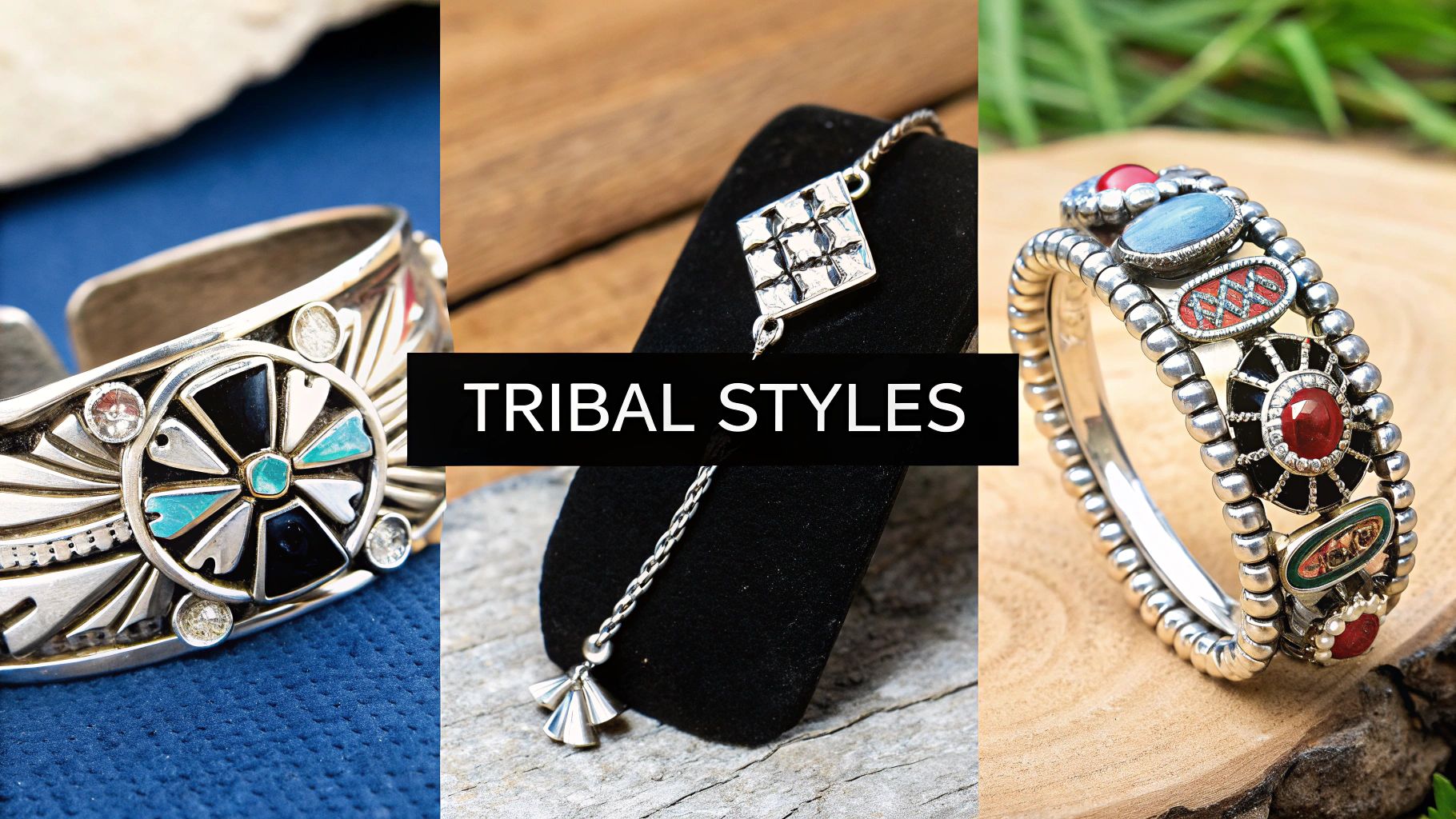
While many people group Southwestern jewelry under a single umbrella, this art form is really a rich tapestry woven from the distinct traditions of many different tribal nations. The term "Southwestern jewelry" isn't one style but a collection of unique artistic languages, each with its own grammar, vocabulary, and history.
Learning to recognize the signatures of Navajo, Zuni, and Hopi artists is the key to a much deeper appreciation. Each tribe’s approach to silver and stone tells a story about their history, environment, and artistic philosophy. By spotting these key differences, you can begin to see the specific cultural legacy—and the hands of the artisan—behind every incredible piece.
Navajo Bold Silverwork and Stone Setting
Navajo (Diné) jewelry is often what first comes to mind when people think of Southwestern silver. Their style is defined by its substantial and masterful silverwork, which often serves as a bold frame for a single, magnificent stone. Navajo artisans are celebrated for their ability to create pieces that feel both rustic and regal.
Their techniques are foundational to the craft, including stamping, casting, and hand-hammering silver into powerful shapes. You’ll often see a large, high-quality turquoise cabochon set as the undeniable centerpiece, commanding attention with its sheer presence. This style emphasizes the beauty of the metal itself, making it just as important as the gemstone it holds.
Navajo jewelry is a statement of strength and substance. The focus is on creating a dramatic interplay between heavy, expertly worked silver and prominent, high-quality gemstones, resulting in pieces with a powerful and enduring presence.
Zuni Intricate Inlay and Cluster Work
In contrast to the bold silver focus of Navajo work, Zuni artistry is a celebration of precision, color, and intricate detail. Zuni jewelers are masters of lapidary work, which involves cutting and fitting stones together with breathtaking accuracy. Their most famous techniques are inlay, petit point, and needlepoint.
Inlay work is like creating a mosaic in miniature, where stones like turquoise, coral, jet, and mother-of-pearl are cut and set flush against one another to form detailed images or geometric patterns. Petit point and needlepoint use tiny, hand-cut teardrop or needle-shaped stones set in clusters, creating a delicate and dazzling texture.
The silver in Zuni jewelry often plays a supporting role, acting as a subtle framework for the vibrant and elaborate stonework. Understanding the nuances of these various techniques is essential for collectors, and you can learn more about how to spot quality in our guide on authentic Southwestern earrings craftsmanship and care tips.
Hopi Silver Overlay and Symbolic Designs
Hopi jewelry offers another distinct aesthetic, one defined by its elegant and graphic storytelling. The signature Hopi technique is silver overlay, a meticulous process that creates a stunning contrast of light and dark.
Here’s how it works:
- An artisan starts with two identical sheets of sterling silver.
- A design—often a culturally significant symbol like a rain cloud, water wave, or katsina figure—is carefully cut out from the top sheet.
- This top sheet is then soldered onto the solid bottom sheet.
- The background of the bottom sheet is oxidized, or blackened, making the polished silver design on top stand out in sharp relief.
This method results in clean, graphic lines and a beautiful sense of depth. The focus is less on the stone and more on the symbolic power of the silver design itself, creating a sophisticated and meaningful work of art.
How to Choose Authentic Southwestern Jewelry
When you're diving into the world of Southwestern jewelry, it's a journey that's incredibly rewarding, but you want to do it with awareness and respect. Choosing a genuinely handcrafted piece over a mass-produced imitation means you're not just getting a higher-quality treasure—you're directly supporting the artists and helping preserve their cultural heritage. When you make an informed choice, you're honoring the intricate native american jewelry meanings and ensuring the creators get fair compensation for their incredible skill.
This is about more than just finding a pretty design; it’s about learning to see the tell-tale signs of true craftsmanship. Once you know what to look for, you can collect with confidence and a clear conscience.
Look for the Artist's Signature
One of the surest signs of an authentic piece is the artist's hallmark. Think of it like a painter signing their canvas. Many Native American silversmiths stamp their work with a unique mark—it could be their initials, a personal symbol, or even their full name.
That little signature is a declaration of pride, a mark of ownership. When you turn over a cuff bracelet or the back of a pendant and find that stamp, it connects you right back to the individual who poured their skill into it. While some much older, "Old Pawn" pieces might not be signed, it’s a critical feature to look for in any contemporary jewelry.
An artist's hallmark transforms a piece of jewelry from an anonymous object into a personal story. It is a direct link to the hands and heritage that created it, confirming its status as a genuine work of art.
Examine the Quality of Materials and Workmanship
Authentic jewelry just feels different. It has a certain heft to it, a tangible quality that only comes from being made by hand with care. When you're holding a piece, pay close attention to the details:
- Sterling Silver: The vast majority of genuine pieces are crafted from sterling silver, which might be stamped with ".925" or "Sterling." The metalwork itself should be clean and precise, with no sloppy solder marks or rough, unfinished edges.
- Genuine Stones: Real turquoise has natural variations—in both color and matrix (the web-like patterns from the host rock). It should feel cool and solid to the touch. Plastic or resin imitations, on the other hand, often feel surprisingly light and warm up quickly in your hand.
- Precision and Detail: Look closely at the settings. Are the stones held securely? Is the inlay work totally smooth and seamless? Are the stamped designs crisp, deep, and even? A true artisan’s work shows a level of precision that a machine just can’t replicate.
Ask Questions and Buy from Reputable Sources
Your best tool as a buyer is your own curiosity. Never feel shy about asking a seller questions about a piece's story. A reputable dealer will be genuinely happy to tell you about the artist, their tribal affiliation, and the materials they used. If a seller gets vague or can't provide those key details, that’s a pretty big red flag.
When you buy from established galleries, directly from artists at markets, or from trusted online shops that specialize in Native American art, you’re helping ensure your purchase is ethical. This approach supports a fair economy for the artists and gives you total confidence in what you're buying. To get an even better handle on the classic materials and designs, you can explore more about western jewelry from turquoise to stamped silver to build your knowledge. By taking these simple steps, you can build a collection that is not only beautiful but also meaningful and respectful.
Caring For Your Wearable Treasures
Authentic Southwestern jewelry isn't just an accessory; it's a piece of art, a story you can wear. When you take good care of it, you're not just preserving silver and stone—you're honoring the culture, the artist, and the native american jewelry meanings woven into its design so it can be treasured for generations.
A few simple habits are all it takes to protect your pieces from tarnish, damage, and daily wear. This is especially true for the beautiful, natural materials in Southwestern jewelry, like sterling silver, turquoise, and coral, which need a gentle touch to stay vibrant.
Essential Cleaning and Maintenance
When it comes to cleaning, the number one rule is to be gentle. Stay away from harsh chemicals, ultrasonic cleaners, and abrasive cloths, as they can permanently damage soft stones like turquoise or scratch up that beautiful polished silver. Keeping it simple is always the best way to go.
For your sterling silver, a soft, untreated polishing cloth is your best friend. Just gently buff away any tarnish, always rubbing in one direction to avoid creating tiny surface scratches. If a piece has a lot of detailed silverwork, you can use a soft-bristled toothbrush with a tiny drop of mild soap and water on the silver only. Be extra careful to keep the soap away from the gemstones.
Always remember that stones like turquoise are porous. Think of them as living stones—they can absorb oils, lotions, and chemicals, which might cause their gorgeous blue-green color to darken or change. They just need a little mindful handling.
Proper Storage and Handling
Believe it or not, how you store your jewelry is just as crucial as how you clean it. Tarnish on sterling silver is primarily caused by exposure to air and humidity, so a little prevention goes a long way.
To keep your treasures looking their best, try these simple storage tricks:
- Store Individually: Pop each piece into its own soft cloth bag or a lined jewelry box. This is a simple trick to stop harder stones and metals from scratching up softer ones.
- Keep It Dry: Find a cool, dry spot for your jewelry box. You can even add an anti-tarnish strip inside to absorb the atmospheric pollutants that cause discoloration.
- Last On, First Off: Think of your jewelry as the finishing touch. Always put it on after applying any lotions, hairspray, or perfume. And make it the first thing you take off before you swim, shower, or exercise.
By following these easy steps, you're doing more than just cleaning—you're respecting the legacy of your jewelry and ensuring its spirit and beauty will last a lifetime.
Common Questions About Jewelry Meanings
Diving into the world of Southwestern jewelry, especially pieces with deep Native American roots, naturally brings up a few questions. It's smart to ask them. Understanding the cultural significance behind what you wear is the best way to honor the artistry and the people who create it. Let's walk through some of the most common things people wonder about.
Is It Okay for Me to Wear Native American Jewelry?
This is probably the most important question people ask, and the answer is a wholehearted yes—as long as it’s done with respect. When you buy authentic jewelry directly from Native artists or from galleries that ethically source from them, you're not just getting a beautiful piece. You're casting a vote with your dollar, supporting an artist, their family, and the continuation of a tradition that has been passed down for generations. It transforms the act from appropriation to appreciation.
How Can I Find Out Who Made My Jewelry?
Another great question. The key is usually the artist's hallmark. This is a small, unique stamp on the silver, acting as the creator’s signature. A little research on that mark can open up a whole new world, often leading you to the artist's name, their tribal nation, and the specific cultural stories that shape their work. It's like finding the signature on a painting.
What Do Certain Colors Mean Together?
People often notice the classic pairing of vibrant blue turquoise with deep red coral and wonder if there's a reason for it. There absolutely is. This combination is a powerful symbol of balance, representing the harmony between the sky above and the earth (or water) below. It's a visual prayer for equilibrium, both in nature and within ourselves. These color choices are deeply intentional, weaving another layer of meaning into the design.
The heart of it all is to approach this art with a curious and respectful spirit. When you learn the stories behind the symbols and make sure you're supporting authentic artists, you become more than a wearer of jewelry—you become a caretaker of a beautiful piece of cultural heritage.
Ultimately, these creations are so much more than accessories. Every piece tells a story. Each design is a piece of history and a vibrant expression of a living culture. By seeking to understand and buying ethically, you play a small but important part in helping these incredible traditions thrive for generations to come.
At Silver Elegant, our passion is connecting you with stunning, high-quality Southwestern jewelry that celebrates these rich traditions. We invite you to explore our collections and find a piece that speaks to your own story. Discover your next treasure at Silver Elegant today.